Archives for the year of: 2014

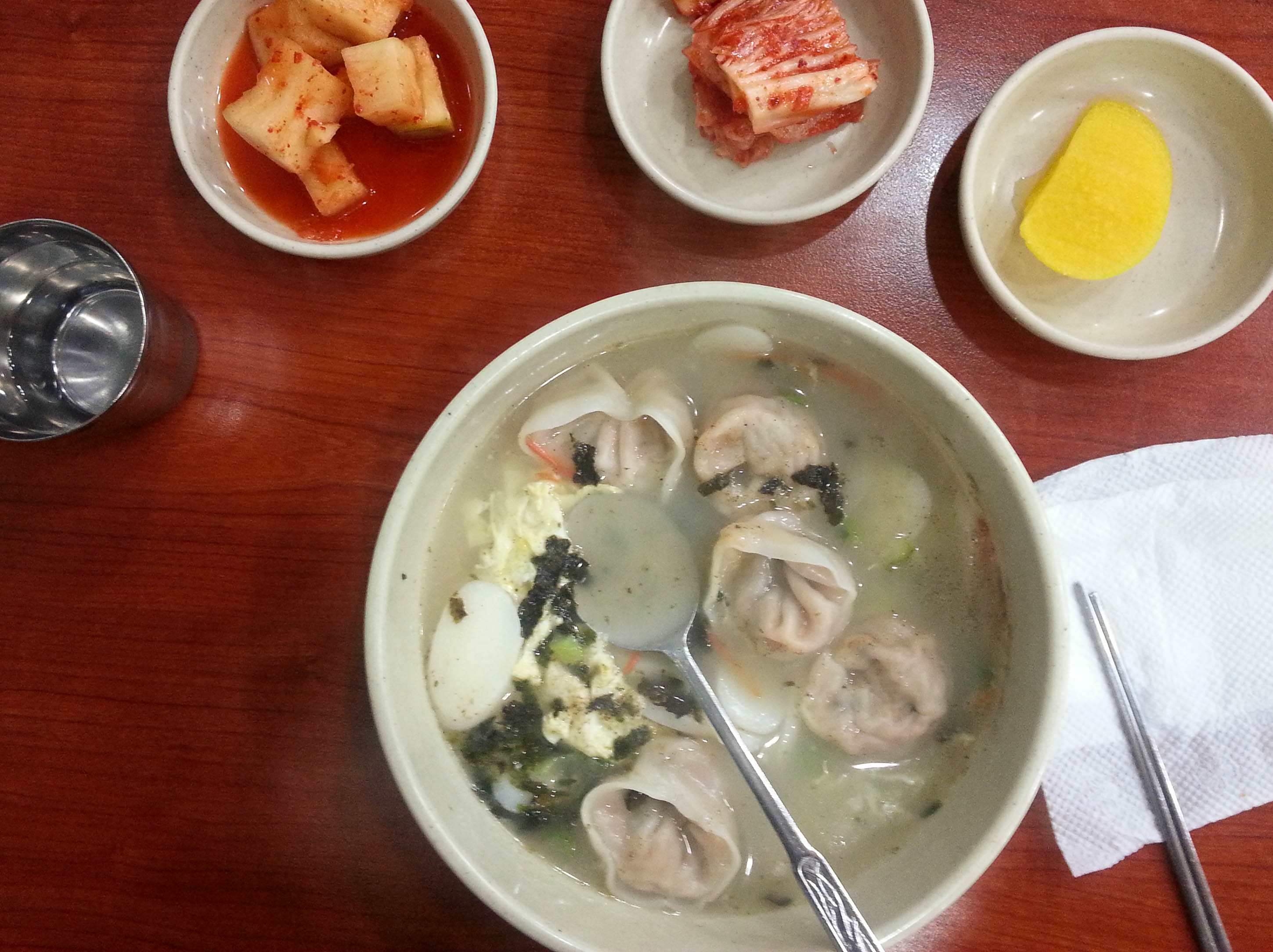
Mandu guk is a simple, yet very satisfying soup. The literal translation is dumpling soup, a meal typically eaten in the fall and winter.  The hearty, non-spicy broth is usually beef based in which the dumplings are boiled, along with green onions, garlic, kelp and sometimes anchovies. This soup often comes garnished with egg and dried seaweed.

Tteok mandu guk, or rice cake and dumpling soup, is traditionally enjoyed by Koreans on Lunar New Year’s Day. This version of soup includes slices of rice cake in addition to the dumplings. The whiteness of the broth symbolizes purity and the tteok, shaped like old currency, represents a prosperous year. Maturity also comes into play since Koreans turn another year older on New Year’s Day rather than their birthday. It is said that you won’t become a year older until you’ve consumed your tteok mandu guk. Maybe I’ll skip the soup this year and be 30 again.

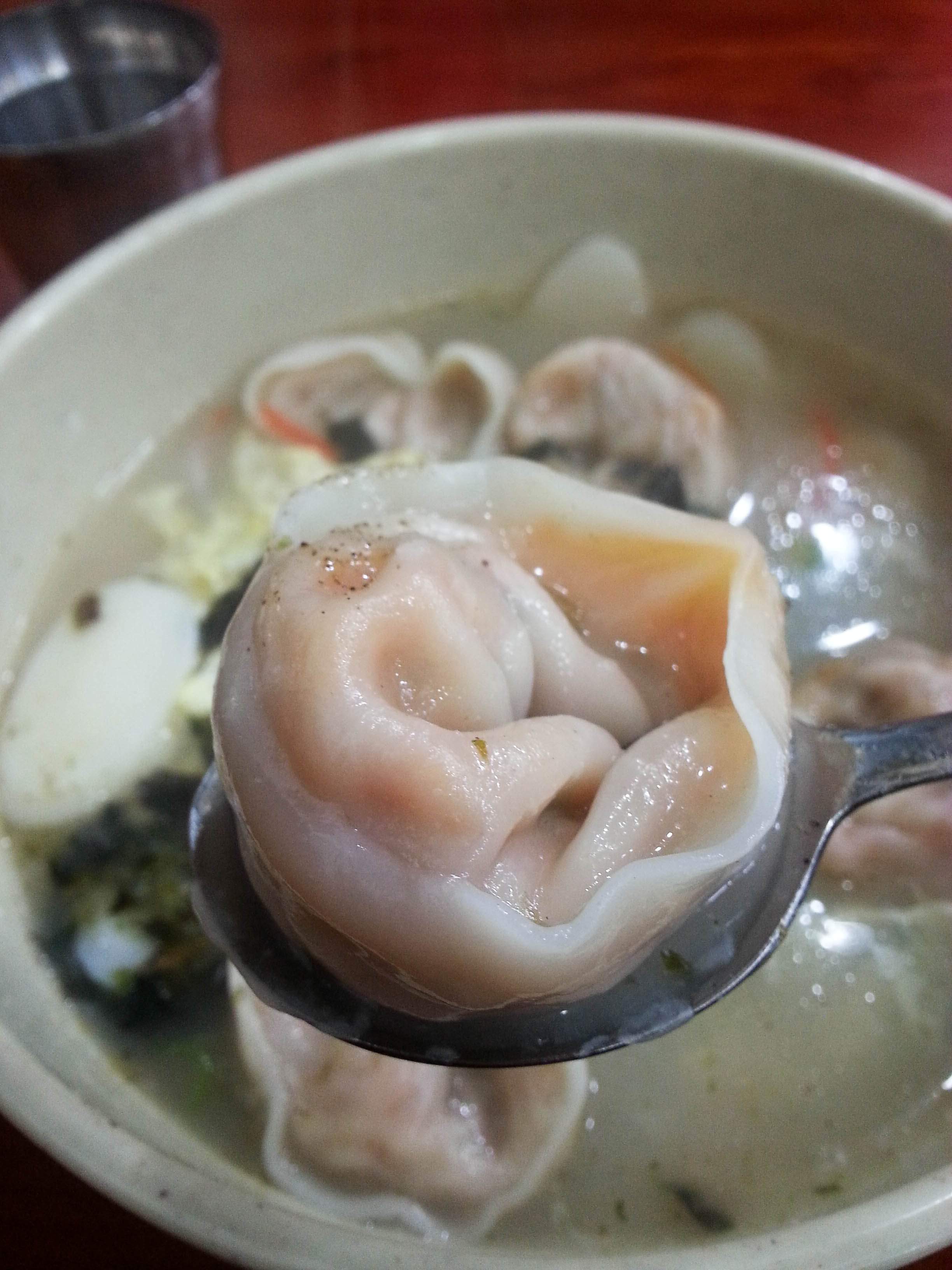
Mandu (Korean dumplings) are not just found in this soup, they are frequently eaten on their own as a snack, appetizer or side dish. More often than not I see them steamed, but they can also be served pan fried or deep fried with a side of soy sauce for dipping. So far I’ve only seen two kinds of mandu—gogi (meat, usually pork) mandu and kimchi mandu. Both kinds usually include minced onions, mung bean sprouts, garlic, ginger, and sometimes glass noodles. I still haven’t decided which one I prefer, but I do think I enjoy them best in soup.

A steaming bowl of tteok mandu guk, which could easily become just mandu guk by removing the rice cakes.  As usual, kimchi, radish kimchi and pickled daikon radish are served as sides.

A steaming bowl of tteok mandu guk, which could easily become just mandu guk by removing the rice cakes. As usual, kimchi, radish kimchi and pickled daikon radish are served with the soup as sides.

Delicious kimchi mandu.

Delicious kimchi mandu.

Disk-shaped, thinly sliced rice cake is called garaetteok.

Garaetteok is a thinly sliced, disk-shaped variety of rice cake found in tteok mandu guk and tteok guk.


I hope everyone had a Merry Christmas! Korea is the only East Asian country to recognize Christmas as a national holiday, so that means I had the day off, yay! It was a little hard being so far from loved ones, but I managed to enjoy my day anyway. I had brunch with a few friends, then I spent the rest of the day relaxing and watching movies.

My apologies for the lack of posts lately. I’ve been a little under the weather and have been a bit lazy…more posts to come soon! In the meantime, here are a few photos from the past few weeks.

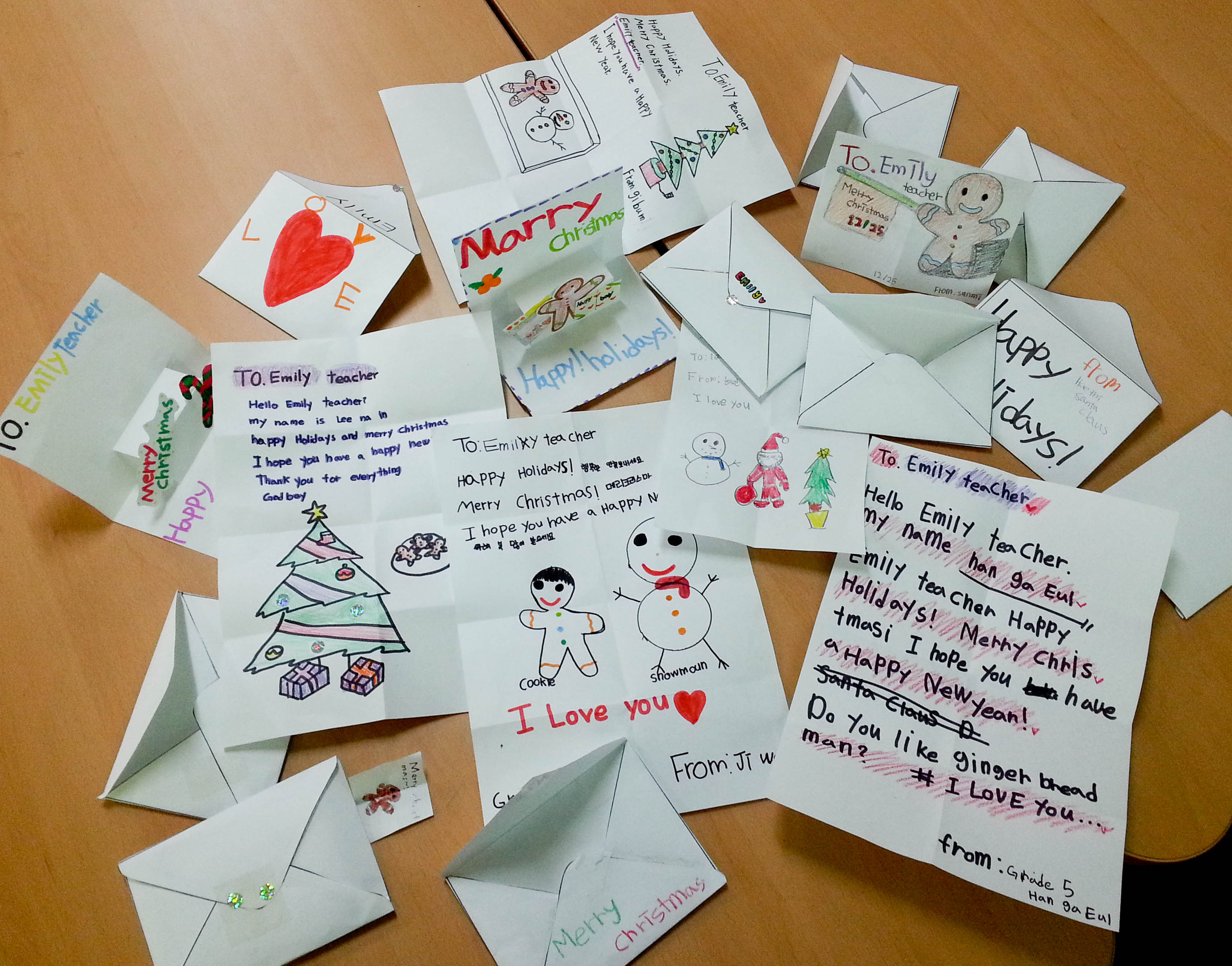
On the last day of classes for the semester at my small school, I had the students make Christmas cards for their parents and homeroom teacher. They surprised me by making them for me instead. So sweet.

I was showered with holiday love from my students.

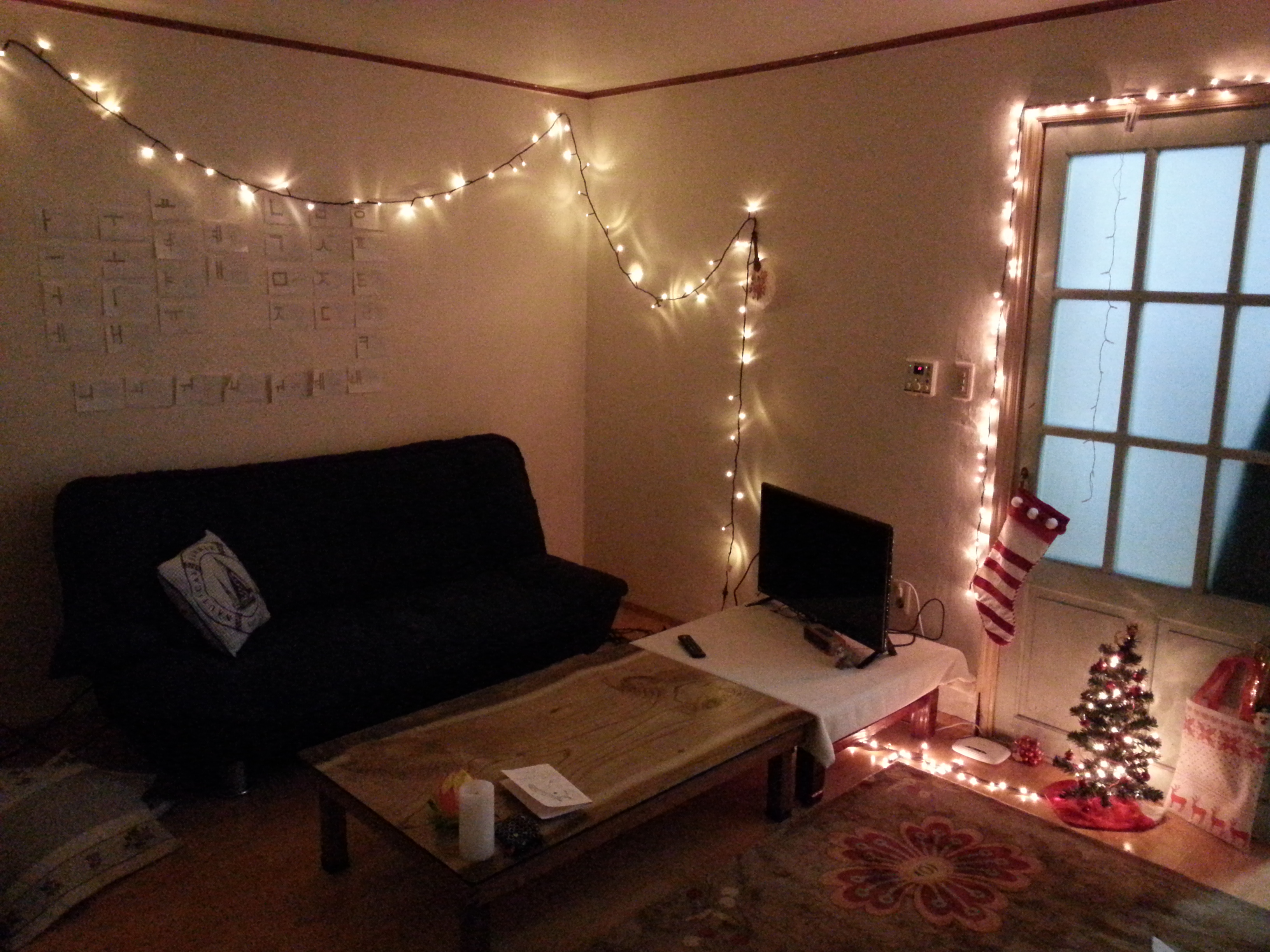
My living room was quite cozy on Christmas. The previous teacher that lived here left a tree behind for me to decorate and get in the Christmas spirit.

My living room was quite cozy on Christmas. The English teacher that lived here last year left a tree behind for me to decorate and get in the Christmas spirit.

The great thing about my small school is having very small classes. The third graders are the cutest.

The great thing about my rural school is having very small classes. The third graders are the cutest.

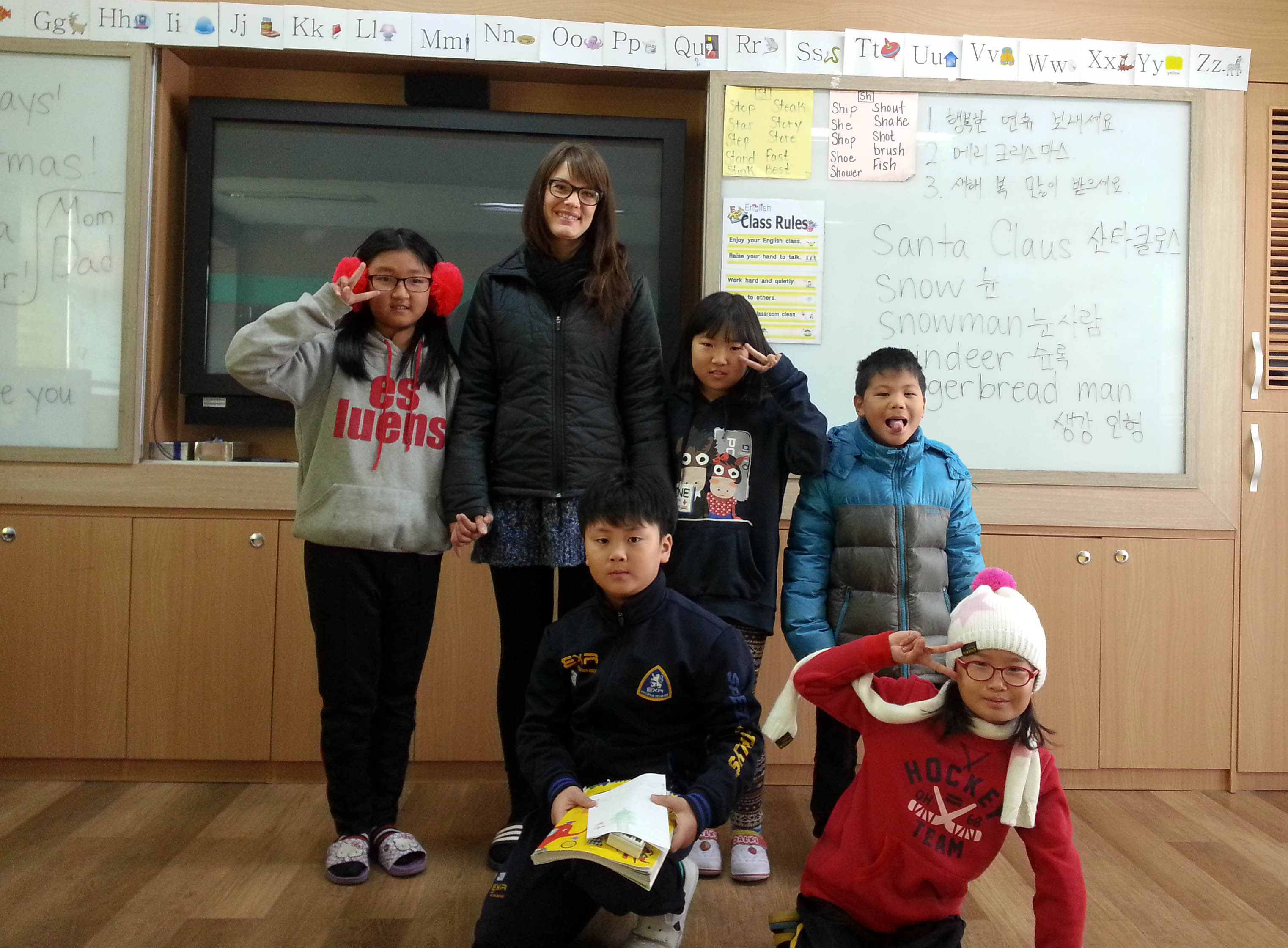
Here I am with the fifth graders. We decided to have a photo shoot on the last day of classes.

Here I am with the fifth graders. They love pictures.

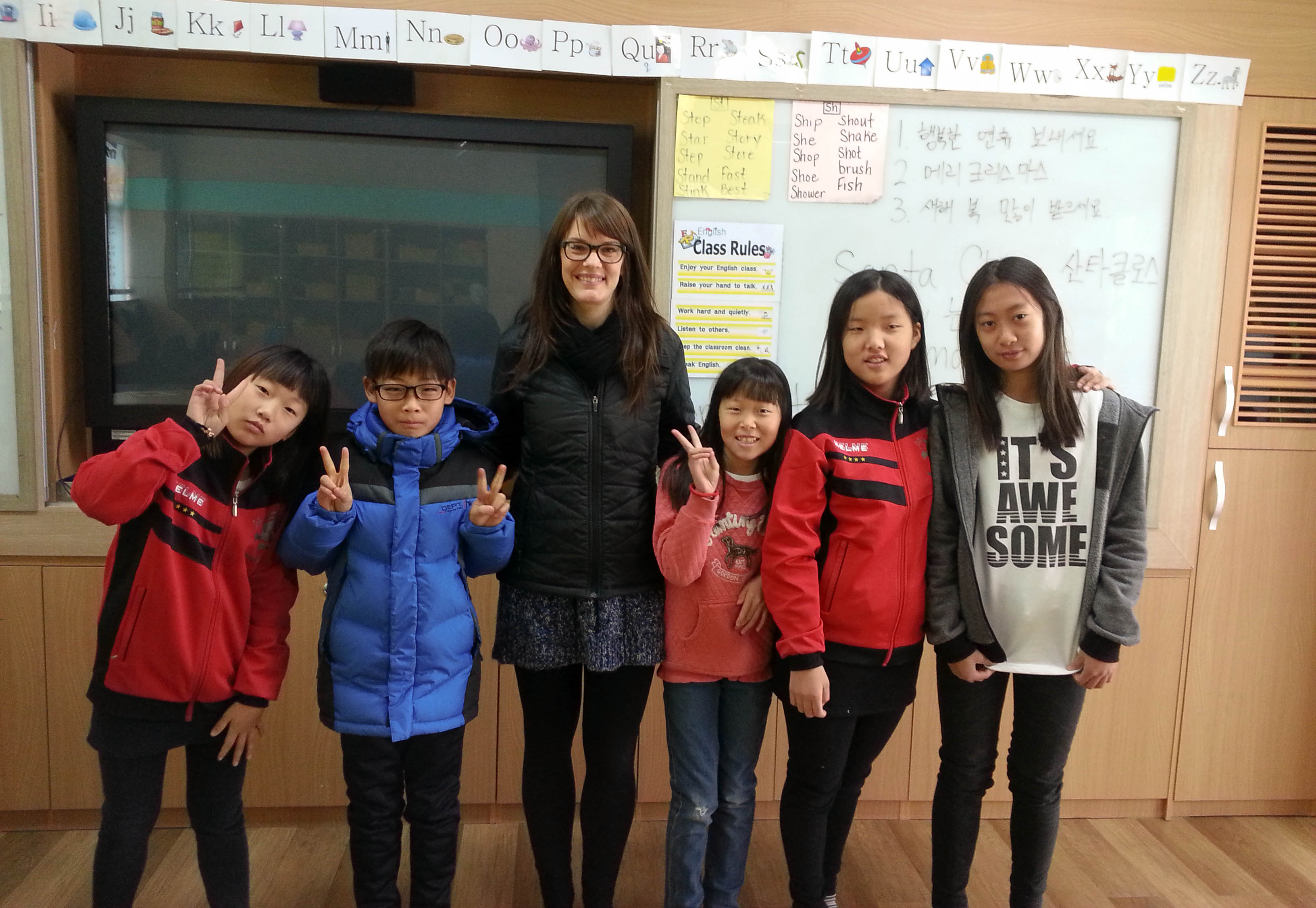
I have much larger classes at my main school. This is one of my 4th grade classes. They all wanted to stand next to me in the picture so I got squished in the middle.

I have much larger classes at my main school. This is one of my 4th grade classes (the smallest of the classes at this school). They all wanted to stand next to me in the picture so I got squished in the middle.

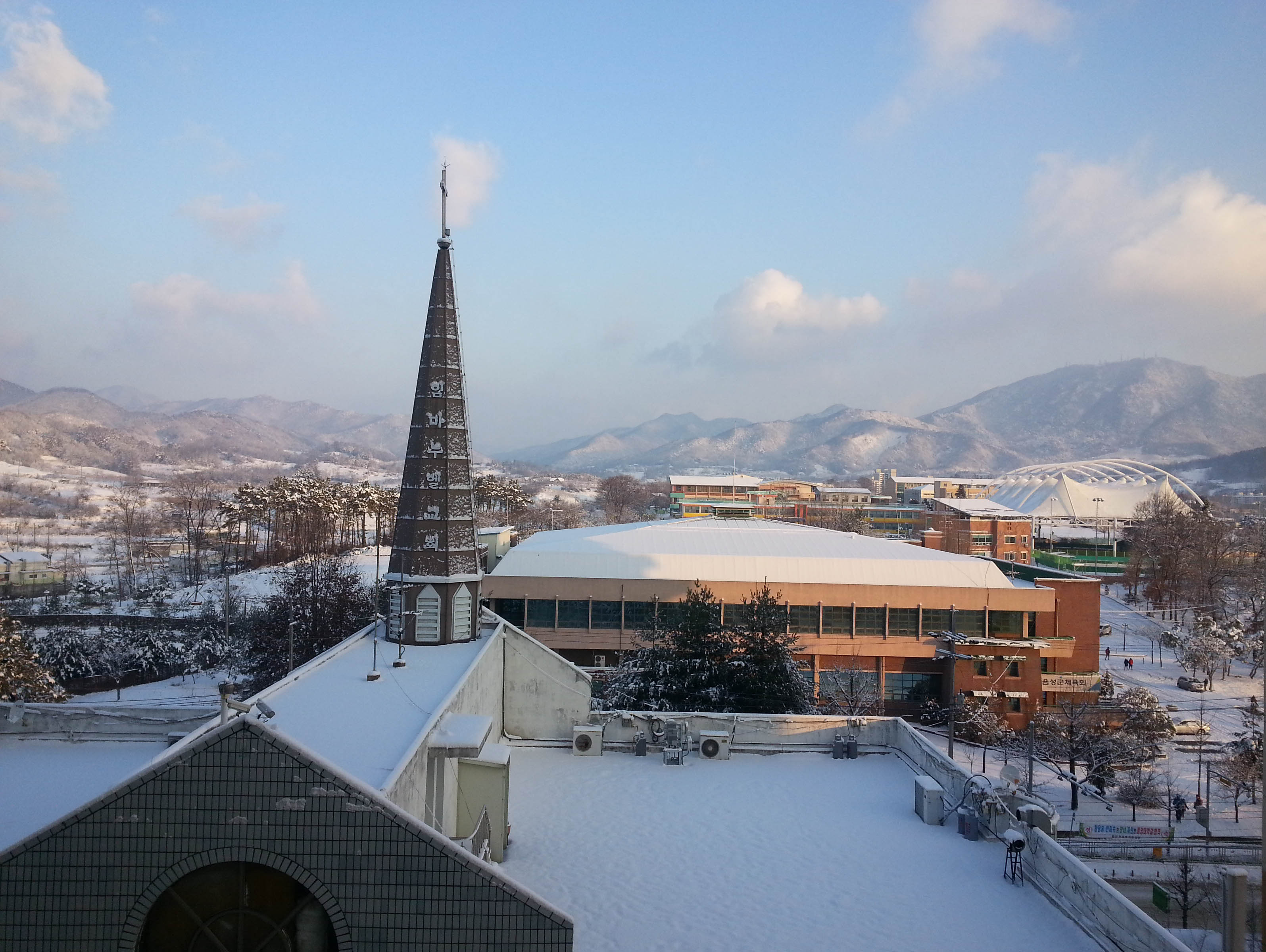
Its been very cold lately. It was 8 degrees on this particular morning. I hate the cold but must admit the dusting of ice and snow made the view that morning quite beautiful.

Its been very cold lately. It was 8 degrees (Fahrenheit) on this particular morning. I hate the cold but must admit the dusting of ice and snow made the view that day quite beautiful.

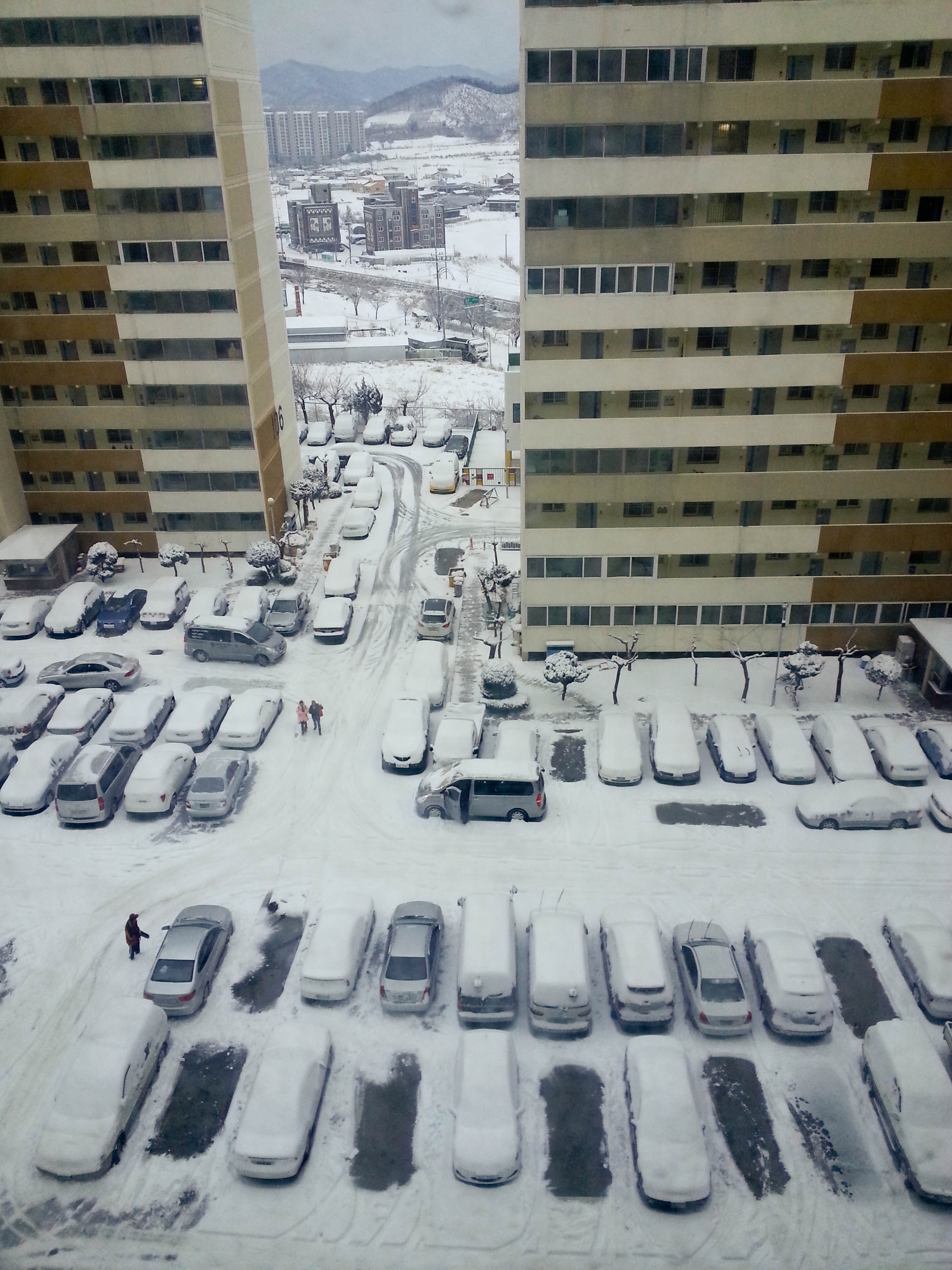
This is the view from my office. I had no idea it was going to snow so often here.

This is the view from my office. I had no idea it was going to snow so often here.

I went on a temple stay last weekend (more on that later) and this sign was on the door of my room. I have yet to see any "wild animals" in this country.

I went on a temple stay last weekend (more on that later) and this sign was on the door of my room. I have yet to see any “wild animals” in this country.

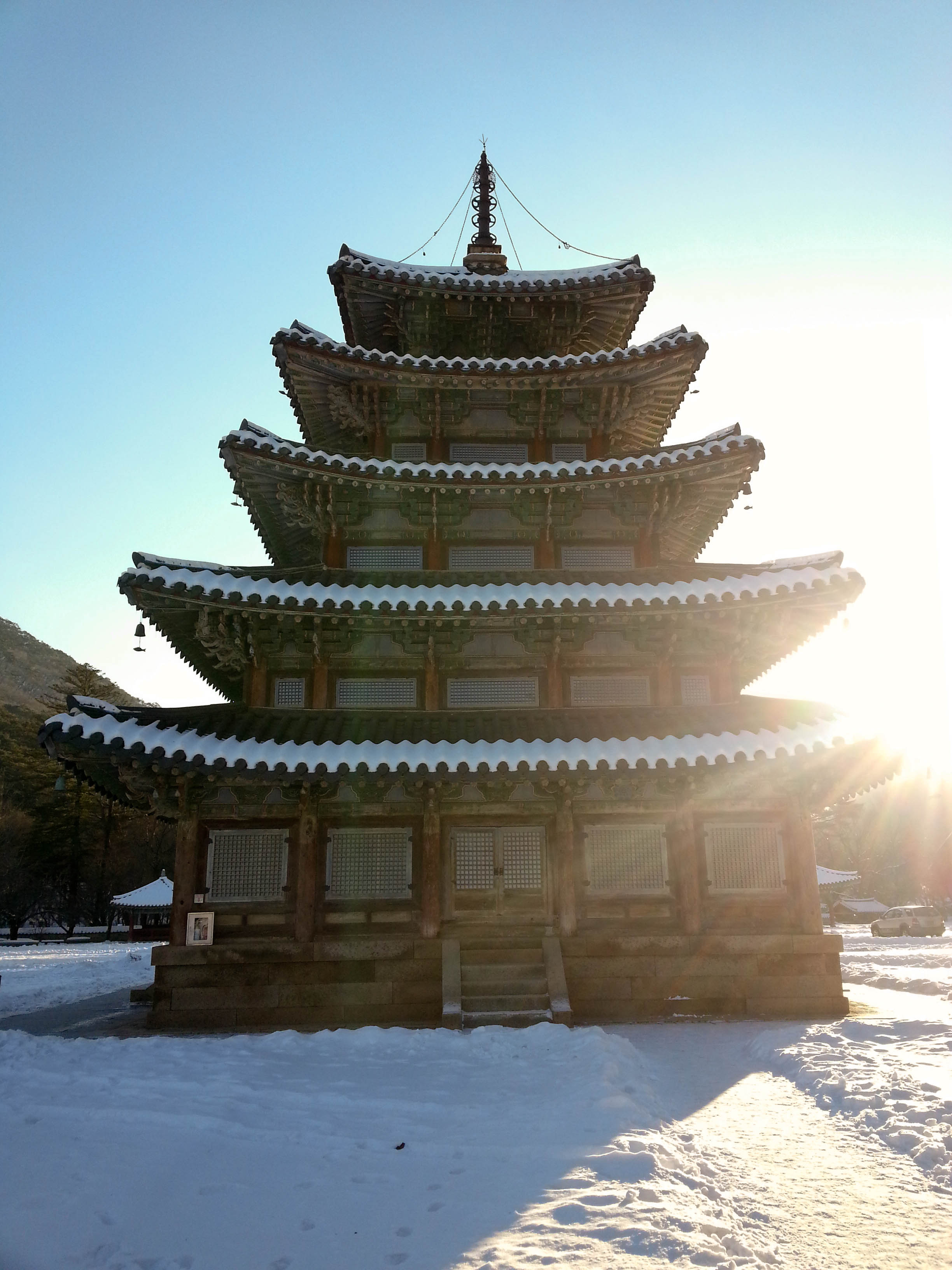
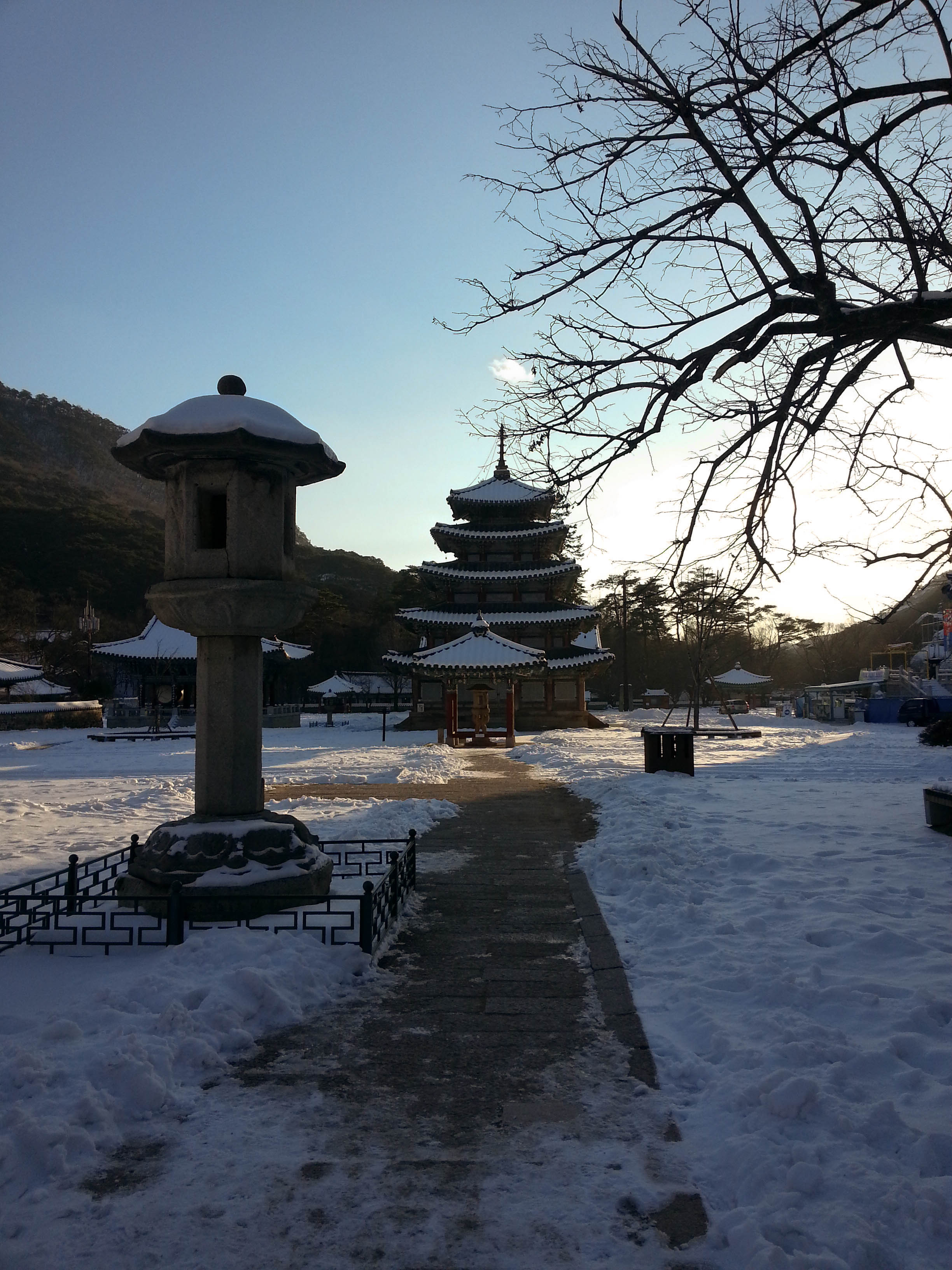
Palsangjeon in the sunlight at Beopjusa Temple.

Palsangjeon in the sunlight at Beopjusa Temple.

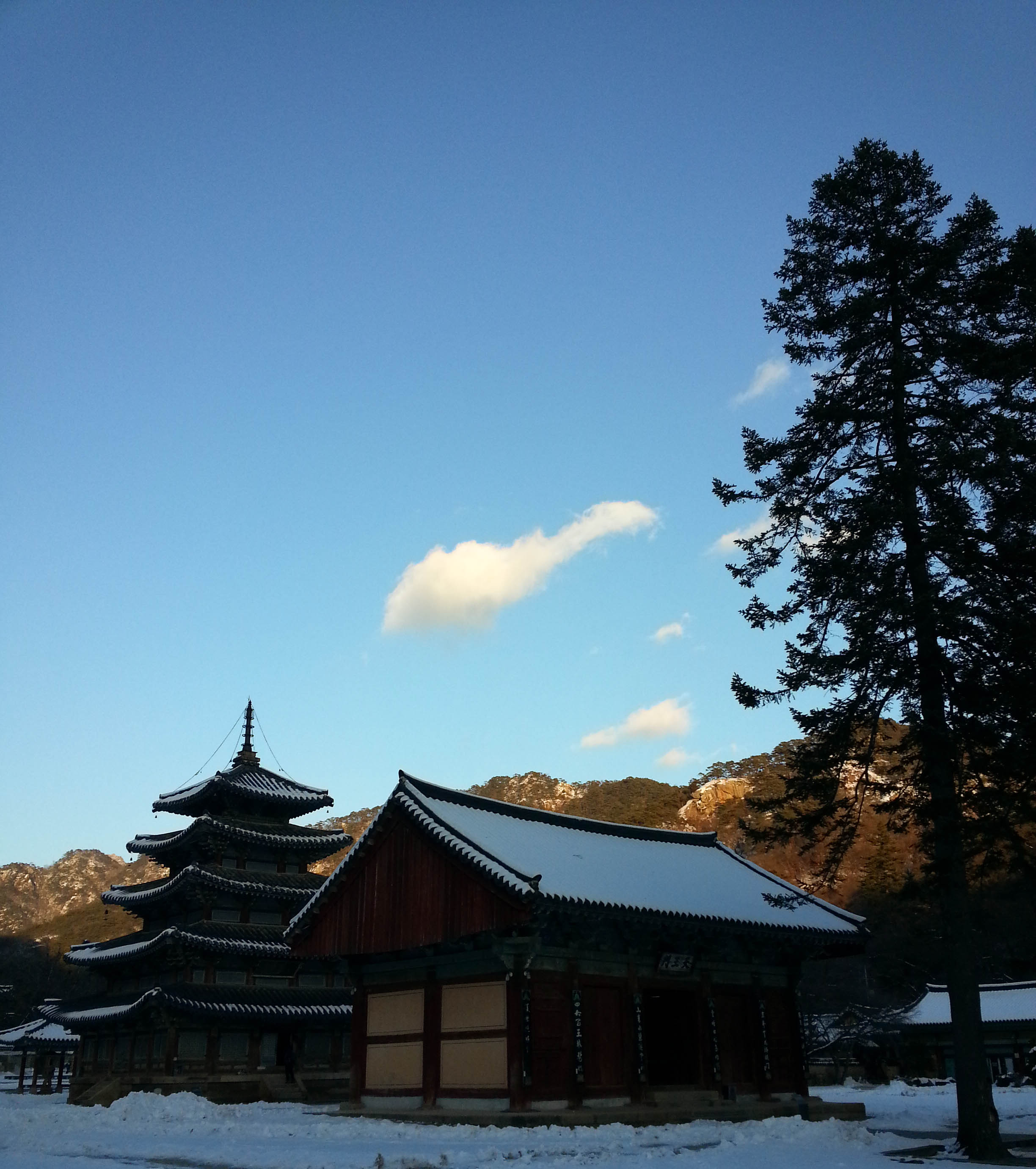
Beopjusa Temple

Beopjusa Temple, Songnisan National Park

Beopjusa Temple

I’ve been to this temple multiple times. Winter seems to be the only time it’s not cluttered with people.

Look at the size of those icicles!

Look at the size of those icicles!

‘Tis the season to bundle up and eat hot soup, so I thought I’d post about another traditional Korean dish that I like particularly like when it’s cold out.  Doengjang jjigae is a stew made with fermented soy bean paste, or doenjeang, which is an essential element in Korean cuisine.  I think many foreigners are initially turned off by this dish, mostly because doengjang is so pungent.  Fermented soy bean paste doesn’t necessarily sound too appetizing, either.  However, the hearty flavor of this dish is unlike any other soup or stew I’ve tried, and I love it.

The broth is usually comprised of doenjang, anchovy stock, garlic and Korean red pepper powder or flakes (gochugaru), which creates a perfect blend of spicy saltiness.  Onions, zucchini, tofu, mushrooms and potatoes are added to the broth, making a deliciously balanced stew (clams, pork or beef are also sometimes included, depending on the recipe).  Doenjang jjigae is often served as a side dish at barbecue restaurants, but lately I’ve been ordering it on it’s own with a bowl of rice for a cheap, healthy and quick dinner.  If you ever have the opportunity to try it, I highly recommend doing so.

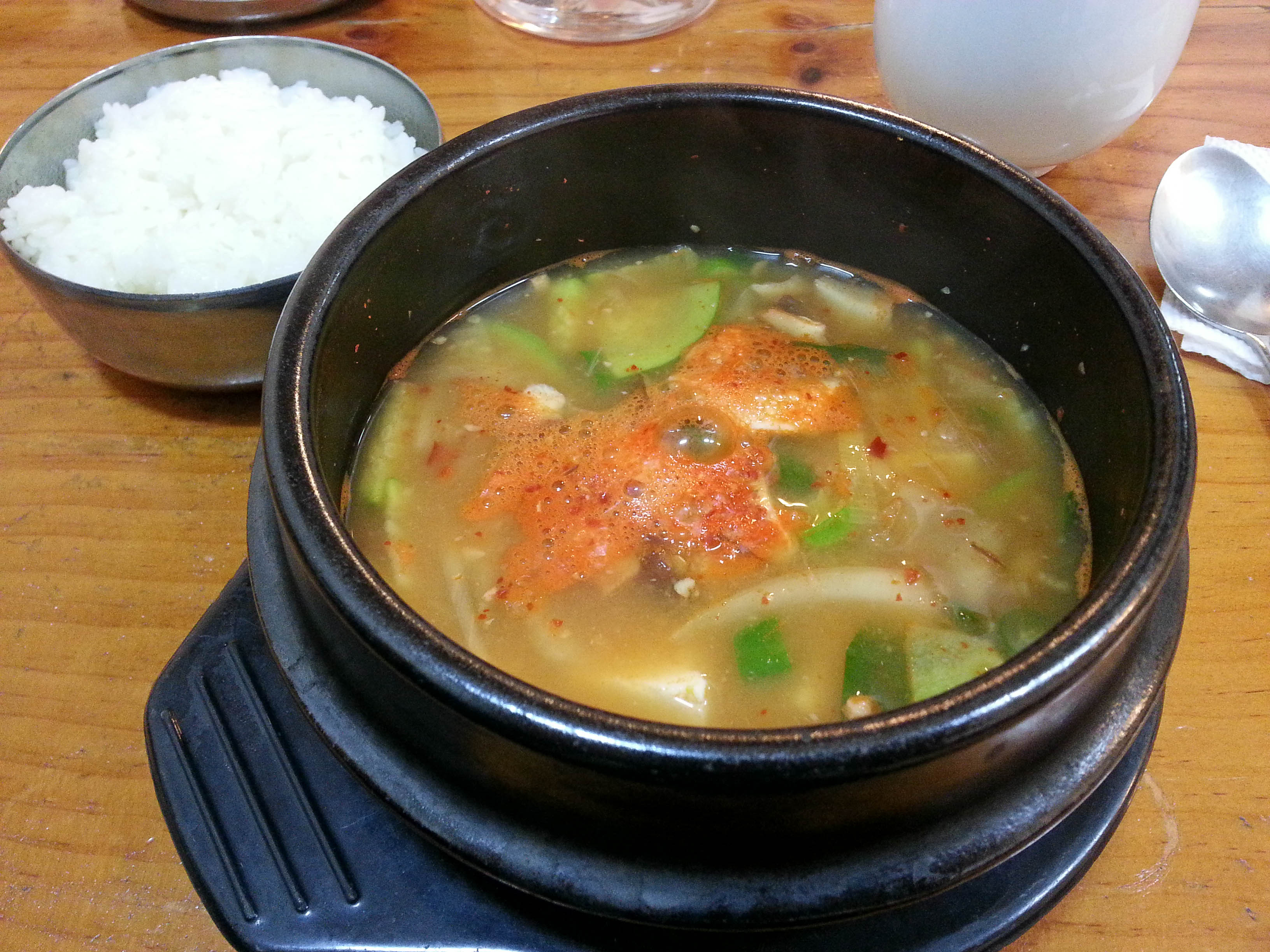
Doenjang jjigae is served sizzling hot in a stone bowl along with a side of rice.

Doenjang jjigae is served sizzling hot in a stone bowl along with a side of rice.

This version was made with onions, zucchini, mushrooms, tofu and chili peppers.

This version was made with onions, zucchini, mushrooms, and tofu. I have yet to try a version with clams or any other type of meat. I also haven’t tried making it on my own yet, but I plan on doing so soon as I know this will be one of the dishes I’ll miss when I leave Korea.

“If we had no winter, the spring would not be so pleasant: if we did not sometimes taste adversity, prosperity would not be so welcome.”  -Anne Bradstreet

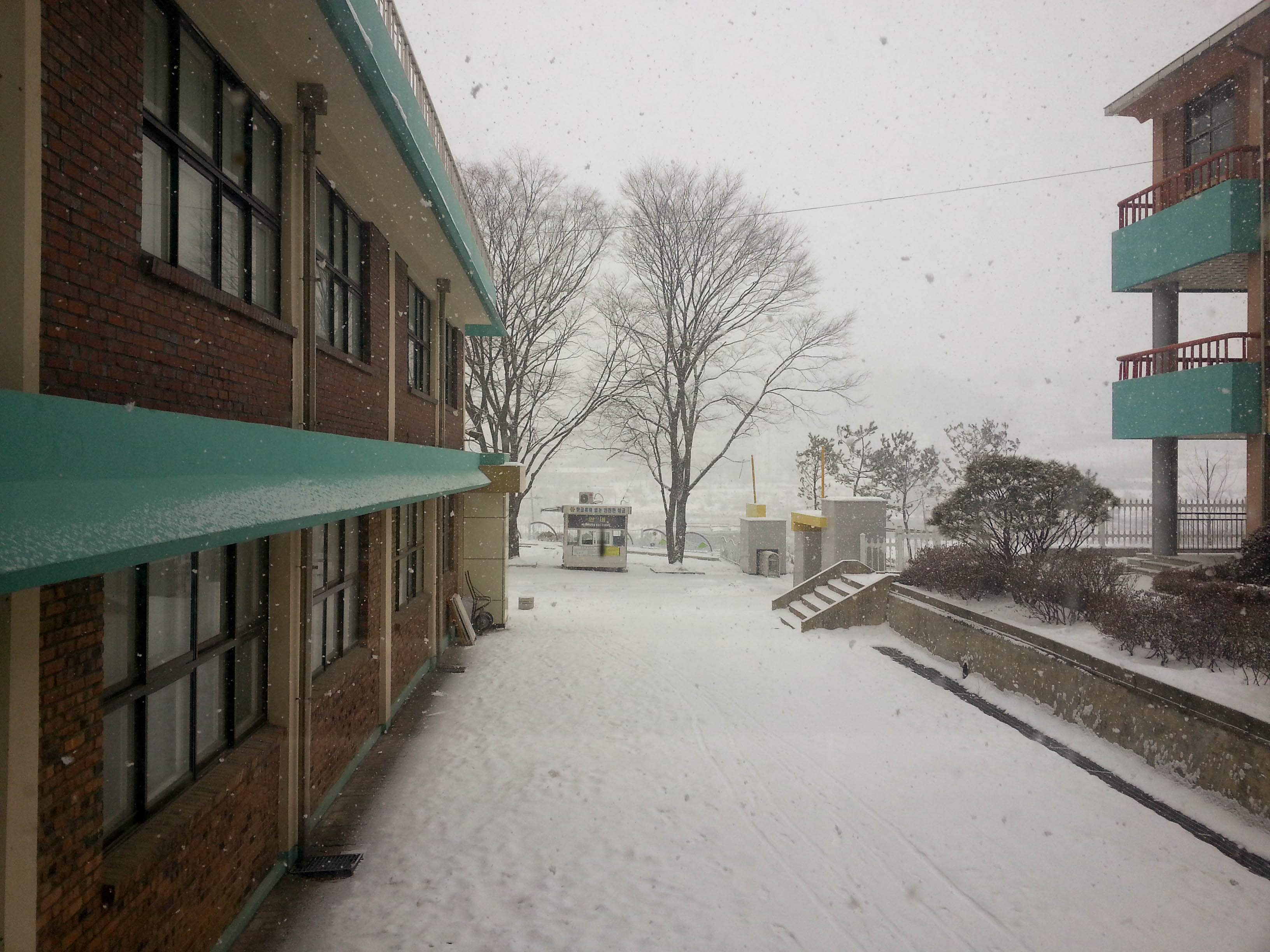
It’s technically still fall, but I woke up to five inches of snow on Wednesday and declared it winter.  That means I’ve entered the fourth season of the year in Korea, and I think this one might be the most difficult.  I really dislike being cold, and that’s particularly unfortunate in a country where I’m a teacher and heating is not generously provided in public schools.  This week the temperature has been in the upper teens and low 20s (Fahrenheit) which feels particularly harsh when I just can’t warm up.  The hallways, cafeteria, and bathrooms are not heated at all, and the heat (which was finally turned on two weeks ago) is stuck at a very low setting in my classroom.  I will remain bundled up in my coat, scarf and gloves all day long for the next several months.

Being so far away from loved ones during the holidays also makes this time of year a bit of a struggle.  I worked through Thanksgiving (although I did eat some turkey with friends from around the world a few days later) and for Christmas I have the day off, but I will have to go to work in the icebox they call school the day before and after.  The good news is I have underfloor heating in my apartment and lots of yarn to knit with so I can improve my knitting skills.  I also recently found Christmas lights to string around my apartment which means I don’t have to use the hideous overhead fluorescent lighting all the time!  It’s certainly not the same as curling up in front of a cozy fireplace, but it does add a little bit of warmth to the atmosphere that I’ve been craving since getting here.

Thankfully, I have some delightful students that love winter and know how to cheer me up on bleak winter days.  I also know that I can look forward to next year when I’ll be closer to my dear friends and family.  Until then, I’m going to eat a lot of kimchi jjigae, teach myself how to knit a hat, and continue to be grateful for the opportunity to experience a year in Korea, even if it means missing the holidays and constantly shivering.

The view from my apartment on Wednesday morning.

The view from my apartment on Wednesday morning.

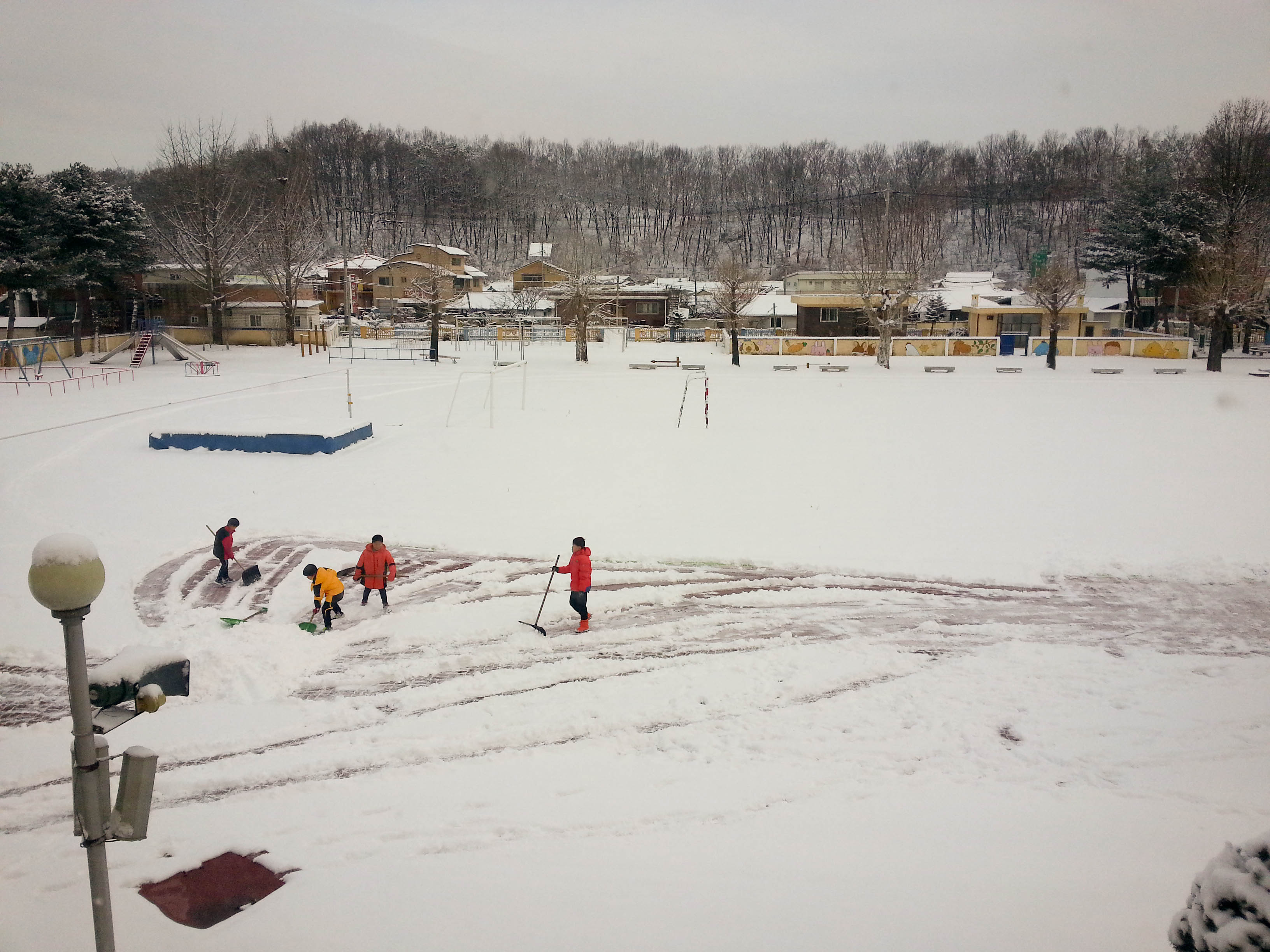
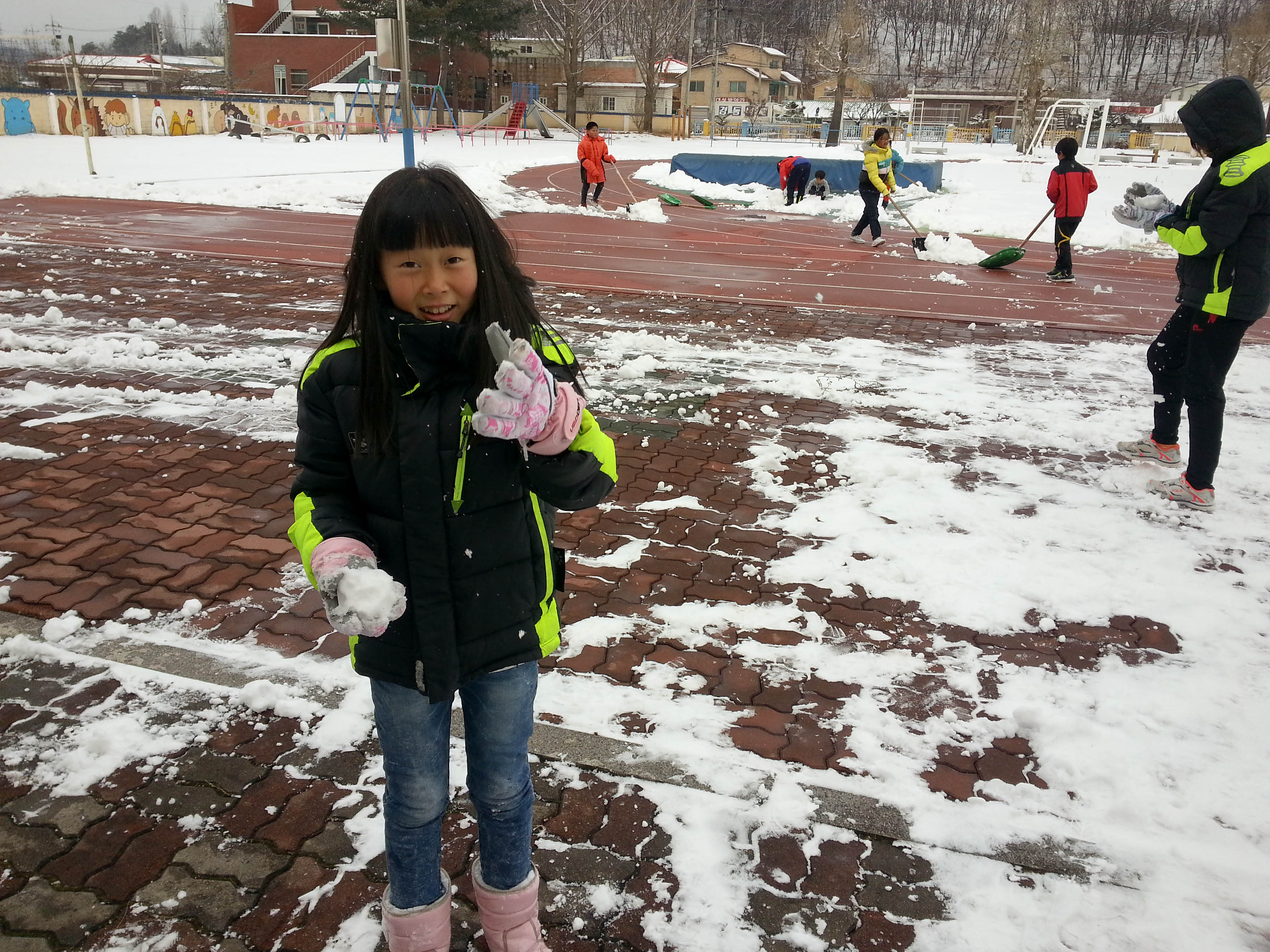
When I got to school, the students were already hard at work shoveling.

When I got to school, the students were already hard at work shoveling.

"Emily Teacher, I'm going to throw this snowball at you, ok?"

“Emily Teacher, I’m going to throw this snowball at you, ok?”

Happy students playing in the snow.

Happy and totally oblivious to the cold.

This is when I realized why they were so happy about shoveling. They couldn't wait to build and igloo.

This is when I realized why they were so happy about shoveling. They couldn’t wait to build an igloo!


20141003_182214

Lanterns on the Namgang River at the Jinju Lantern Festival.


Chokseongnu Pavilion in Jinju

Chokseongnu Pavilion in Jinju

View from Sujeong Mountain in Eumseong.

View from Sujeong Mountain in Eumseong.

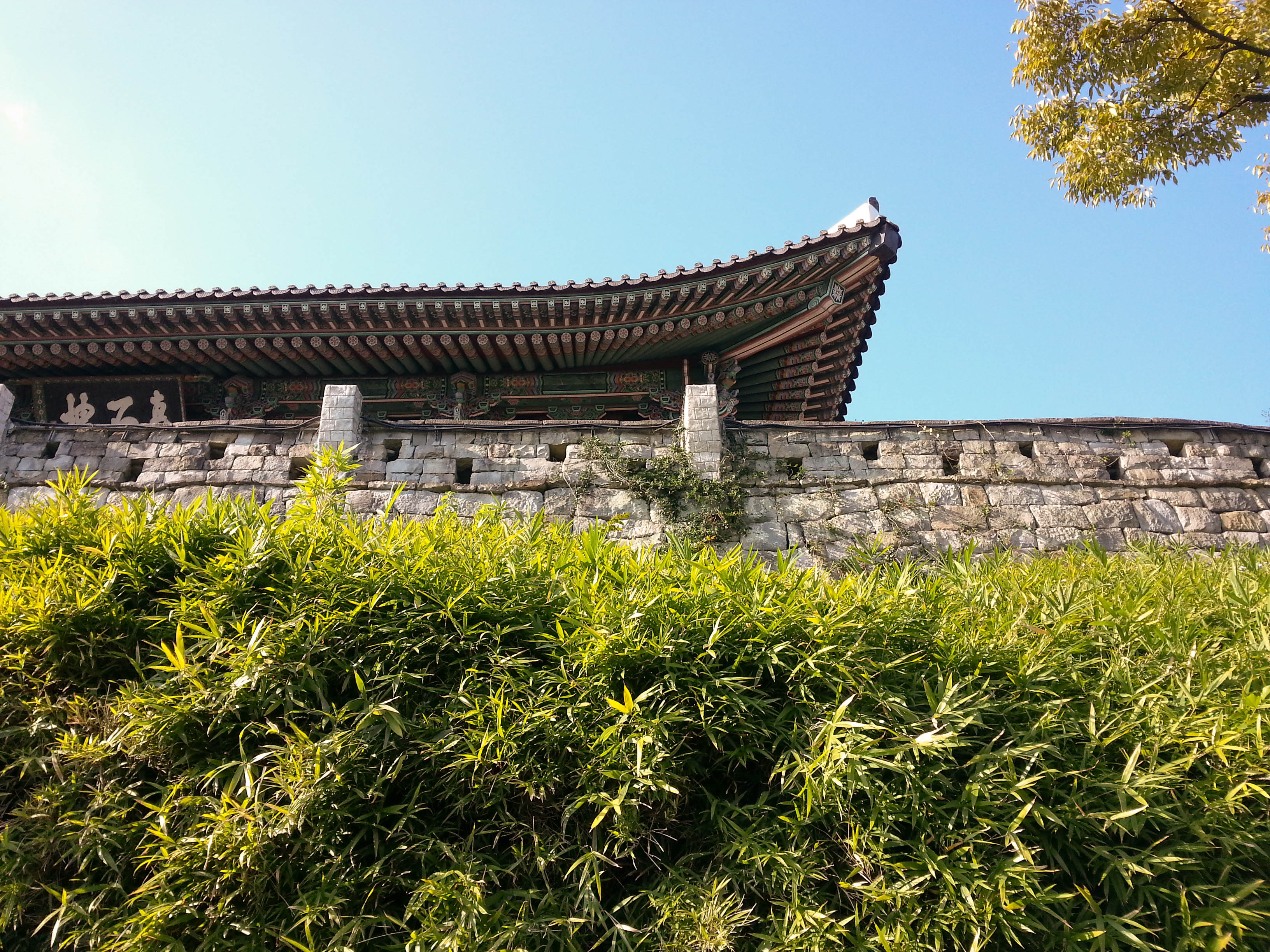
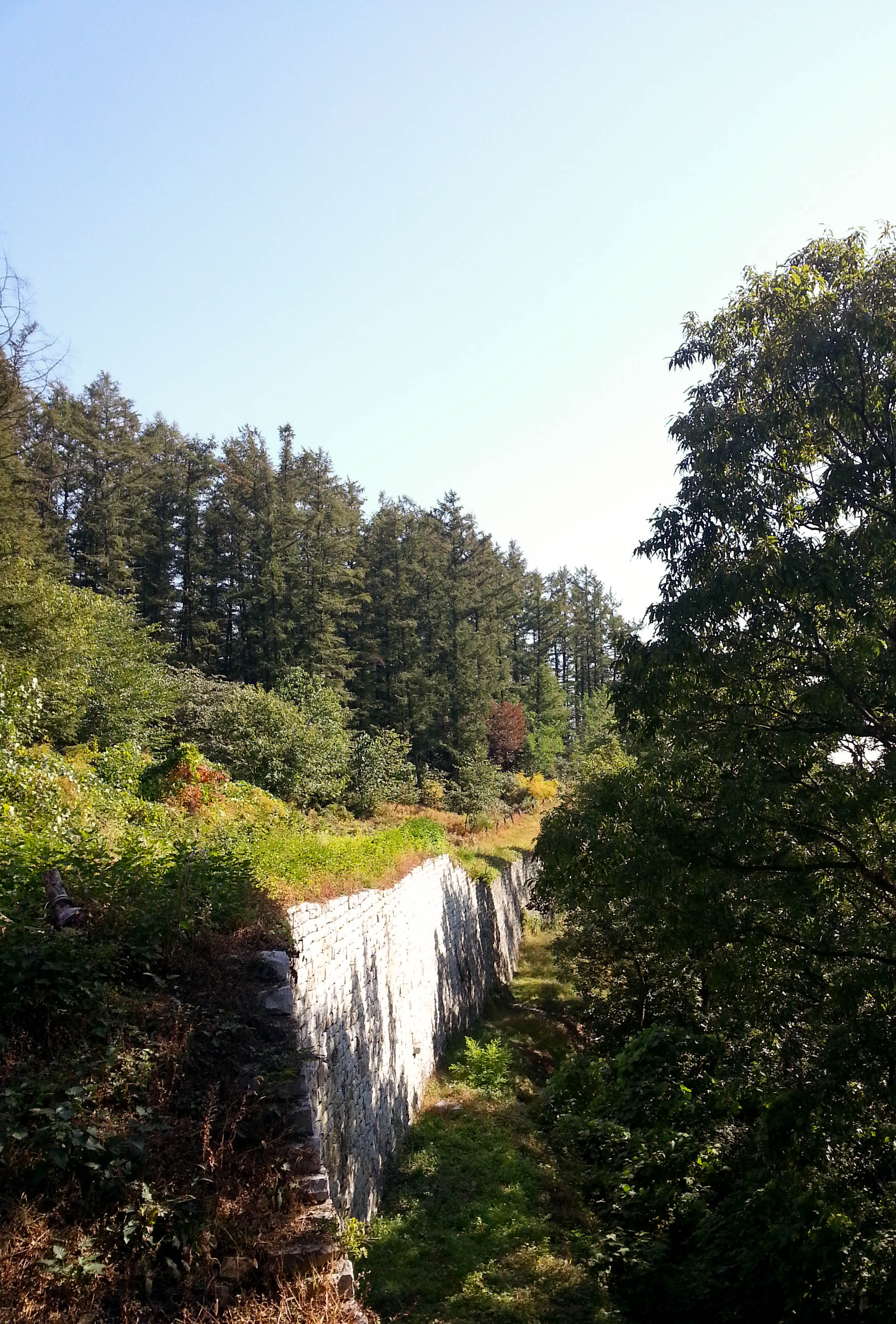
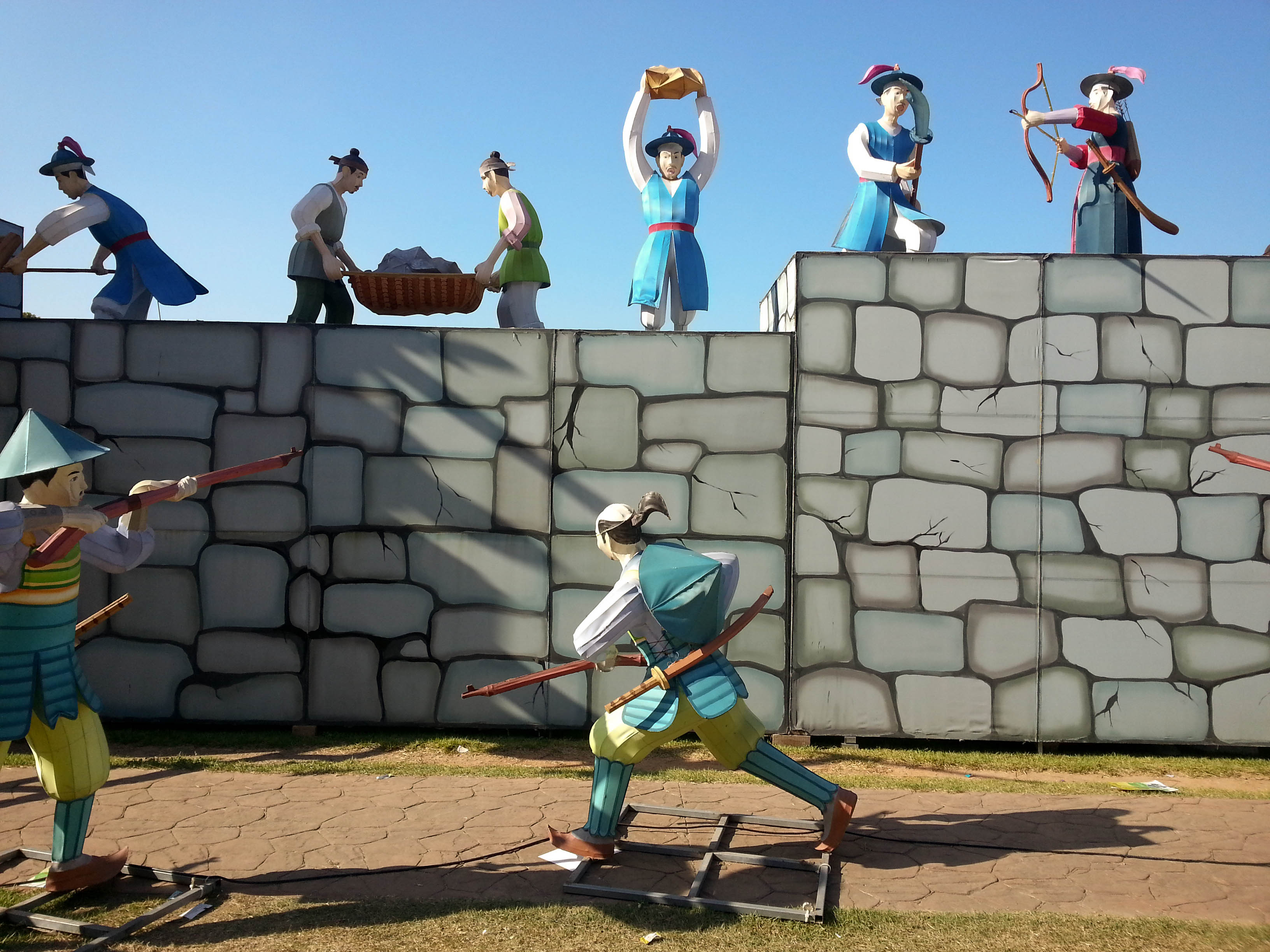
This is a fortress wall in Eumseong. It was originally built as an earthen fortification during the Three Kingdoms Period (4th-7th century). It was rebuilt with stone during the early Joseon Period in the 1500s.

This is a fortress wall in Eumseong that was originally built as an earthen fortification during the Three Kingdoms Period (4th-7th century). It was rebuilt with stone during the early Joseon Period in the 1500s.

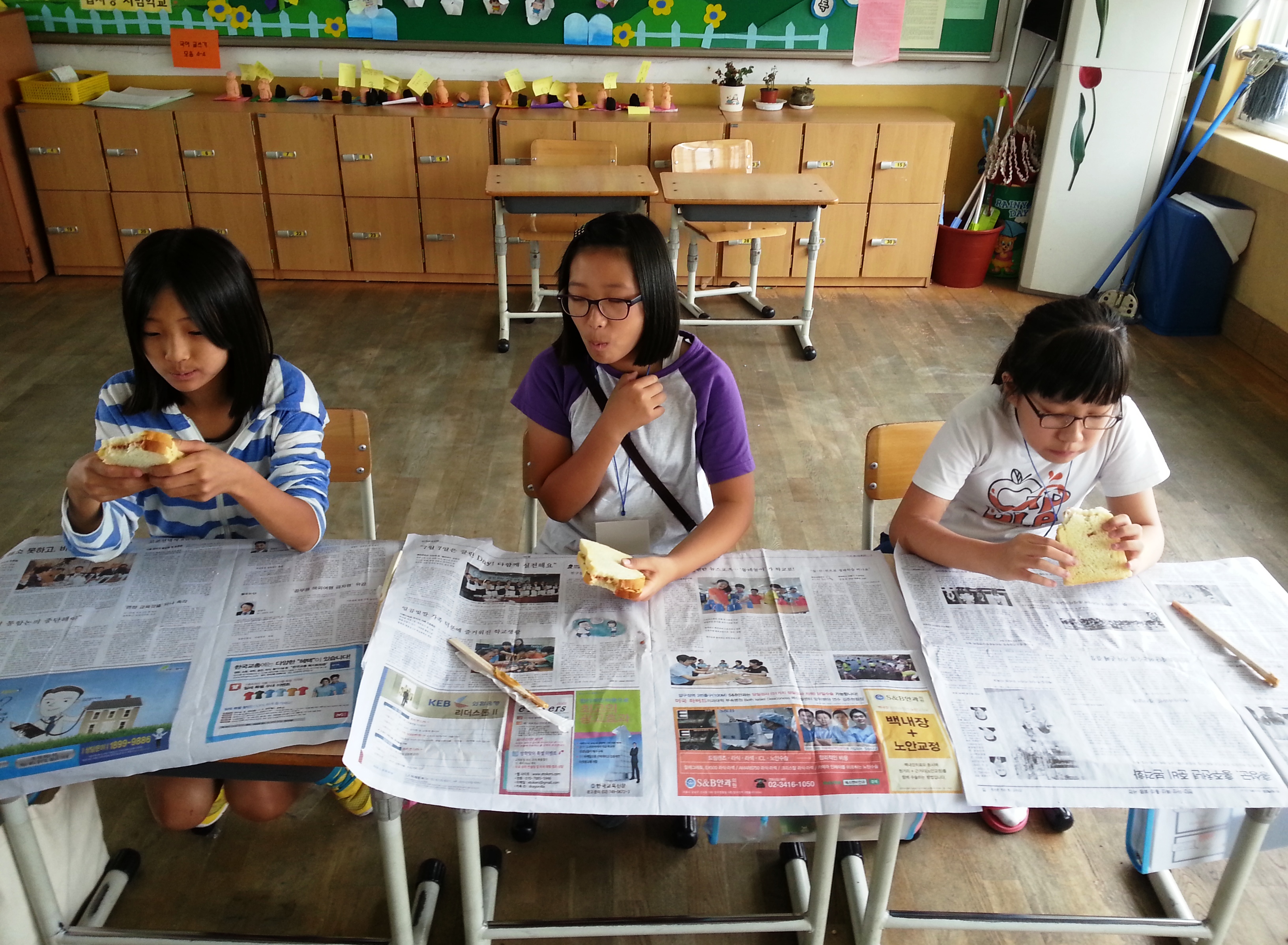
Flashback to summer camp when my students tried peanut butter and jelly sandwiches for the first time. They weren't quite sure what to think.

Flashback to summer camp when my students tried peanut butter and jelly sandwiches for the first time. They weren’t quite sure what to think.

These children are playing a traditional Korean game called tuho, where arrows or sticks are thrown into a canister. It is said to have originated in China and was played among royal and higher class families.

These children are playing a traditional Korean game called tuho, where arrows or sticks are thrown into a canister. It is said to have originated in China and was played among royal and higher class families.

Lanterns in the daylight at the Jinju Lantern Festival.

Lanterns in the daylight at the Jinju Lantern Festival.

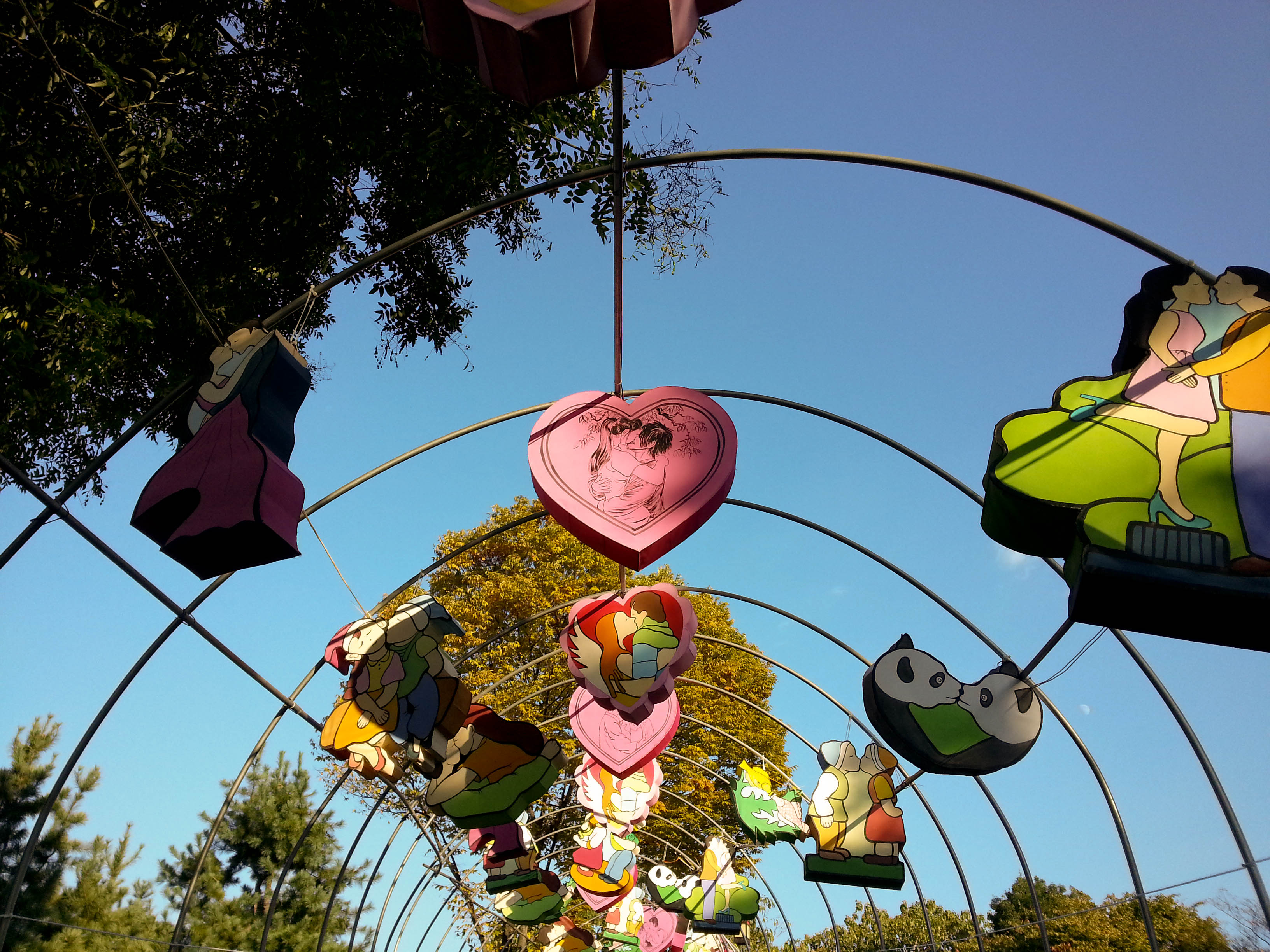
Tunnel of love at the Jinju Lantern Festival.

Tunnel of love in Jinju.

Lanterns at the Jinju Lantern Festival.

Handmade lanterns in Jinju.

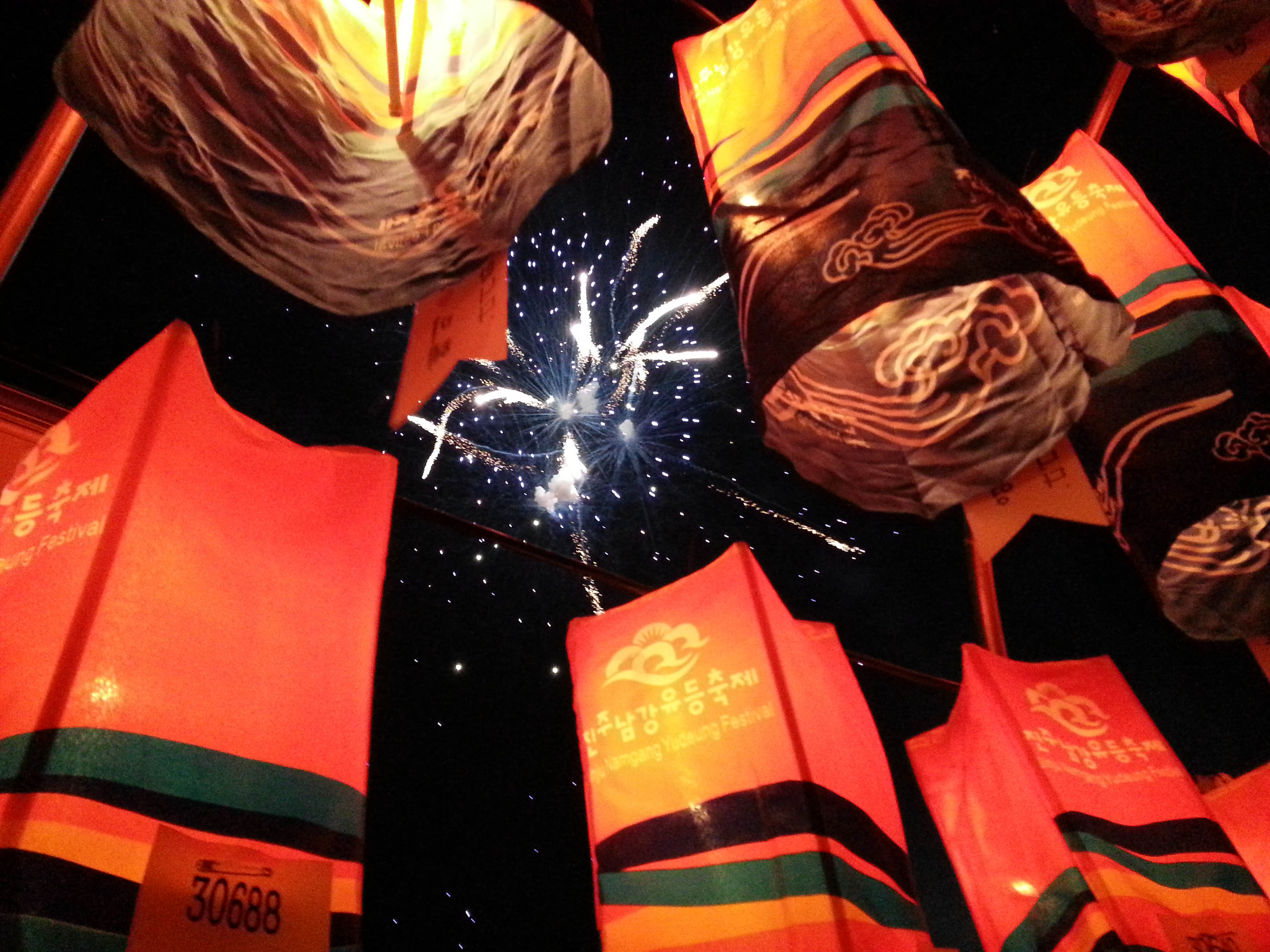
Lanterns and fireworks.

Fireworks at the Jinju Lantern Festival.

The staff at my small school has been playing volleyball against the staff at nearby schools on Wednesdays. Volleyball, like many events in Korea, is of course accompanied by food and alcohol. This happens at 3 in the afternoon when students are still at school. A little different that school activities back home.

The staff at my small school (myself included) have been playing volleyball against the staff at nearby schools on Wednesdays. Volleyball, like many events in Korea, is of course accompanied by food and alcohol. This happens at 3 in the afternoon when students are still at school. I can’t say that I’ve gotten used to it yet.

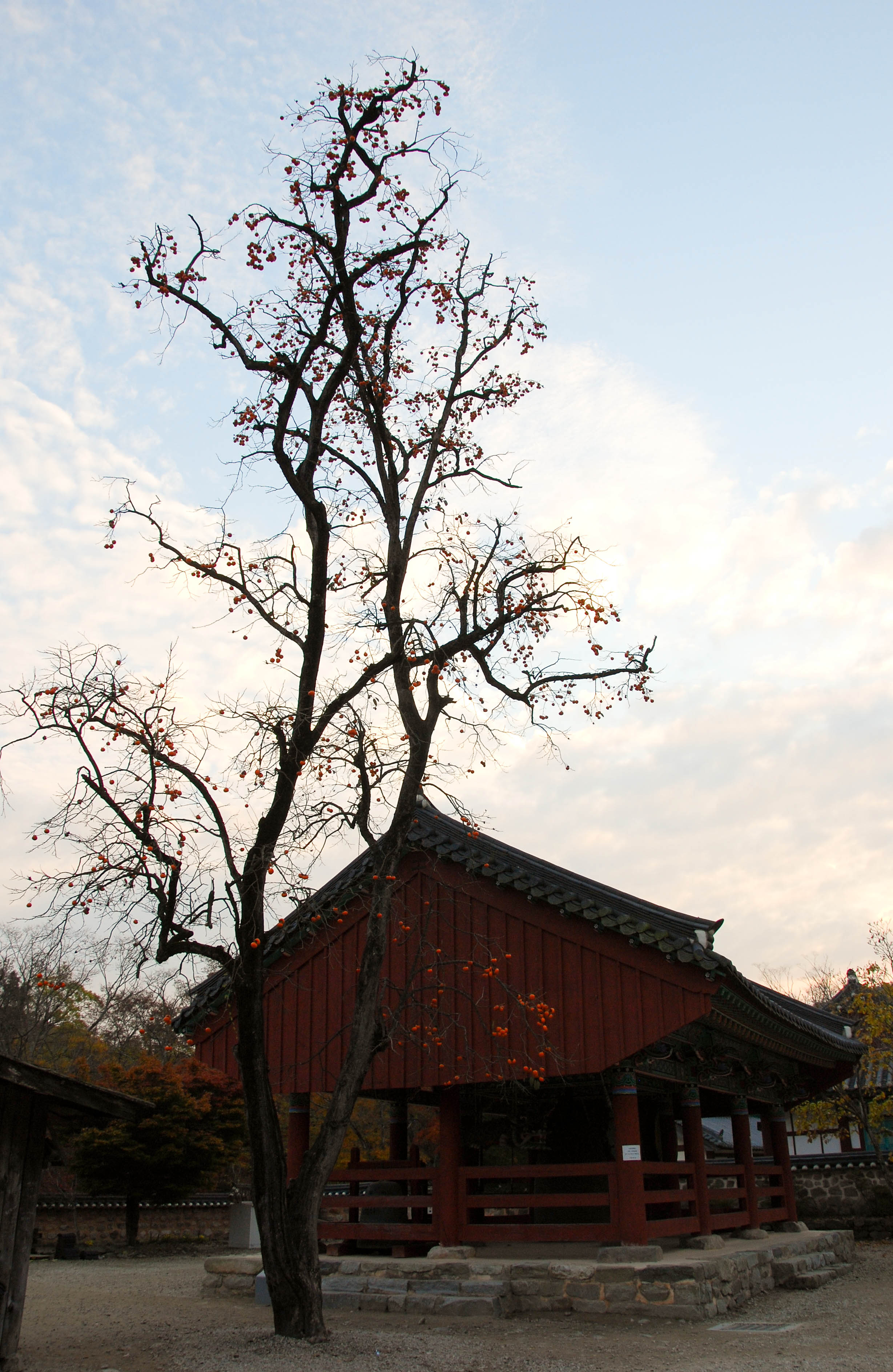
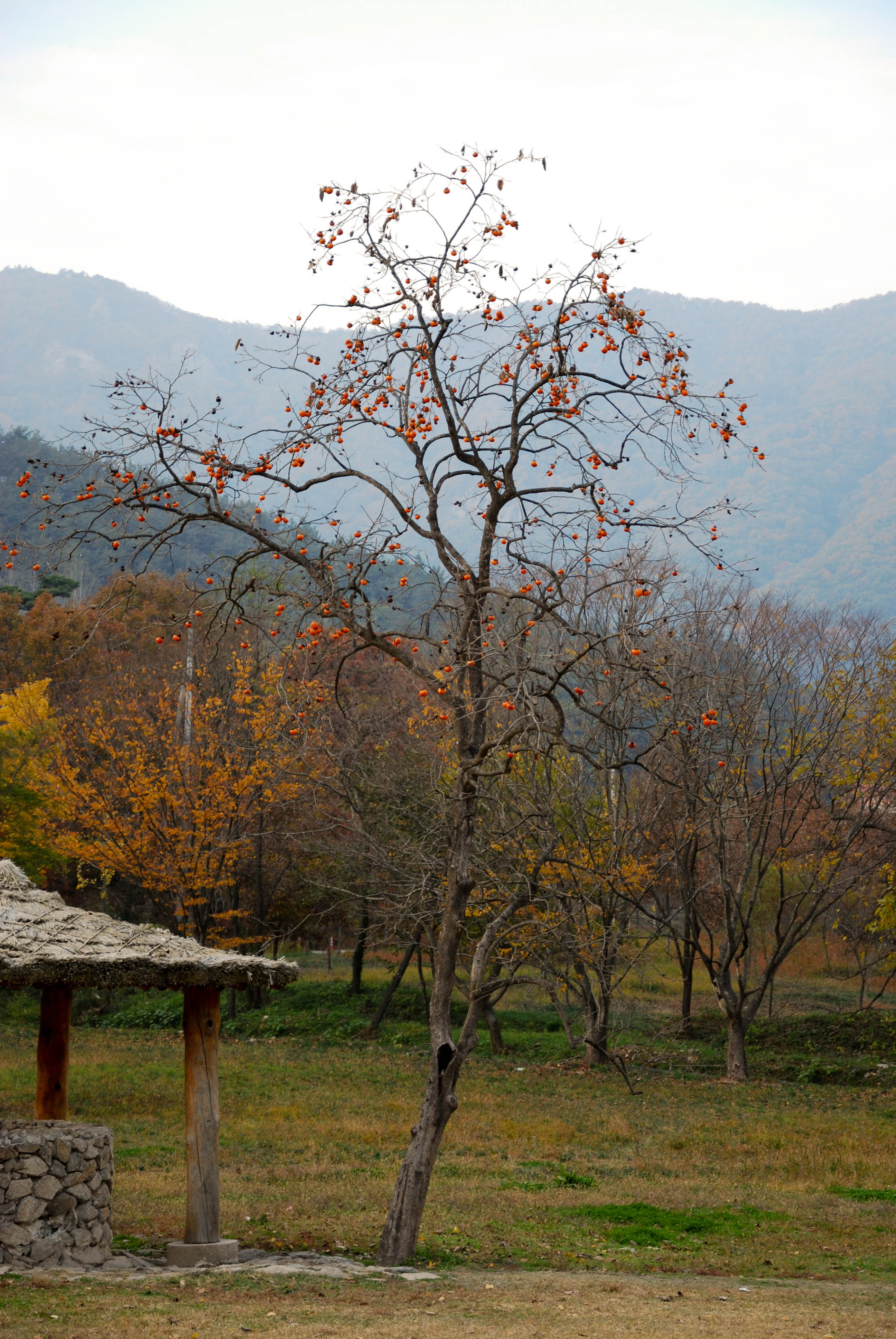
A persimmon tree

A persimmon tree at Seonunsa Temple.

Knowing my students like me puts a smile on my face.

Knowing my students like me puts a smile on my face.

The last of the leaves hang on for dear life.

The last of the leaves hang on for dear life.

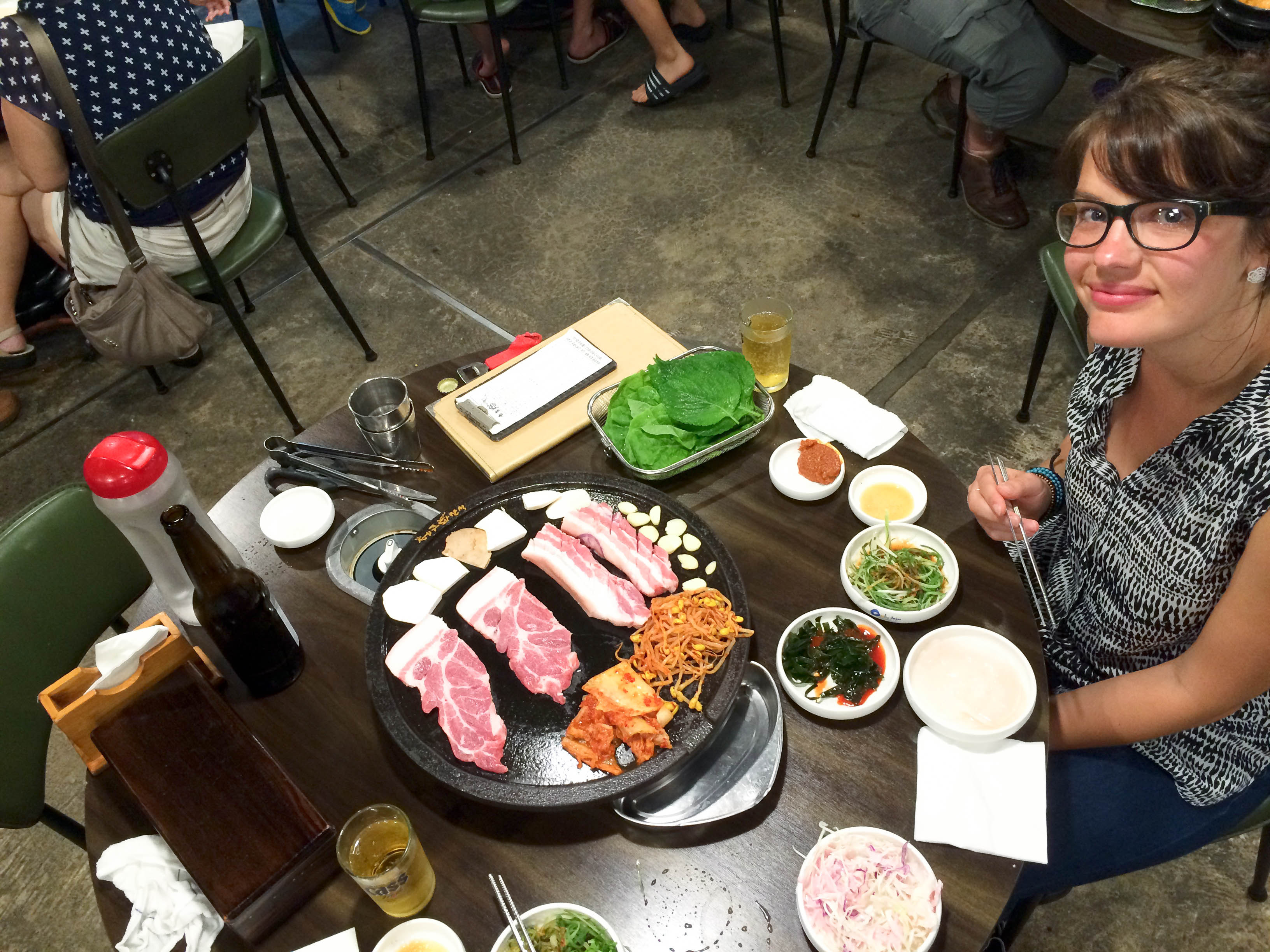
One of the things I love about Korea is the sense of community built around food and the interactivity that happens right at the dinner table.  Many meals are “family style” where dishes are shared and cooked on your tabletop.  Korean barbecue is one of those meals and one that I never get tired of.  Samgyeopsal, which is pork belly, is the quintessential cut of meat for Korean barbecue.  It’s ordered by the gram, usually 100-200 per person, and is brought to your table raw, unseasoned and un-marinated.  That may sound a bit boring, but once it starts sizzling on the gas or charcoal grill built into your table, you won’t be disappointed.

Samgyeopsal is always served with ssamjang (a thick dipping sauce made with red pepper paste and fermented soybean paste) and either a little bowl of course salt or a sesame oil and salt combination.  Once the pork is nice and crispy on the outside, I like to dip it in the two and wrap it up in a lettuce or perilla leaf which are also always served with samgyeopsal.  I also like to add garlic, cloves of which are grilled at your table alongside the pork.  Sometimes grilled kimchi is a nice addition as well.  Like all Korean meals, an array of banchan (side dishes) will be brought to your table along with the samgyeopsal, kimchi, garlic and lettuce.  Typically you’ll get a soup, pickled radish, onions, mushrooms, bean sprouts, and some marinated seaweed, among other things.  It varies from place to place, but they’re always free with your meal and refillable at no extra cost.

Usually one person in your dinner party takes charge of the grill at your table.  I’ve had a few different experiences in terms of how much the staff help out, however.  The first time David came to visit I was so excited to share a traditional Korean barbecue meal with him, but we were both disappointed when the woman working there wouldn’t leave our table.  She just stood there, manning the grill until all the meat was cooked (at the time I was still fairly new to Korea and didn’t know how to politely ask her to leave and let us grill our own meat).  That is the only time I’ve had the staff babysit the grill like that, though.  Most of the time they leave you to do it on your own, or they might step in and flip your meat over if they see you’ve left it too long on one side.  Either way, if you feel like you do need help or a refill of some sort, you can call the staff over by simply pushing a button at your table.

I suppose some people might not enjoy the aspect of cooking your own food at a restaurant.  Isn’t not having to do the cooking the point of going out for dinner?  For some, maybe.  I happen to love the communal, interactive dining experience, and the fact that I don’t have to wash any of the dishes afterwards makes it even better.

A Korean barbecue experience with samgyeopsal.

A Korean barbecue experience with samgyeopsal.

When ordering samgyeopsal, it's served raw for you took cook on the grill at your table.

When ordering samgyeopsal, it’s served raw for you took cook on the grill at your table.

This not a picture of samgyeopsal, it's beef, but it's cooked and consumed in the same way samgyeopsal is. Notice she's using scissors to cut the meat. Scissors are knives in Korea.

This not a picture of samgyeopsal, it’s beef, but it’s cooked and consumed in the same way samgyeopsal is. Notice she’s using scissors to cut the meat. Scissors are knives in Korea.

Korean barbecue usually goes hand in hand with soju and beer. Soju is a distilled, vodka-like liquor that is usually made from rice, and a 375ml bottle only costs $1-3.

Korean barbecue typically goes hand in hand with soju and beer. Soju is a distilled, vodka-like liquor that is usually made from rice, and a 375ml bottle only costs $1-3.

A perfectly crisp piece of samgyeopsal.

A perfectly crisp piece of samgyeopsal.

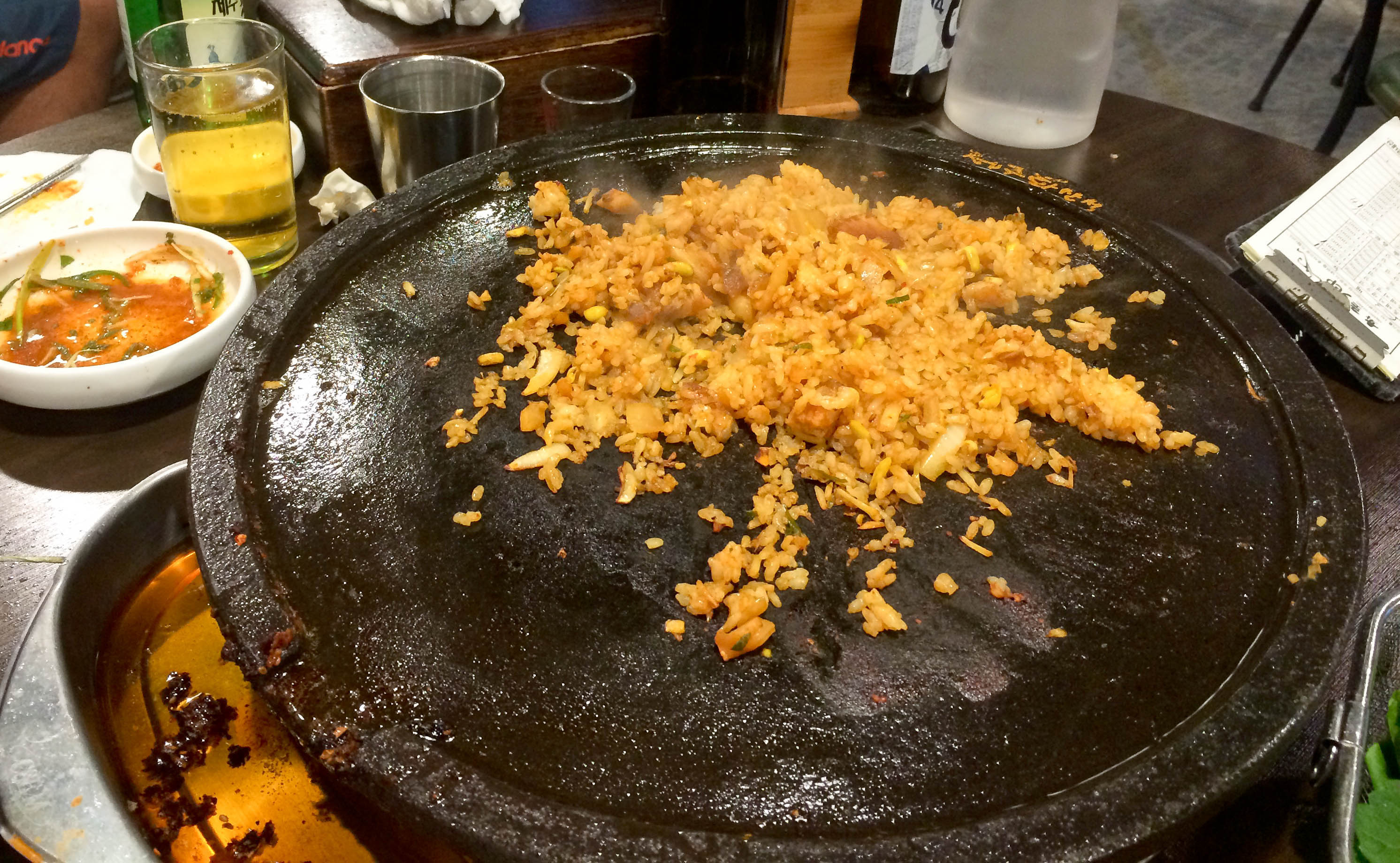
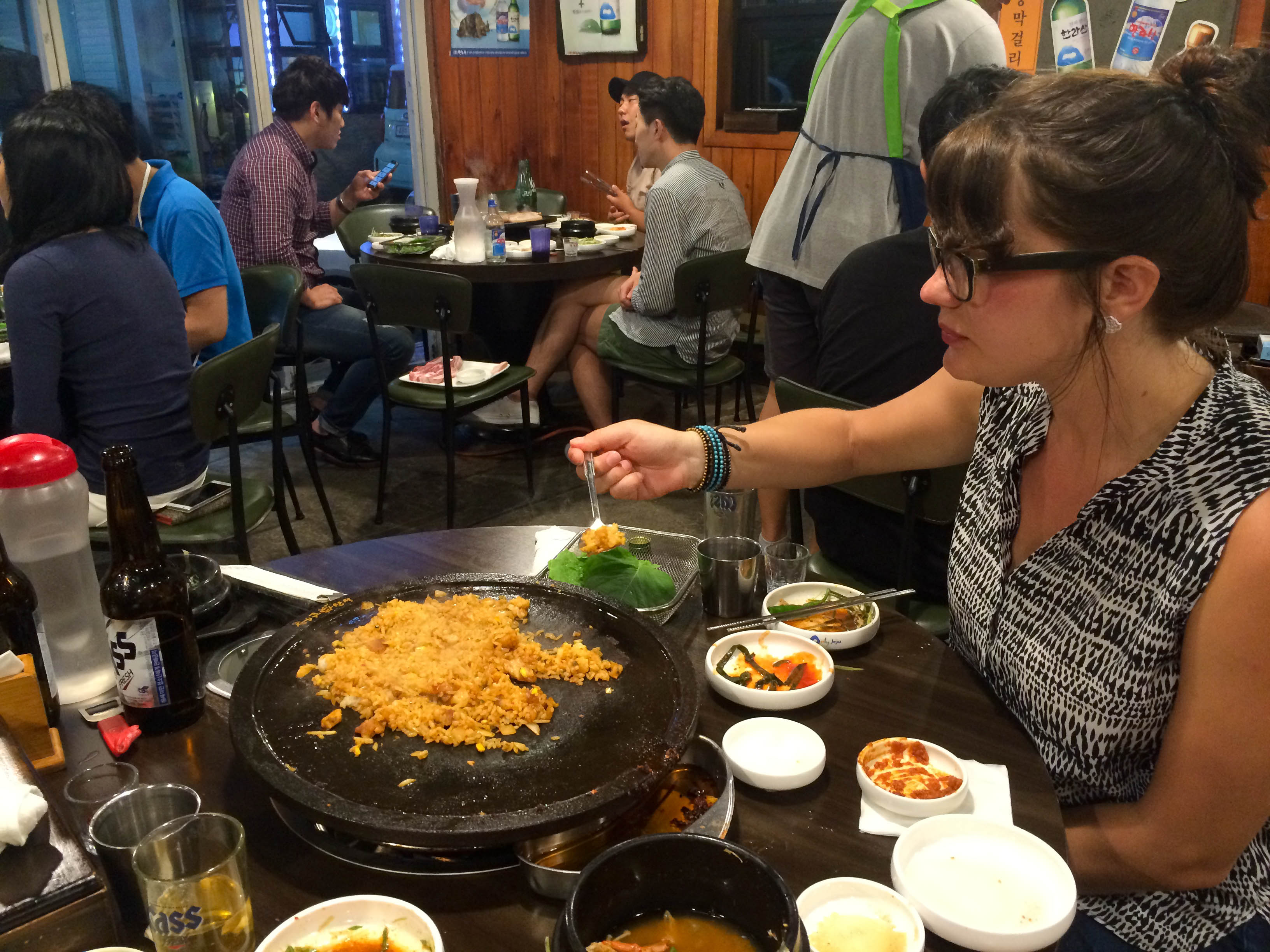
Depending on the type of grill at the restaurant, you can order rice to be fried up with the lefter bits and pieces of meat, kimchi and garlic. It's so good!

Depending on the type of grill at the restaurant, you can order rice to be fried up with the leftover bits and pieces of meat, kimchi and garlic. It’s so good!

It’s no surprise hiking is really popular in Korea considering 70 percent of the country is comprised of mountains.  There are 21 national parks in South Korea, which seems like a lot considering the country is the size of Indiana. Jirisan was the first to be designated in 1967, and the Korea National Park Service was established in 1987.  Knowing the park service was formed in 1916 in the United States, it’s a relatively new concept here in Korea.  From what I’ve seen so far, the KNPS does an excellent job of maintaining them.

While I’ve only been to three of the national parks so far, there are several things I’ve observed each time I’ve gone hiking.  One of the first things I noticed was not about the mountains or trails themselves, but the hikers.  I have yet to see a Korean on a hiking trail that isn’t decked out in the latest brightly colored hiking gear, head to toe, with matching backpacks and trekking poles.  The difficulty of the hike doesn’t seem to matter, it’s all about the gear.  Appearance is a really big part of Korean culture, so this isn’t shocking, but I’m still amazed by how much time and money they seem to put into their hiking outfits.  This explains why there are so many outdoor apparel shops throughout Korea.

The first time I went hiking in Korea I wondered why I saw so many people carrying 50+ liter backpacks on a day hike. Then I reached the summit and discovered clumps of people scattered about, all huddling around gigantic spreads of food, rice wine and soju.  I’ve learned that hiking in this country is not complete without a feast on the mountain.  I assume this is why there are so many “rest stops” along trails that are basically roadside restaurants, just in case you didn’t bring enough food or drink with you.  My peanut butter and jelly sandwich and bag of apple slices seemed quite pathetic after seeing so many elaborate mountaintop picnics.  The food lover in me really likes this aspect of hiking in Korea.

As a native Coloradoan and former resident of Washington, I can say the mountains in Korea seem a little puny in comparison to 14,000 foot peaks.  However, I don’t think Korea knows about the secret of switchbacks.  They prefer to just plow straight up the mountain making many of the hikes here a bit strenuous.  This is where I should mention the majority of hikers I see here are older.  And by that I mean it’s rare to see people under 40 taking pleasure in day hiking (not that 40 is old, but I’ve hardly seen anyone in their 20s or 30s on the trails here, unlike what I’m used to seeing back home).

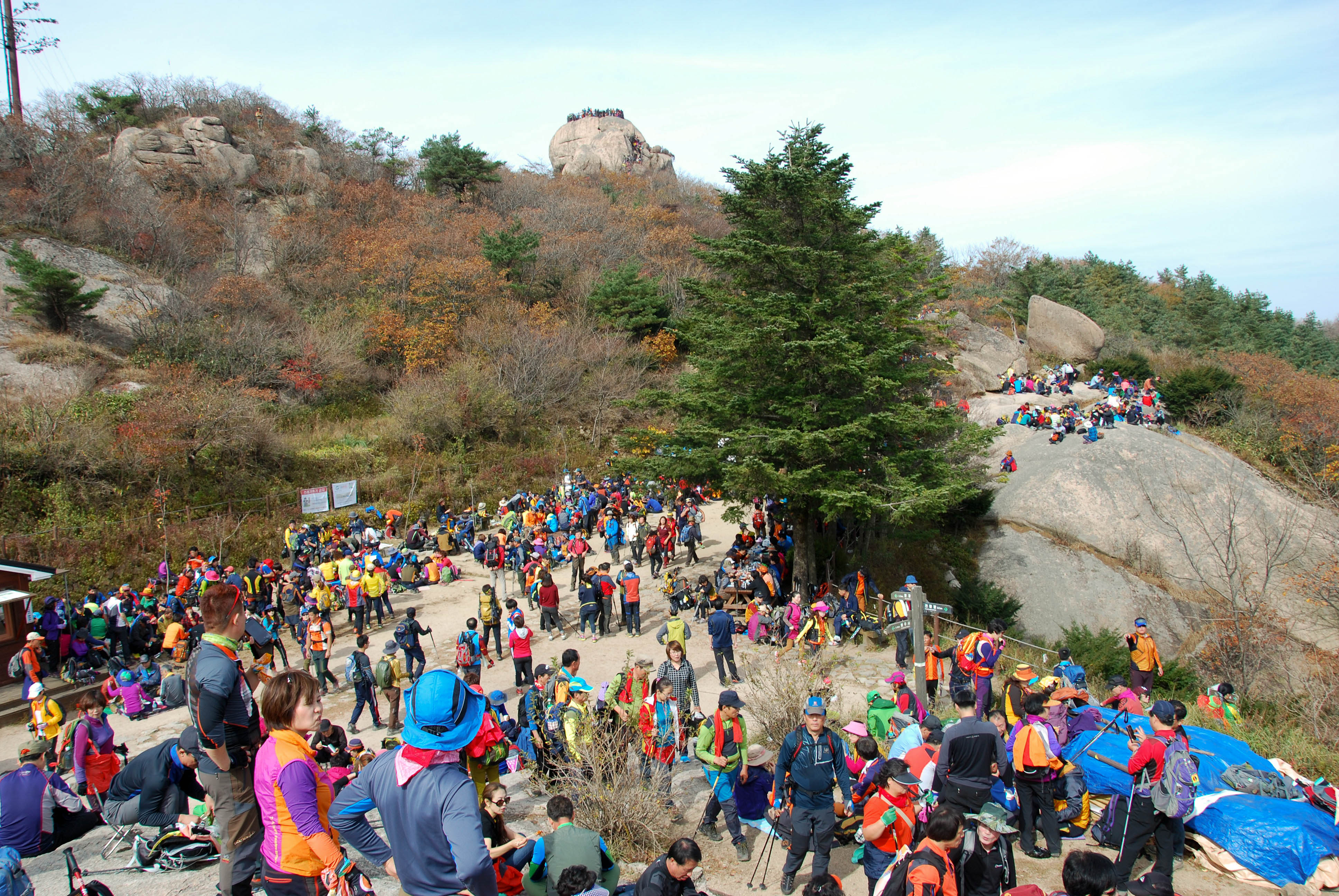
Claustrophobic is not a term I ever thought I would associate with hiking.  That is, until I went on a few fall hikes in Korea.  There have been times when the trail has been so crowded there’s been no where to go and no way to get around all of the people.  I have actually been pushed and shoved on crowded trails here, and I have had to wait in line to finish hiking the last half kilometer to the summit because there are so many people.  I’ve also nearly had my eye poked out more than once by other people’s trekking poles while trying to navigate through what I decided to call hiking jams.  It’s great to see so many people being active and taking advantage of the outdoors, but didn’t we all come here to escape the hustle and bustle of the city, to listen to the trees blow in the wind, to be quiet with nature and our own thoughts?  There have been a few instances where I’ve felt just as stressed about being on a mountain side as I have in an overly packed subway car.  Perhaps I’ve just chosen the most popular trails during the most popular hiking season a few too many times.  I also rely on public transit to get me places, making it harder to access spots that are a little more off the beaten path.  Thankfully, not all of my hiking experiences have been this way, but more than I’d like have been.

In the end, no matter how crowded the trail is or how under-dressed I feel, no matter how big or small the mountain is, it always feels good to conquer it.  I hope to climb a few more before before my time in Korea comes to an end.

A crowded day on Munjangdae Peak in Songnisan National Park. The highest point of this peak is off in the distance where you can see a line of hikers.

A crowded day at Munjangdae Peak in Songnisan National Park.

Hikers feasting in Songnisan National Park.

Hikers feasting in Songnisan National Park.

Extreme picnicking,

Extreme picnicking.

A rest stop in the middle of a trail on a quiet day in Songnisan National Park.

A rest stop in the middle of a trail on a quiet day in Songnisan National Park.

Day hikers making their way up to eat and drink on the mountaintop.

Day hikers making their way up to eat and drink on the mountaintop.

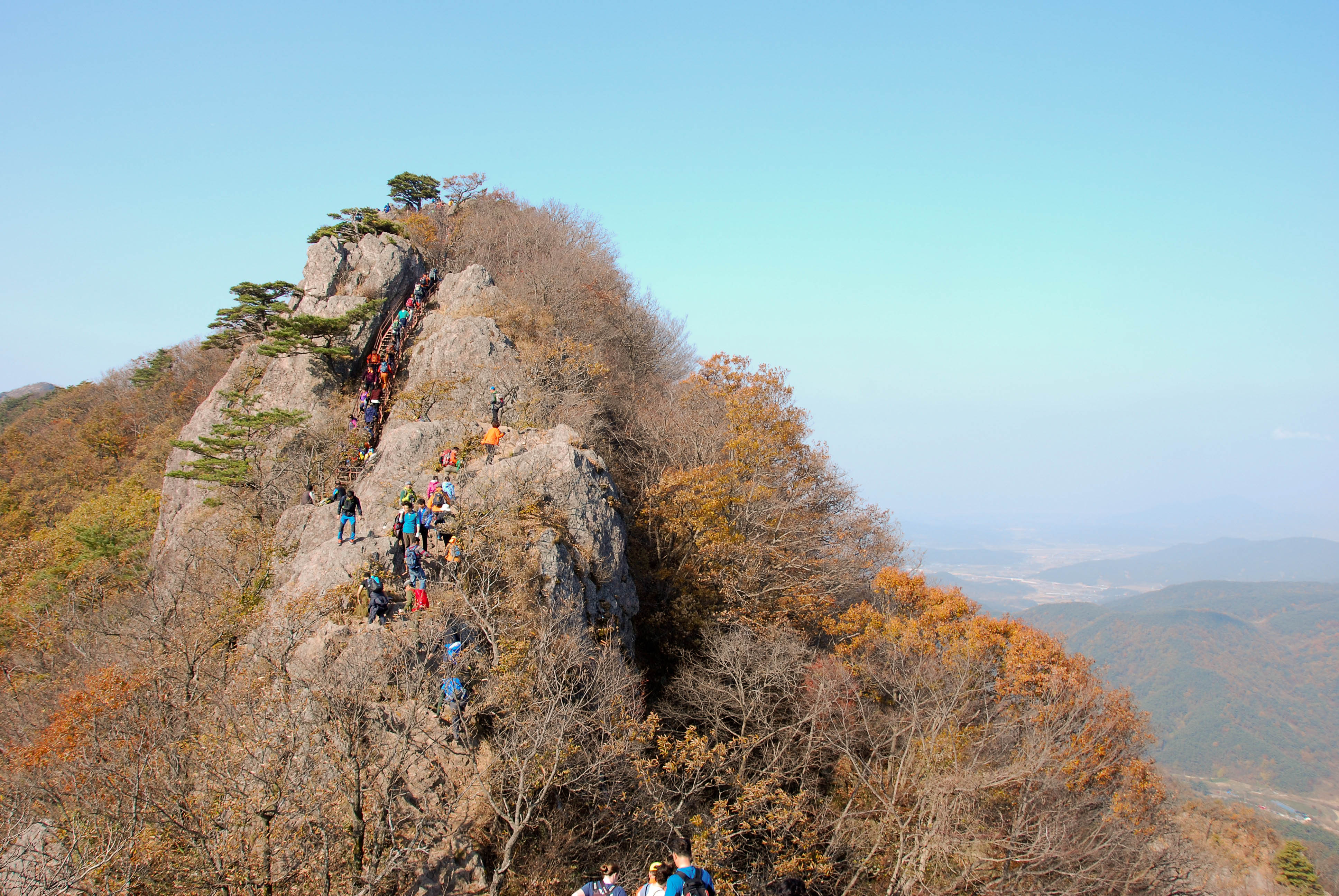
Another crowded day of hiking, this time at Naejangsan National Park.

Another crowded day of hiking, this time in Naejangsan National Park.

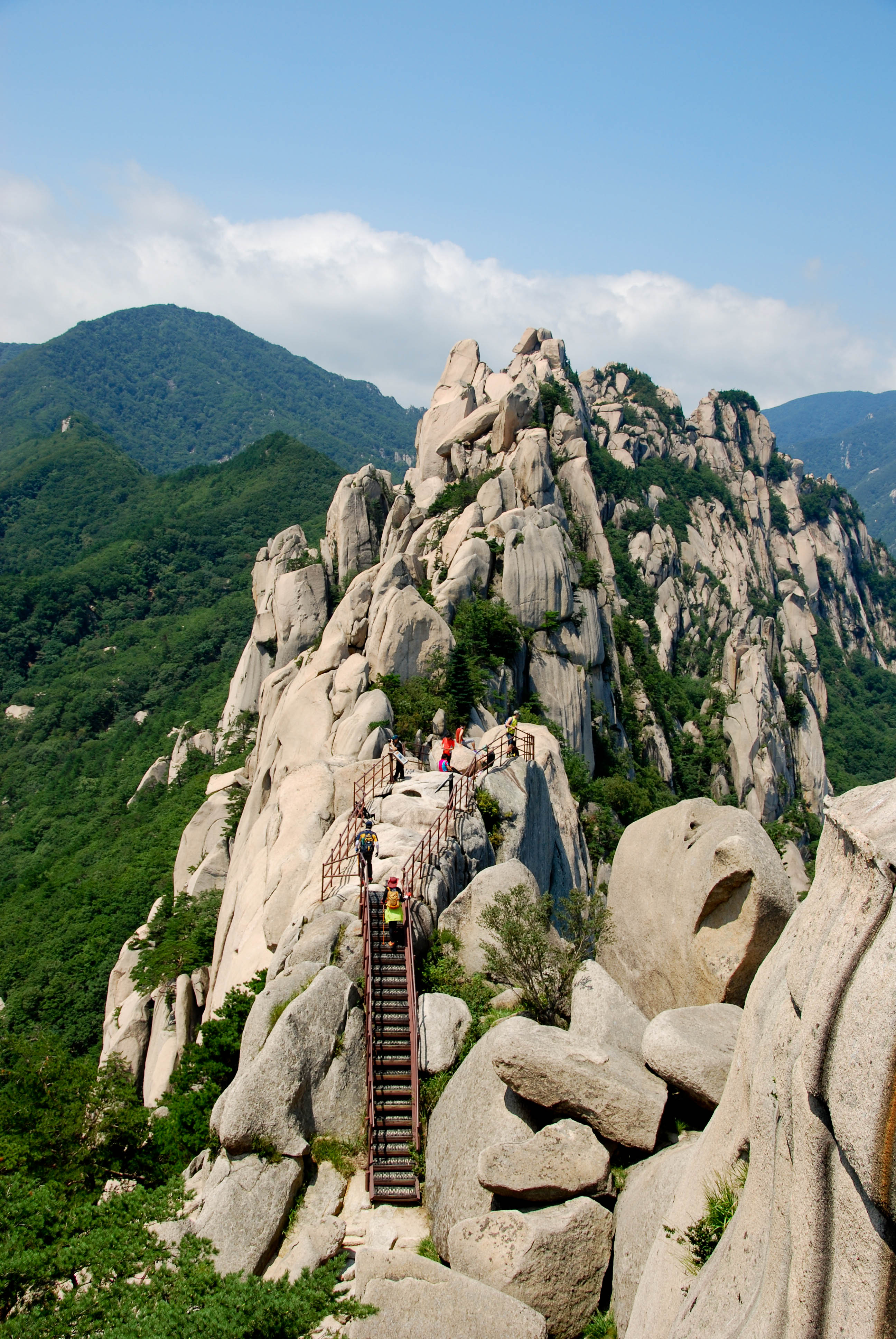
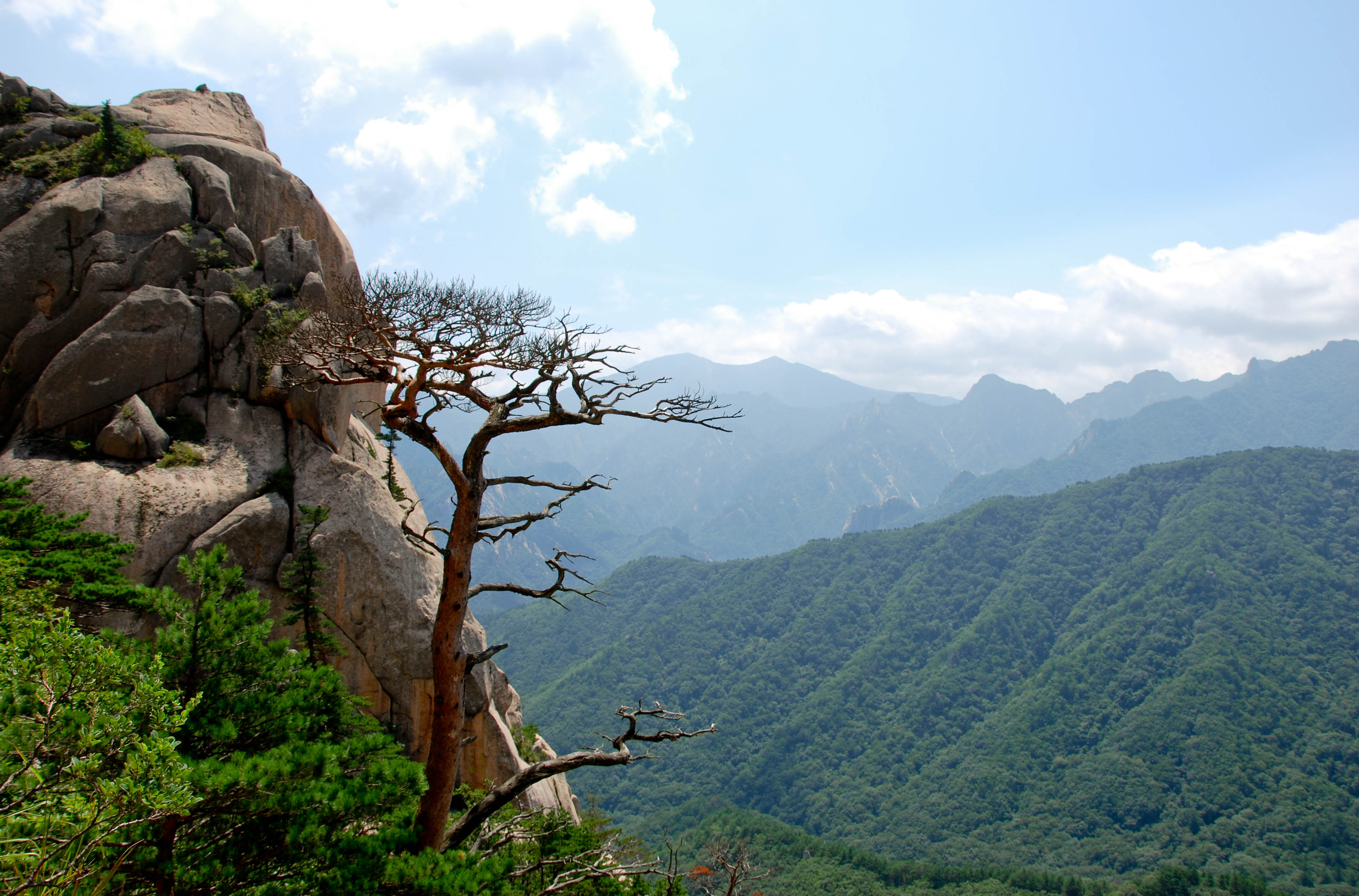
Several peaks I've hiked have ended with stairs leading to the top of a rock. This is in Seoraksan National Park.

Several peaks I’ve hiked here have ended with stairs leading to the top of a rock. This is in Seoraksan National Park.

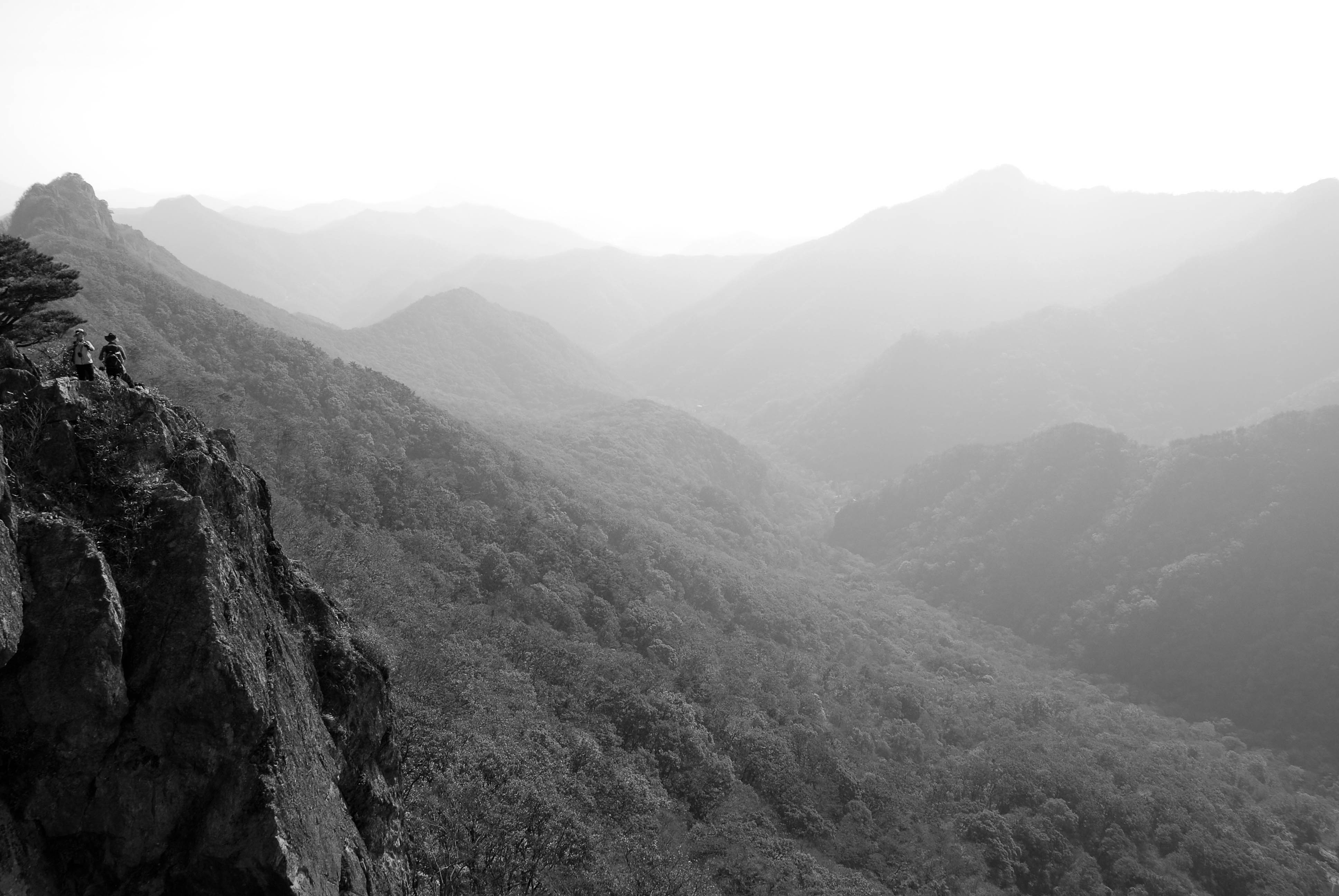
Bulchubong Peak, Naejangsan National Park

Bulchubong Peak, Naejangsan National Park

Seoraksan National Park

Seoraksan National Park

Naejangsan National Park

Naejangsan National Park


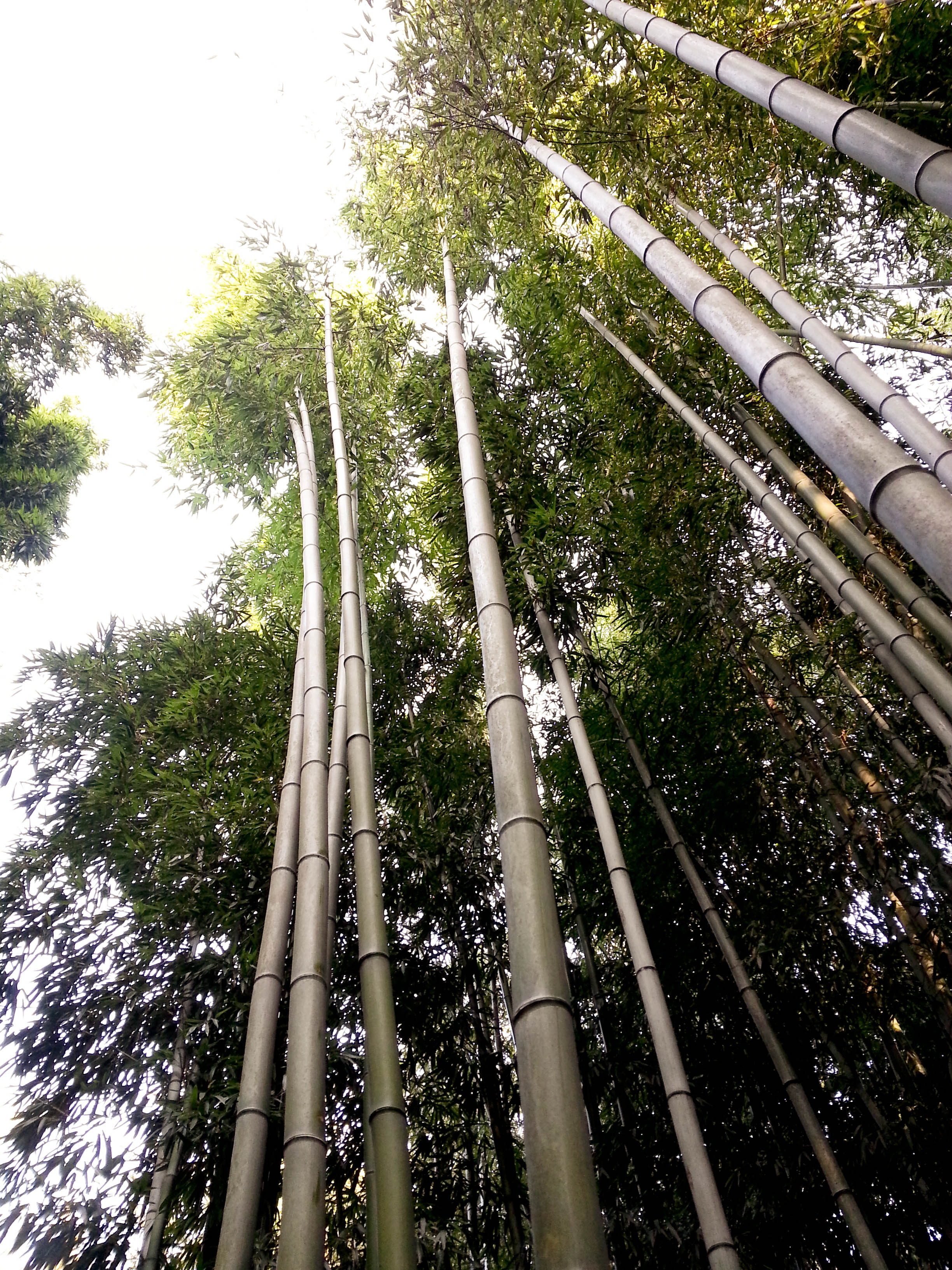
Walking through a bamboo forest in Damyang.

Walking through a bamboo forest in Damyang.

This woman is making one of my favorite Korean street food snacks called hotteok. It's a pancake filled with brown sugar or honey and cinnamon. This is a special kind of hotteok made with bamboo which is why it's slightly green.

This woman is making one of my favorite Korean street food snacks called hotteok. It’s a pancake filled with brown sugar (or sometimes honey) and cinnamon. This is a special kind of hotteok made with bamboo which is why it’s slightly green.

David and the South Sea, Jeju Island

David and the South Sea, Jeju Island

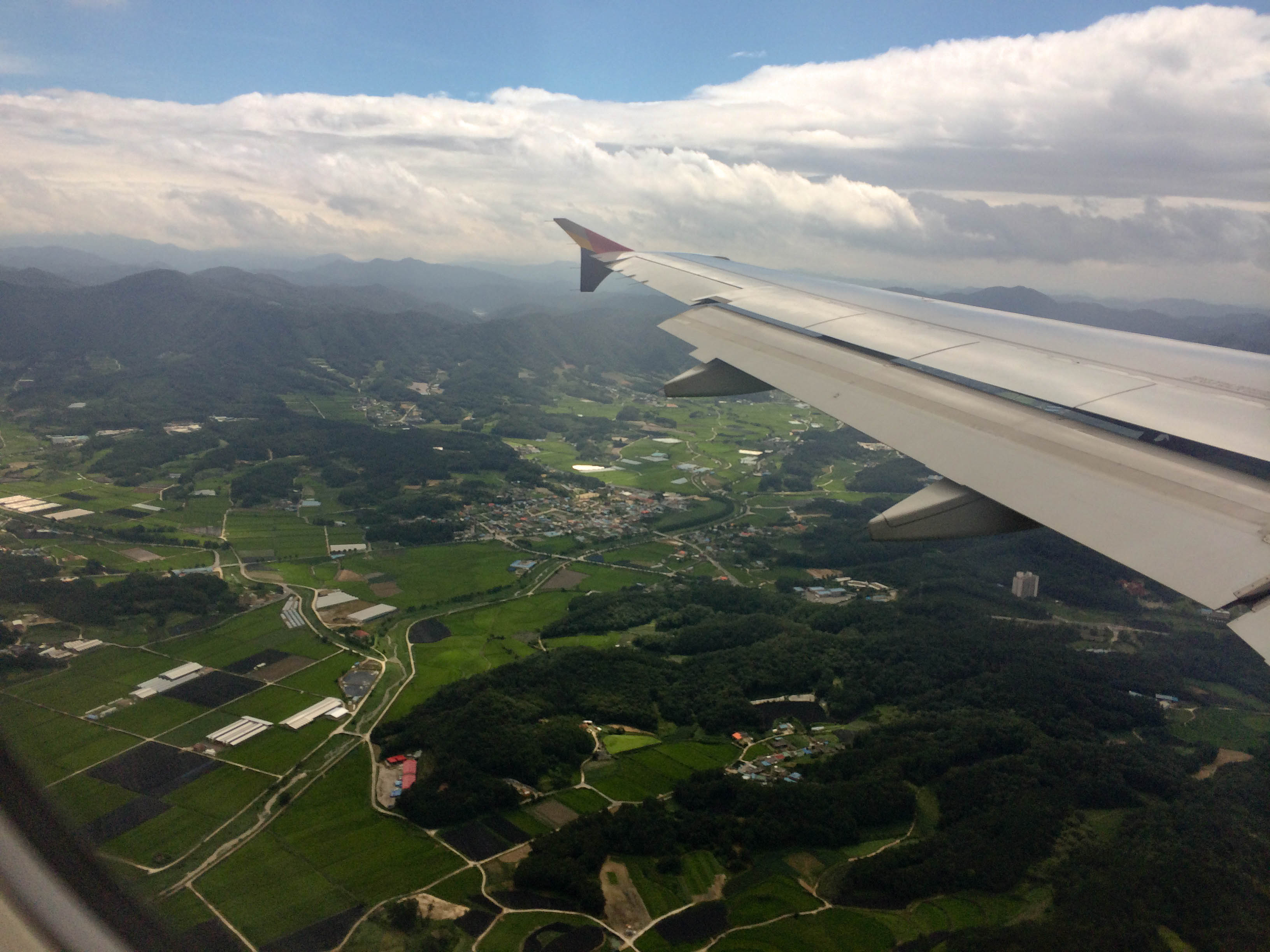
View of Chungbuk, the province I live in, from the air. This was on the flight from Jeju Island to Cheongju.

View of Chungbuk, the province I live in, from the air. This was on the flight from Jeju Island to Cheongju.

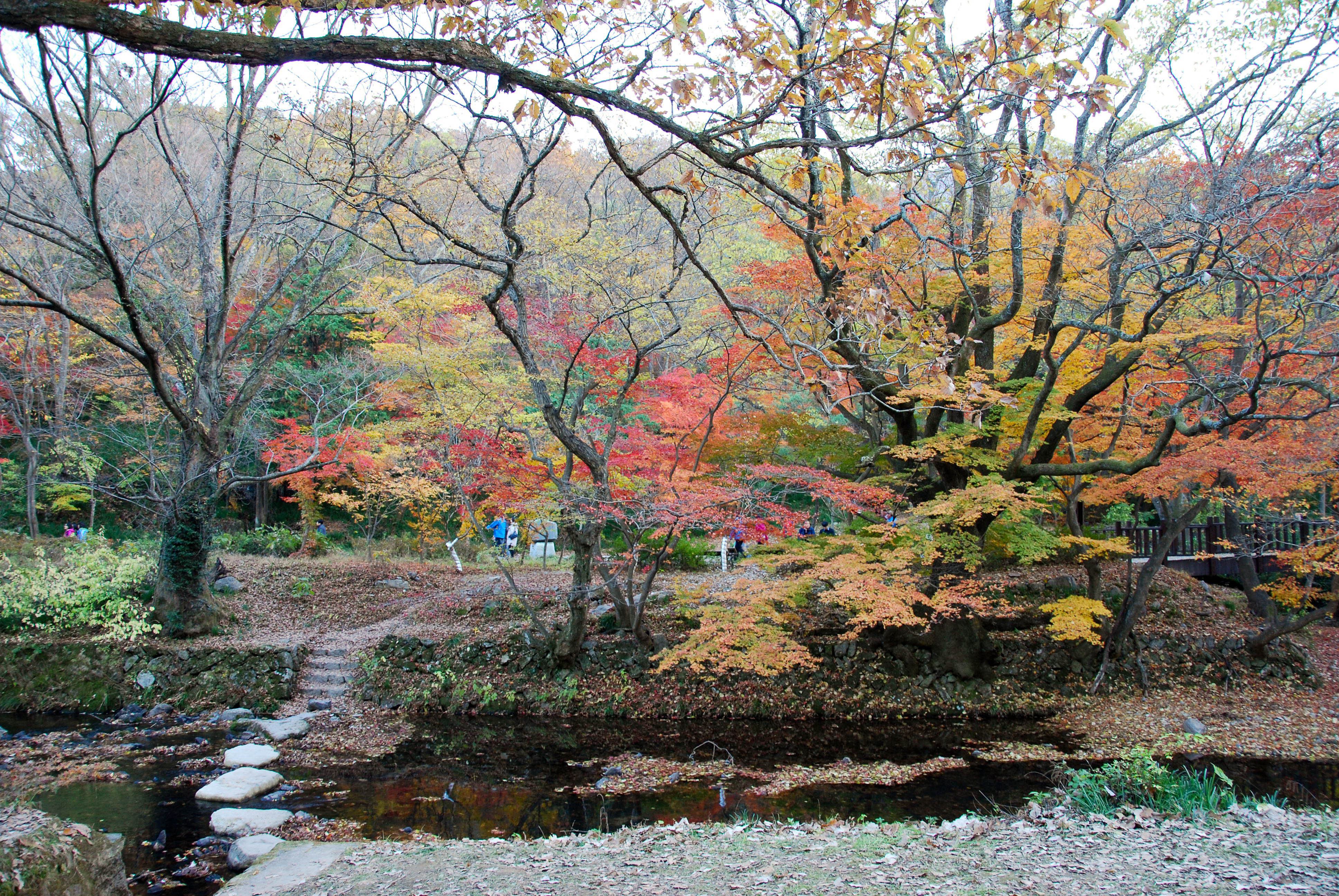
A burst of color at Naejangsan National Park.

A burst of color at Naejangsan National Park.

Fall hiking in Naejangsan National Park.

Fall hiking in Naejangsan National Park.

A fall stroll through Seonunsan Provincial Park.

Strolling through Seonunsan Provincial Park.

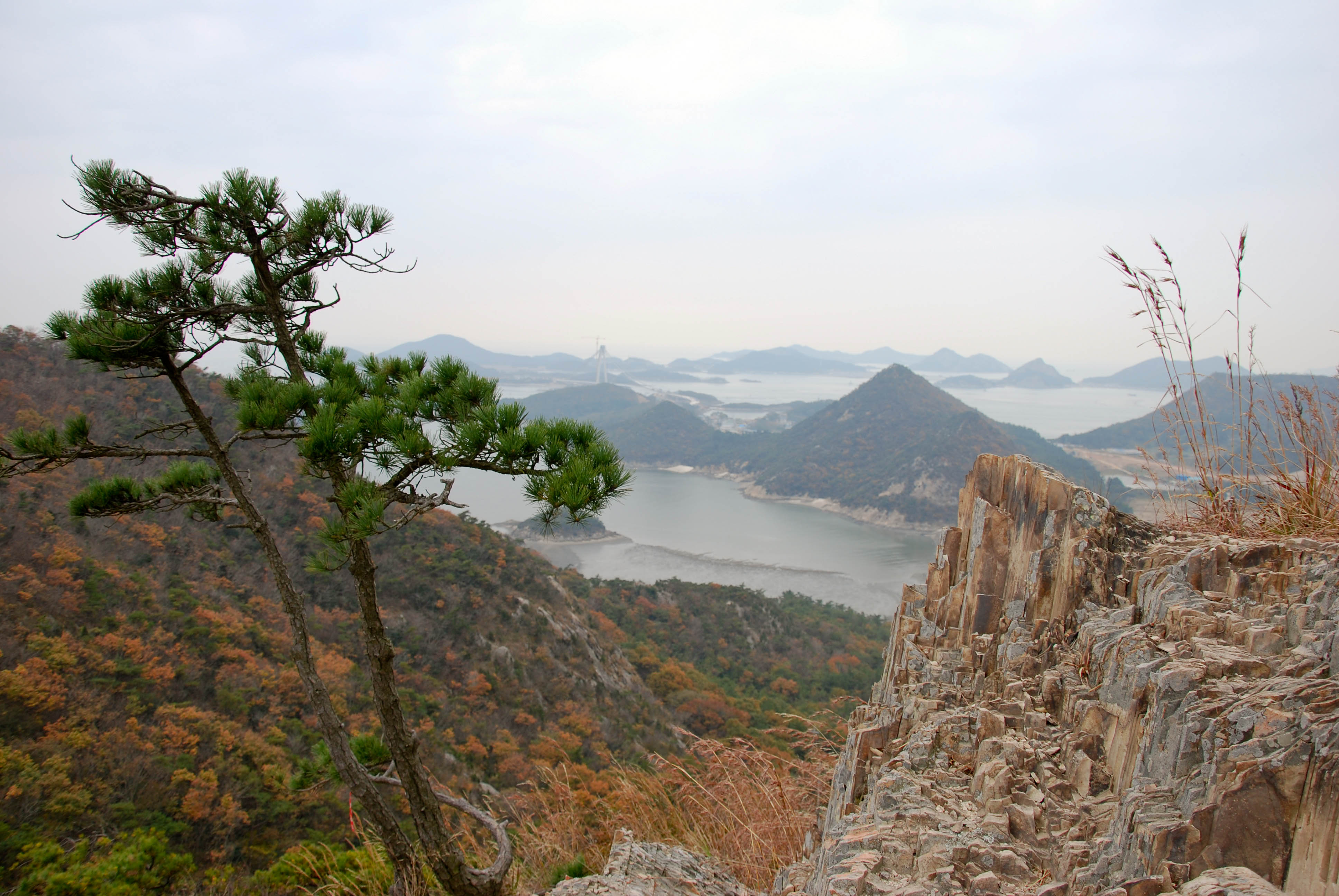
Sinsido Island, looking out towards the West Sea (aka Yellow Sea).

Sinsido Island, looking out towards the West Sea (aka Yellow Sea).

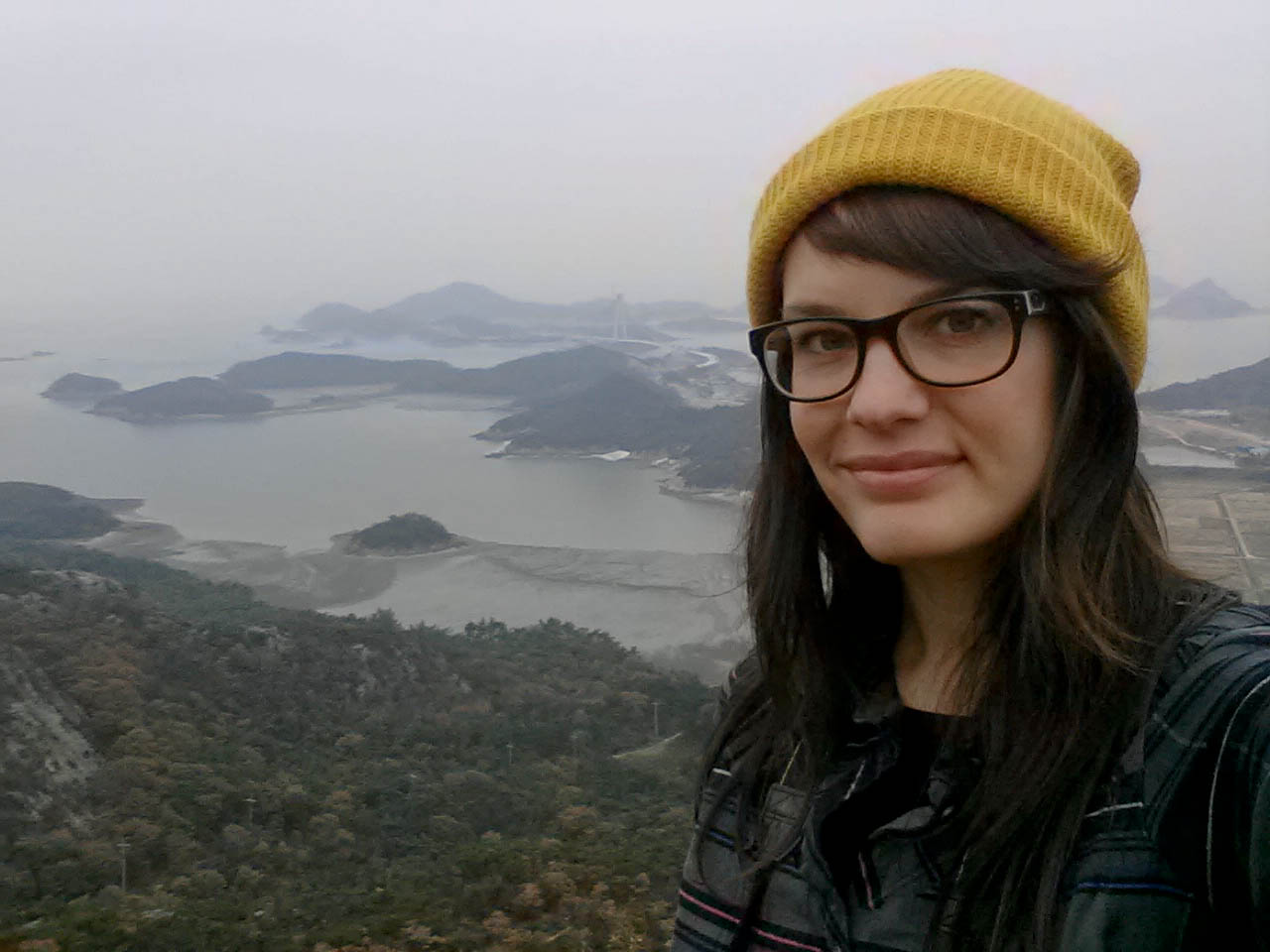
Sneaking in a selfie on a Sinsido Island hike.

Sneaking in a selfie on a Sinsido Island hike.

A persimmon tree in Seonunsan Provincial Park. I had no idea these trees were so talll! I also hadn't ever tried a persimmon until recently. They're really sweet and delicious.

A persimmon tree in Seonunsan. I had no idea these trees were so talll! I also hadn’t ever tried a persimmon until recently. They’re really sweet and delicious.

More fall colors at Seonunsan Provincial Park.

More fall colors at Seonunsan Provincial Park.

Grilled eel which I ate wrapped in a perilla leaf with rice and garlic. So good.

Grilled eel which I ate wrapped in a perilla leaf with rice and garlic. So good!

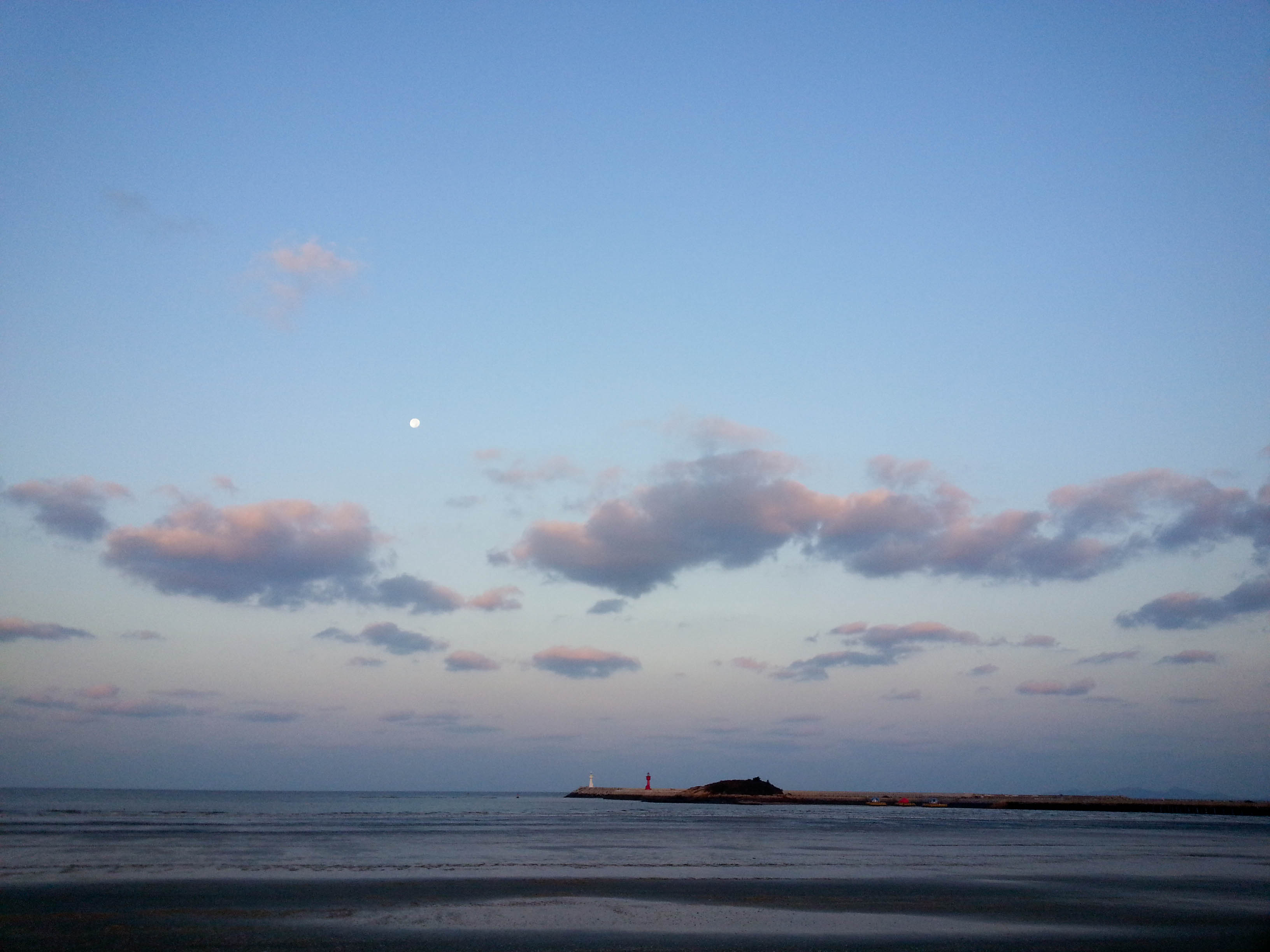
Early morning at Gusipo Beach.

Early morning at Gusipo Beach.

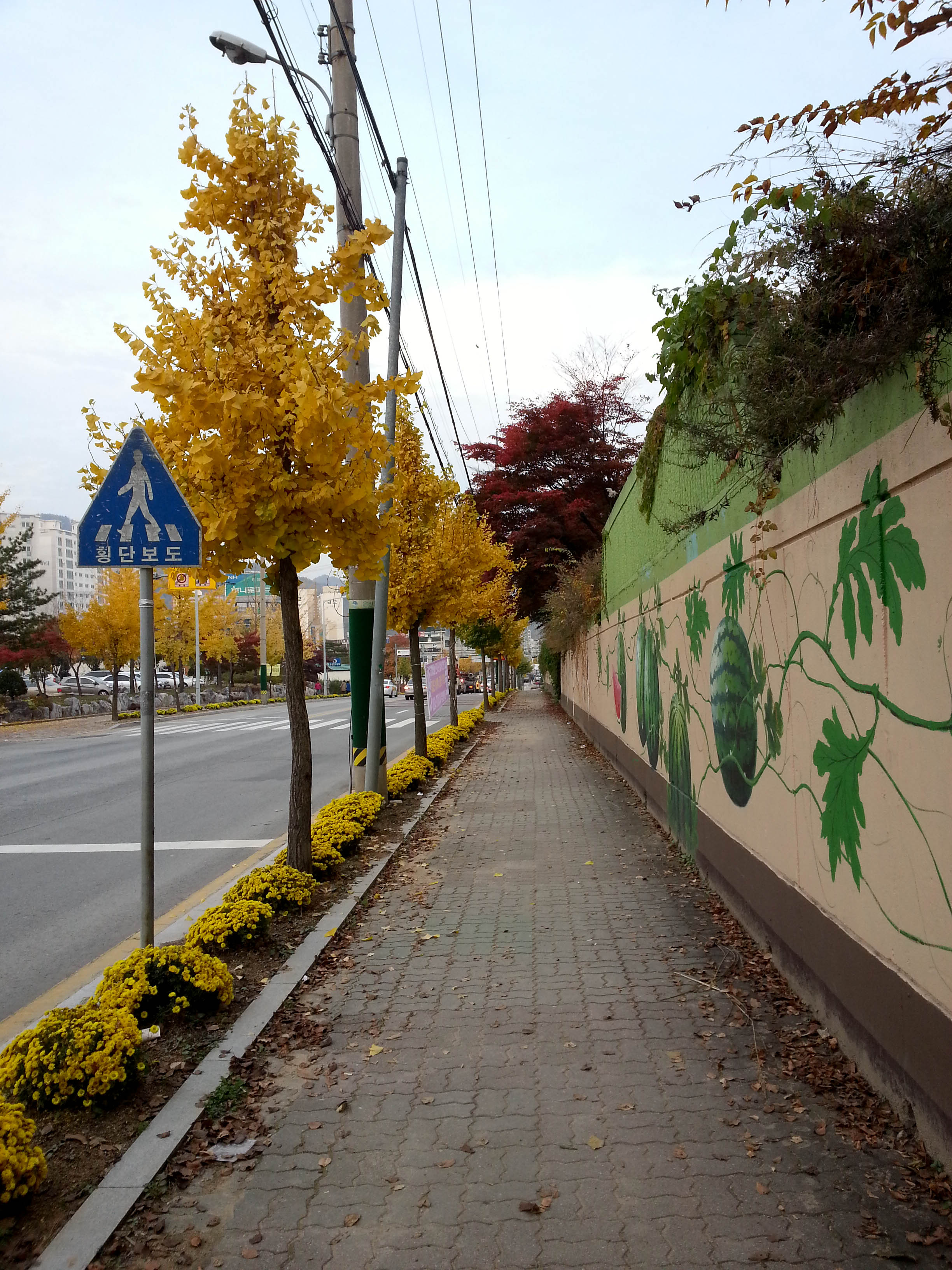
I walk down this sidewalk every day to get to my apartment. The pretty leaves are almost all gone now.

I walk down this sidewalk every day to get to my apartment. The pretty leaves are almost all gone now.

Fall in Eumseong.

Fall in Eumseong.

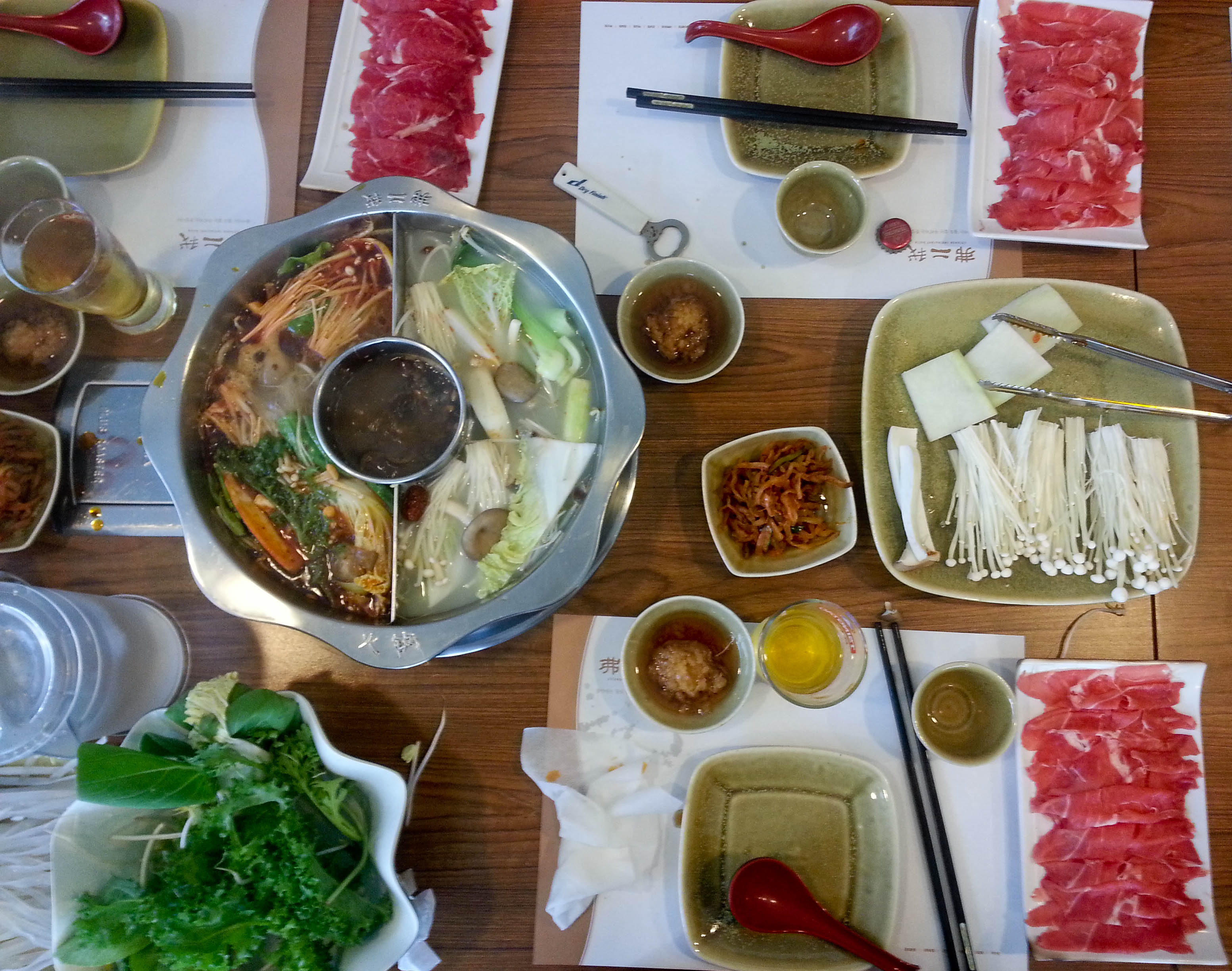
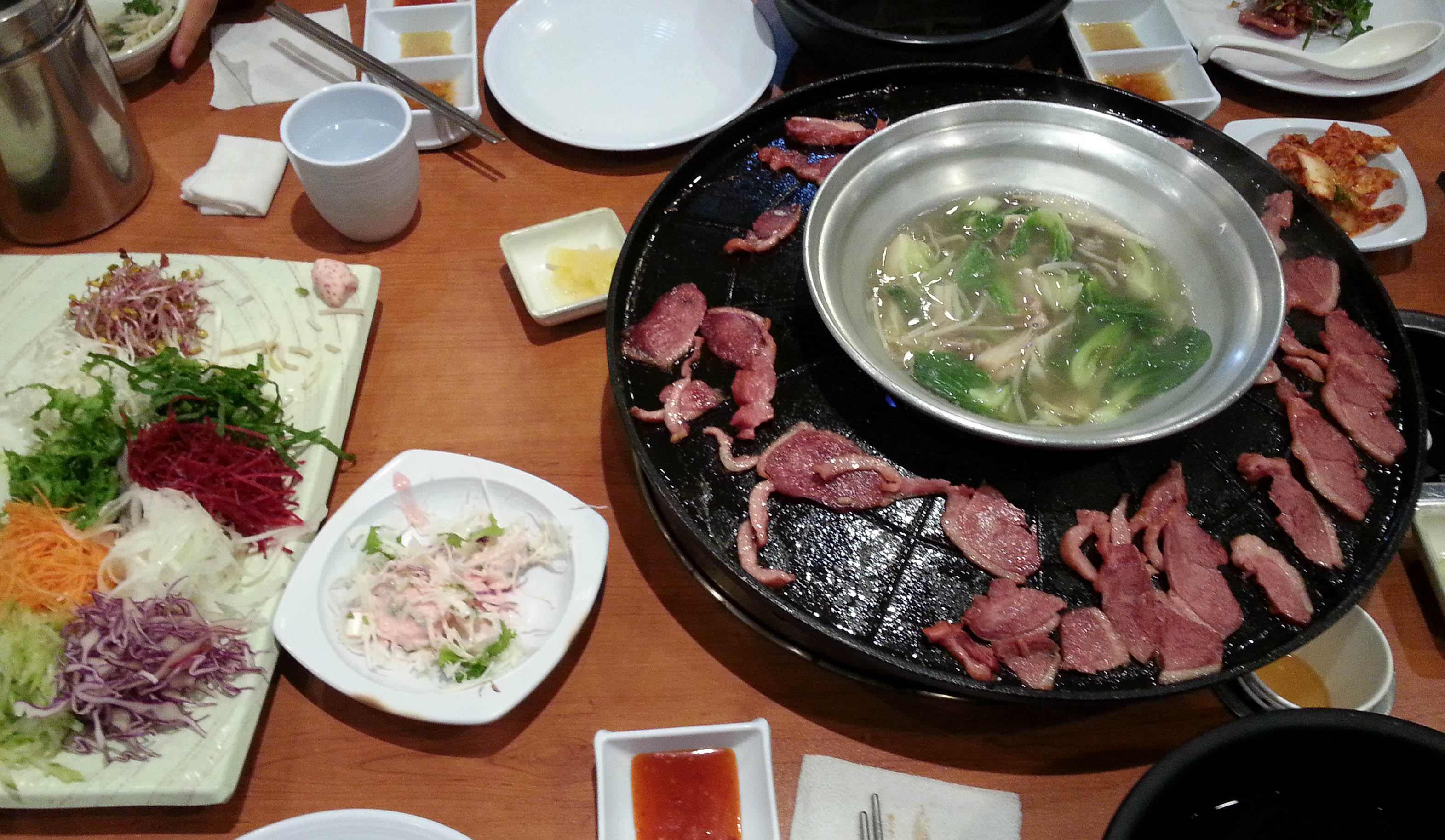
Shabu Shabu is not a traditional Korean dish, it’s Japanese.  Actually, the idea originates from Chinese hot pot dishes, but it is very popular in Korea (not to mention delicious and healthy), so I had to share.  There are various kinds of shabu shabu, but what you will always find at these restaurants is a pot of boiling stock in the middle of your table, to which you’ll add an array of vegetables and then cook your meat in it.  Sometimes there is also a grill along the outside of the pot for cooking meat, and at Vietnamese style shabu shabu restaurants you’ll find rice paper on the table to wrap up your meat and vegetables and then dip in various sauces.

The important thing to remember when going to a shabu shabu restaurant is you must bring a big appetite because you will eat a lot (the first time I experienced this meal I could barely walk home, I was that full).  This is because there are several “courses” involved, and it’s hard to stop eating when it tastes so good.  You begin by choosing a set of meat which will automatically come with loads of vegetables, plus noodles and rice.  You’ll also get a variety of traditional Korean side dishes (called banchan).  Originally, this dish was made with thinly sliced beef, which you only need to briefly dip in the stock to cook, but you will also see pork, duck, and seafood listed as options in meat sets.

One of the things I love about this meal is how beautiful it is, especially right when they begin arranging all the dishes on your table.  I tried to capture it on camera, but I found that a little hard to do because I was so distracted by the deliciousness.

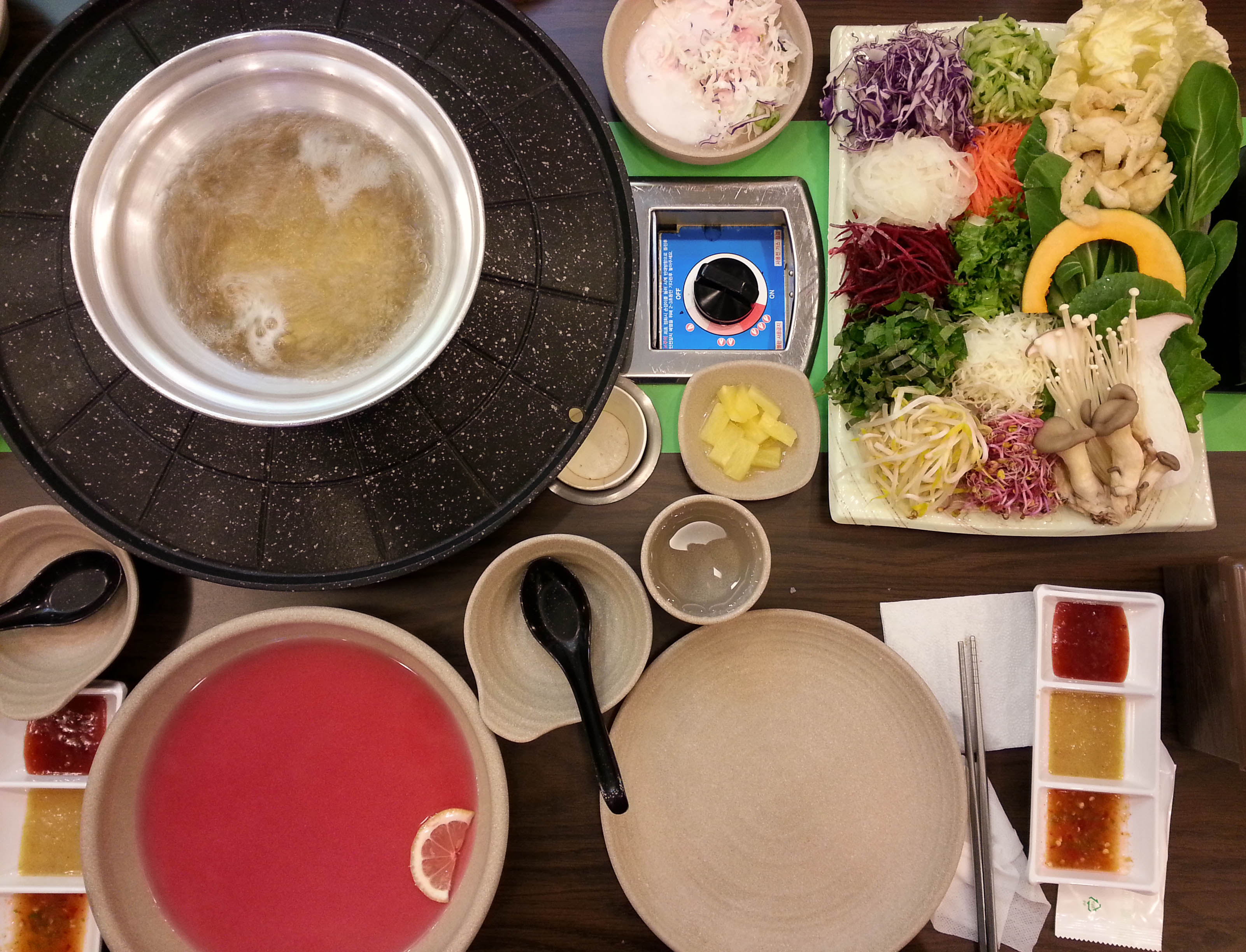
The beautiful spread.

The colorful spread of vegetables.

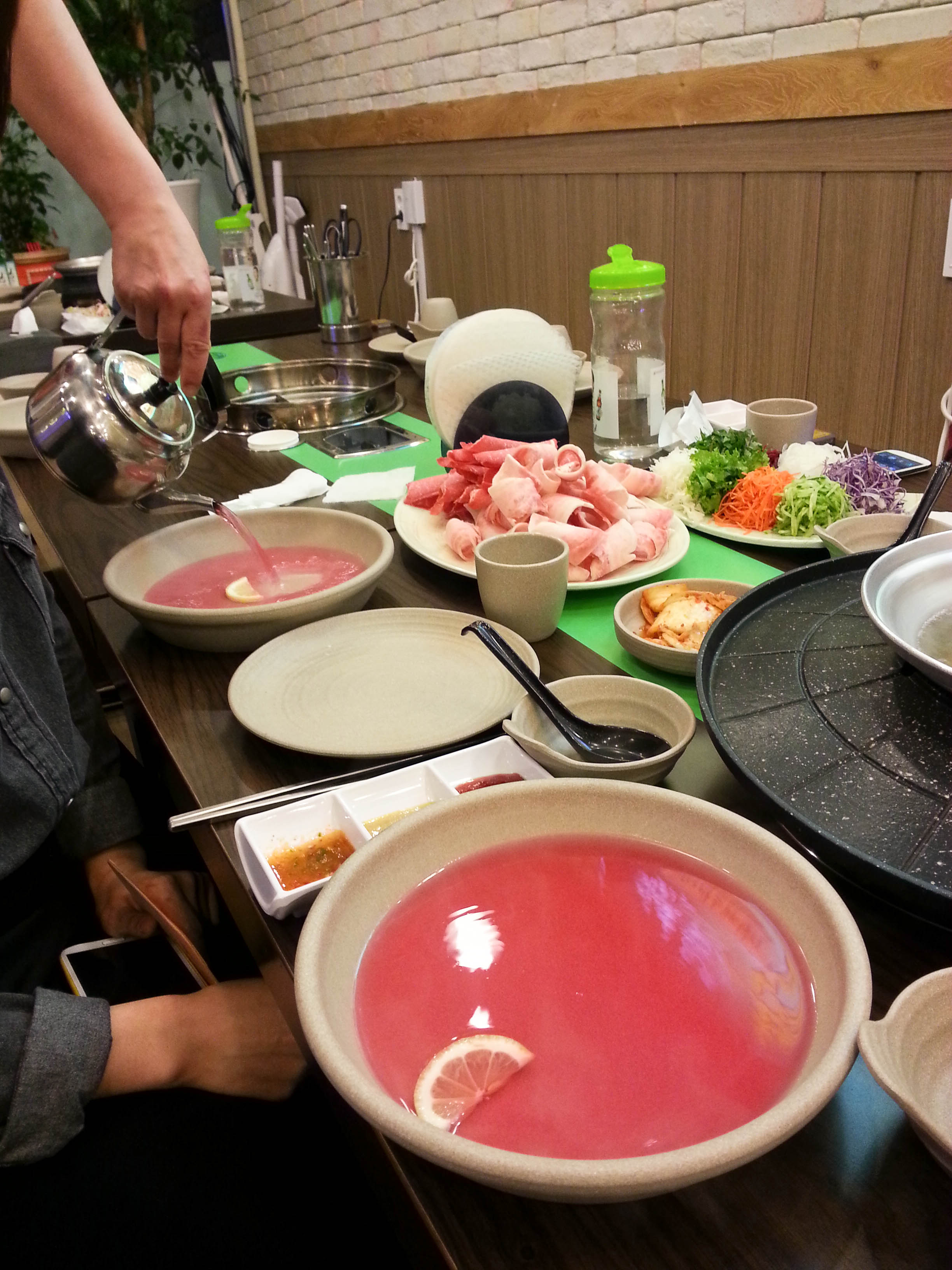
The pink water is for softening the rice paper. I have yet to find out what they put in the water to make it pink.

The pink water is for softening the rice paper (I have yet to find out what they put in the water to make it pink). You can also see the meat set we ordered at this restaurant which is thinly sliced pork and beef.

The choice of meat for this occasion was thinly sliced beef and duck.

On another occasion, we chose thinly sliced beef and duck.

A Chinese version of shabu shabu. We had two different broths at this restaurant, one of which was really spicy.

This is a Chinese version of shabu shabu. We had two different broths at this restaurant, one of which was really spicy.

20140903_184457 - Copy

The name shabu shabu is said to be an onomatopoeia for the sound the meat makes when being cooked in the broth. Here we cooked the duck on the grill and the thinly sliced beef in the pot.

After dipping this rice paper in warm water to soften it, you pile on some meat and vegetables of your choosing.

After dipping this rice paper in warm water to soften it, you pile on some meat and vegetables of your choosing.

Then you wrap it up and dip it into one of the sauces. So good!

Then you wrap it up and dip it into one of the sauces. So good!

After you finish the meat, you add noodles to the remaining broth.

After you finish the meat, you add noodles to the remaining broth and enjoy some noodle soup.

Finally, you add rice and an egg to soak up the last of the broth. Now you are extremely full.

Finally, you add rice and an egg to soak up the last of the broth. Now you are extremely full.

The beautiful spread.

Ready to do it all over again?

Summer Vacation Part 4

I was really excited to go to Jeju, South Korea’s largest island.  I couldn’t wait to see the blue skies, warm sunshine, beautiful beaches and the palm trees.  We were saving the best for last on our summer vacation…or so we thought.  Mother Nature decided we still hadn’t seen enough rain yet.  It rained, I mean poured, all but 30 minutes of our three day visit. No exaggeration.  I’d like to say the weather didn’t stop us from doing everything we wanted, but it did.  We were still able to have a great time, we just didn’t see nearly as much as we’d hoped and there certainly wasn’t any beach time.  Perhaps just another reason to go back someday.

Jeju is accessible by ferry (about 10 hours, depending on which port you depart from) or a short flight from one of Korea’s  airports.  We chose the latter and took a 40 minute flight from Busan.  We had difficulty deciding where to stay on the island since we wanted to see quite a few different things that were spread out over the island, and we knew we’d be using public transit.  In the end we went with The Forest Hostel in Jeju City.  While we had an okay stay at this hostel, I wouldn’t necessarily recommend it.  Our room had an endless supply of giant, hungry mosquitoes and it smelled like a pile of dirty, damp towels.  But, there was a nice common room and the owners were pleasant.

The unfortunate thing about using public transportation (buses) on Jeju is that is takes several hours, one way, to get to the other side of the island, and many of the sites we wanted to see were not within close proximity to each other.  We tried to be strategic about making an itinerary since we were a little restricted by bus timetables, but the crummy weather made it even more challenging than anticipated (mostly because we found ourselves getting tired of being wind blown and soaking wet).  We planned on hiking Hallasan, South Korea’s tallest peak (yeah, yeah, it’s only 6,397 feet high but it’s still a mountain), but we opted not to due to really strong winds, sideways rain and lightning.  Instead, we went underground and explored Manjanggul Cave, one of the most impressive lava tube systems in the world, and checked out some of the beautiful Jeju Olle Trails that go around the perimeter of the island.  Oh, and cannon balls into the sea as well.

Surprisingly, we didn’t indulge in seafood on this leg of the trip.  We were on an island and didn’t eat seafood, really? Yes, really.  We decided we’d splurged enough on fresh seafood in Gyeongpo, and after trying Jeju’s famous black pig barbecue on our first night (a species on Jeju known to be more tender than others), we decided it was so good we had to go back the next night too.

Even though the trip didn’t go as planned and we didn’t get to cross everything off the list, it was still unforgettable and an excellent experience (largely do to a great travel companion).  I’ll let the pictures do the rest of the talking.

Welcome to Jeju Island.

Welcome to beautiful Jeju Island.

Dol hareubangs (roughly meaning stone grandfather), which are statues carved from volcanic rock, can be spotted all over Jeju. Traditionally, they were carved and placed at village entrances to provide protection.

Dol hareubangs (roughly meaning stone grandfather), which are statues carved from volcanic rock, can be spotted all over Jeju. Traditionally, they were carved and placed at village entrances to provide protection.

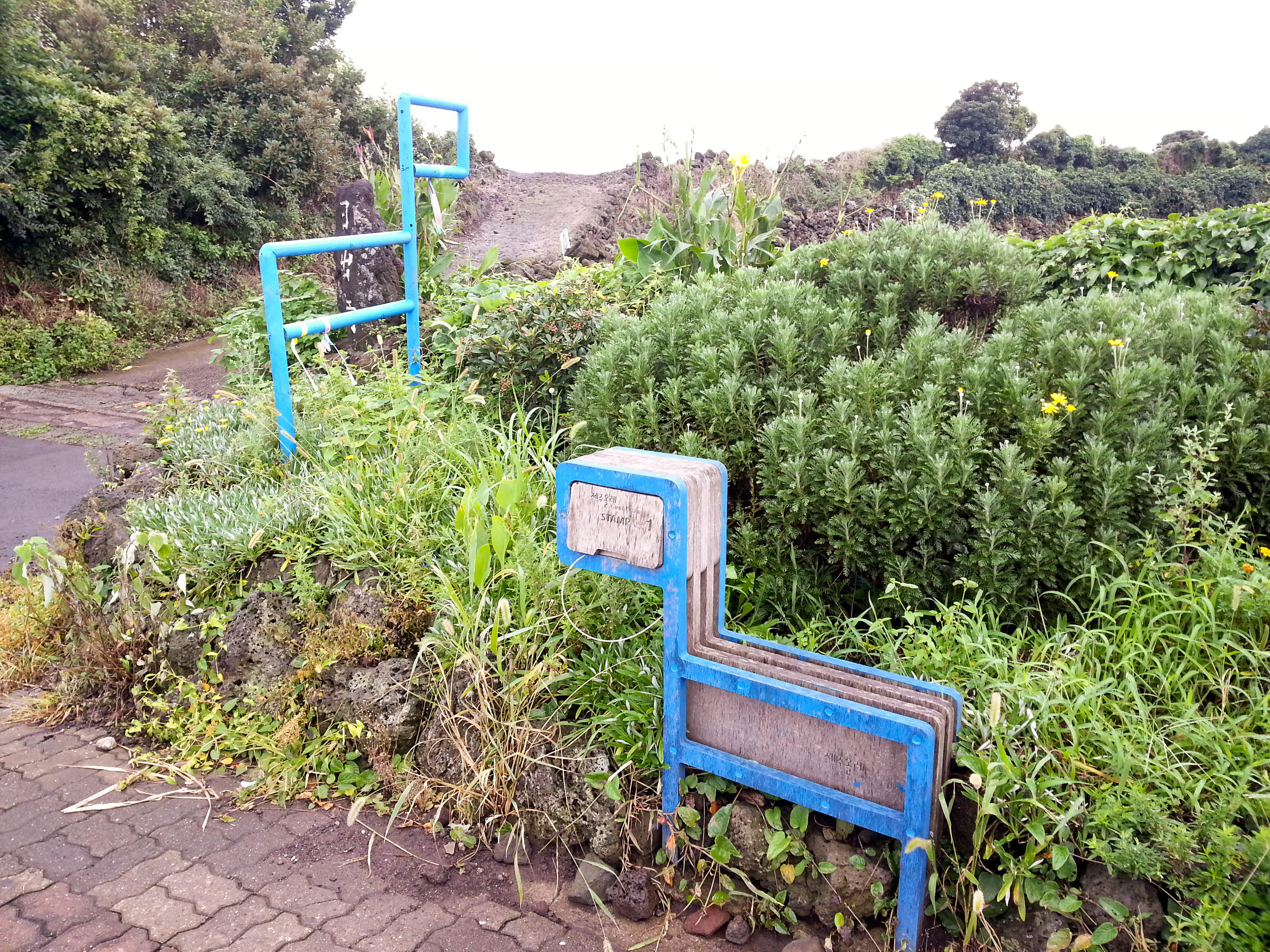
The trailhead for Jeju Olle #1.  There's a stamp inside the box which you can use to stamp your Jeju Olle "passport".

The trailhead for Jeju Olle #1. There’s a stamp inside the box at the bginning of each trail which you can use to stamp your Jeju Olle “passport”.

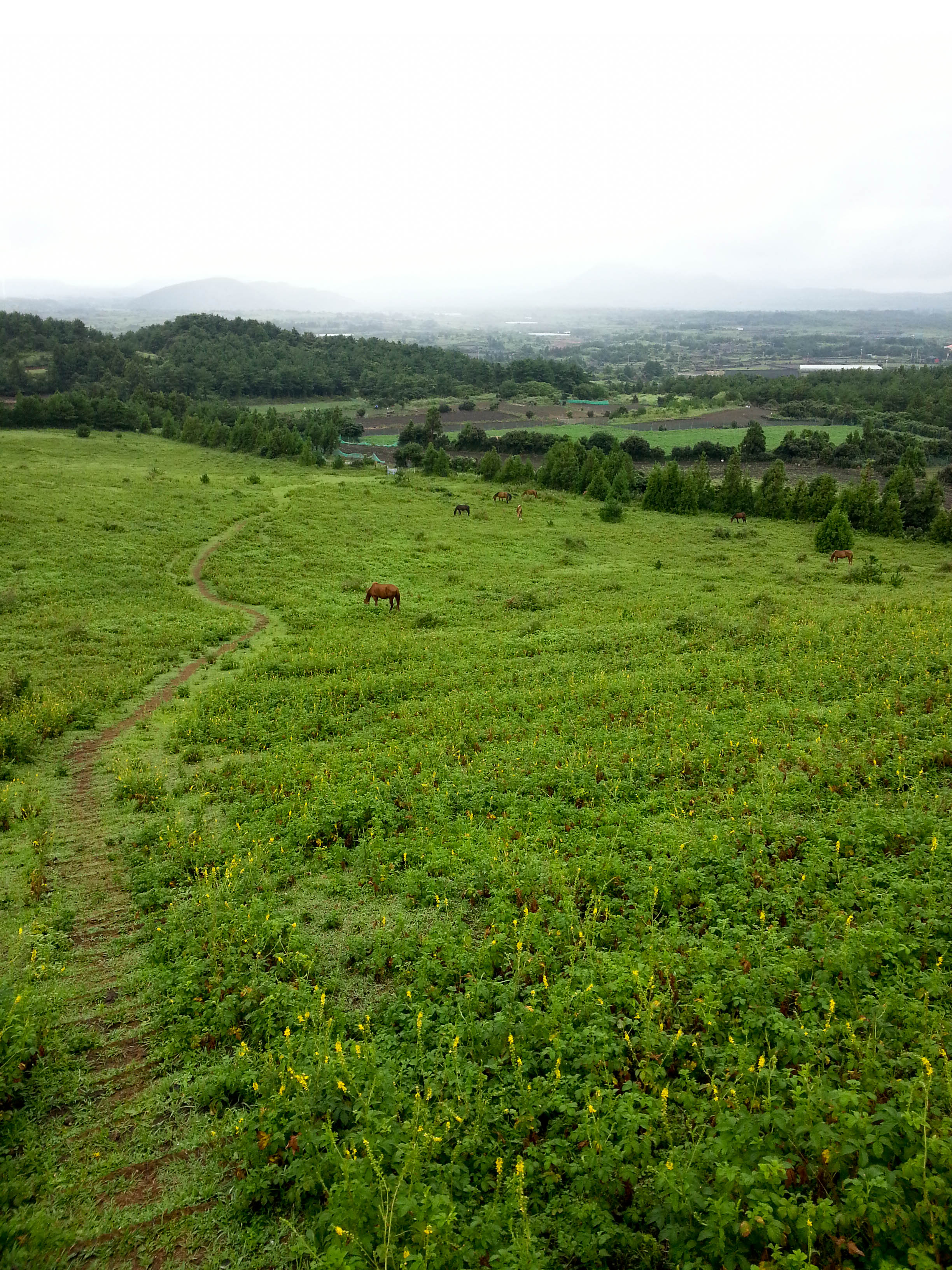
Fields and wild horses along Jeju Olle #1.
Fields and wild horses along Jeju Olle #1.

This is when we had a 30 minute break from the rain.
This is when we had a 30 minute break from the rain.

The dirt/mud on the island was such a brilliant color.
The dirt/mud on the island was such a brilliant color.

More of trail #1. I love how green it was.

More of trail #1. I love how green it was.

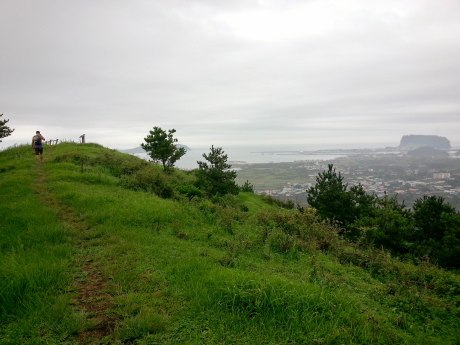
View of Seongsan Ilchulbong from trail #1.

View of Seongsan Ilchulbong from trail #1.

Somewhere along trail #1.
Somewhere along trail #1.

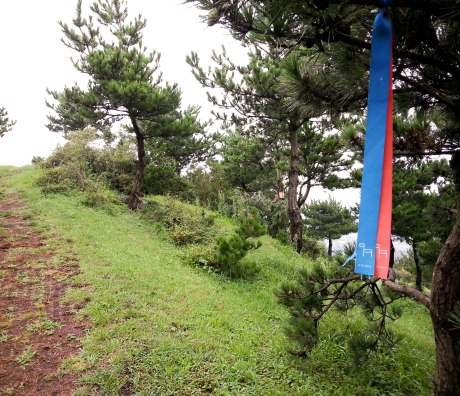
The Jeju Olle Trails are marked with these blue and red ribbons.
The Jeju Olle Trails are marked with these blue and red ribbons.

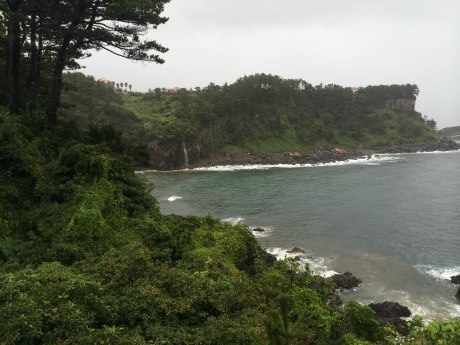
The coastline in Seogwipo.
The coastline in Seogwipo.

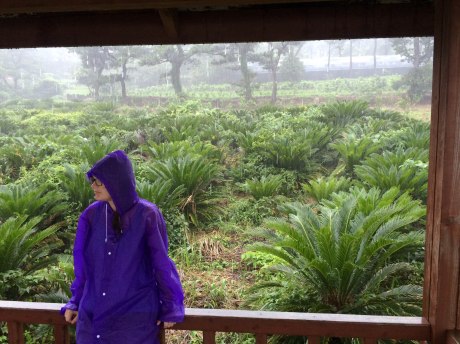
We hung out under this pavilion for a while to see if the storm might pass. Nope, it was there to stay for several days.

We hung out under this pavilion for a while to see if the storm might pass. Nope, it was there to stay for several days.

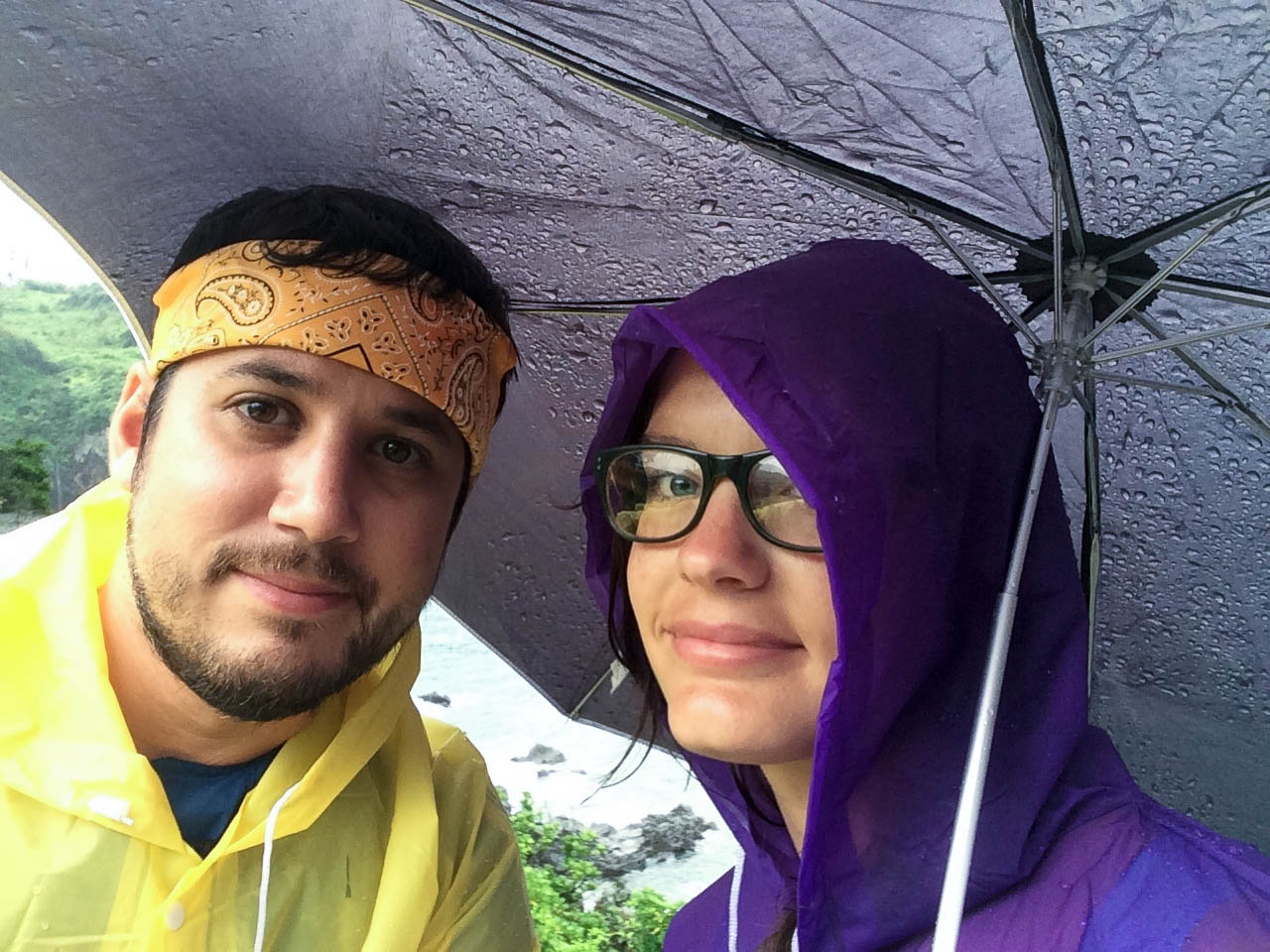
Rain, rain, go away.

Lucky for us, cheap ponchos were for sale everywhere.

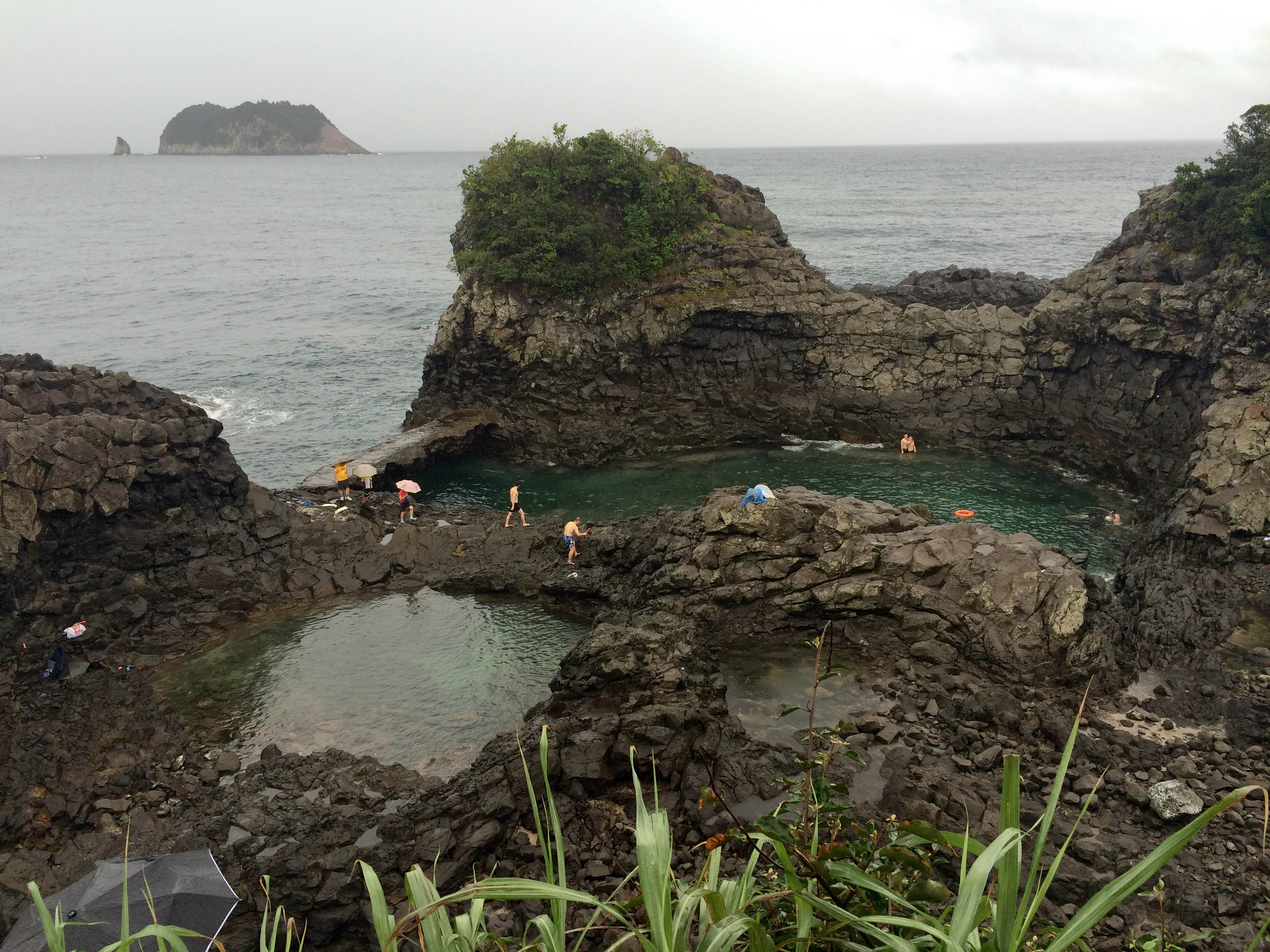
We stumbled upon this swim spot (the rain didn't seem to keep many people away) in Seogwipo.

Despite the rain, we stumbled upon this swimming hole in Seogwipo.
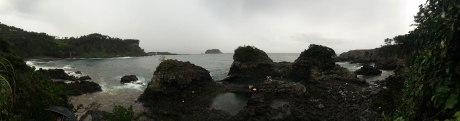
Panorama of the lagoons near Oedolgae Rock in Seogwipo.
Panorama of the lagoons near Oedolgae Rock in Seogwipo.

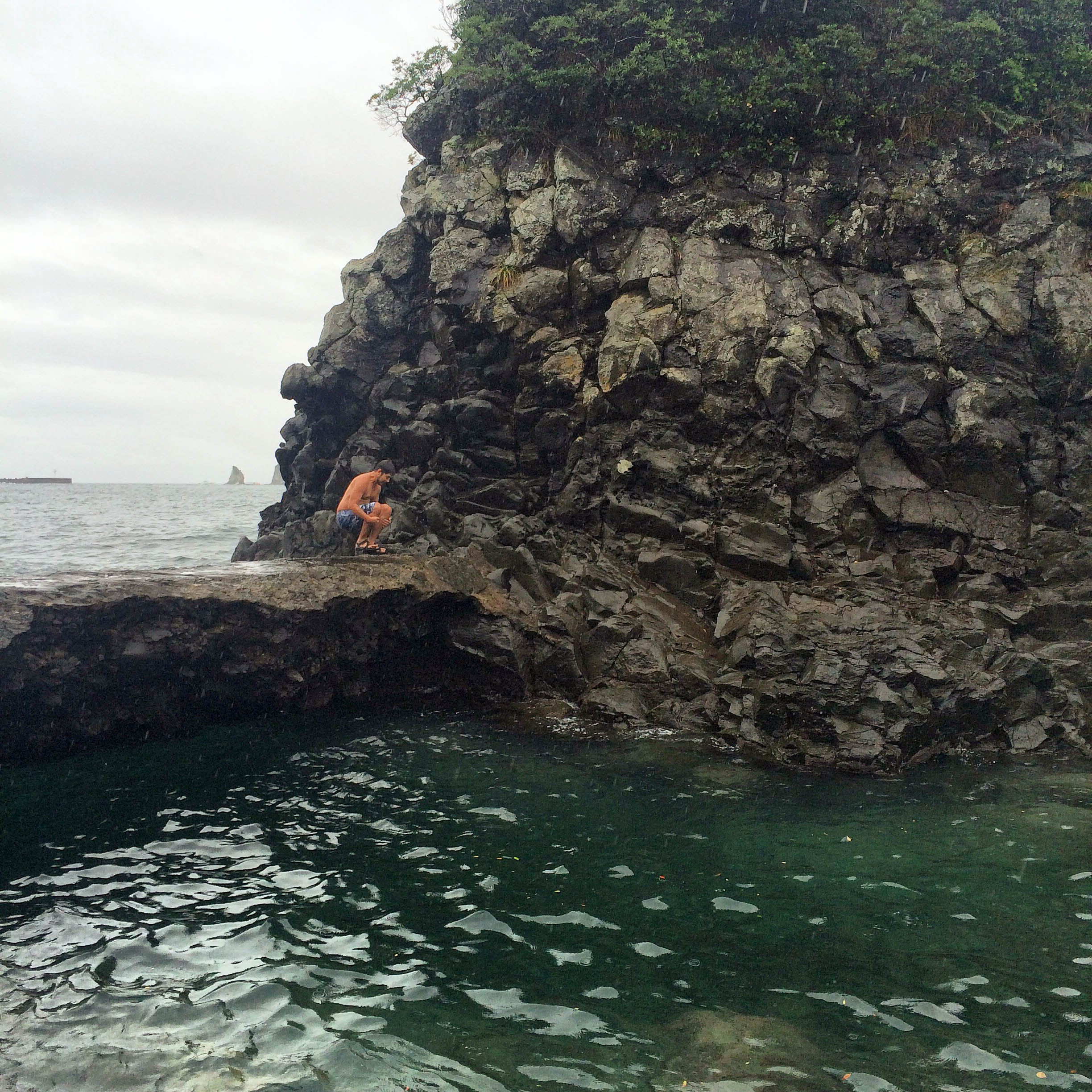
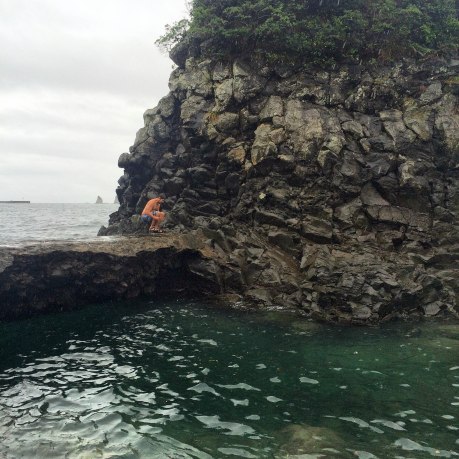
David doing a cannon ball into the lagoon near Oedolgae Rock.

David doing a cannon ball into the lagoon near Oedolgae Rock.

Enjoying the beautiful weather.

Enjoying the beautiful weather.

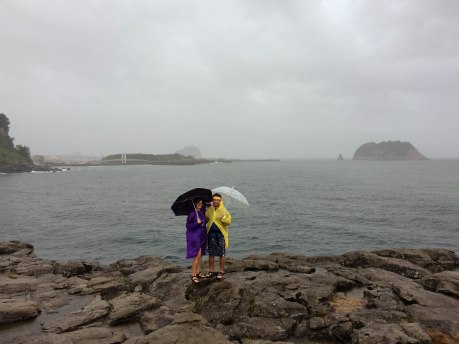
What rain?
What rain?

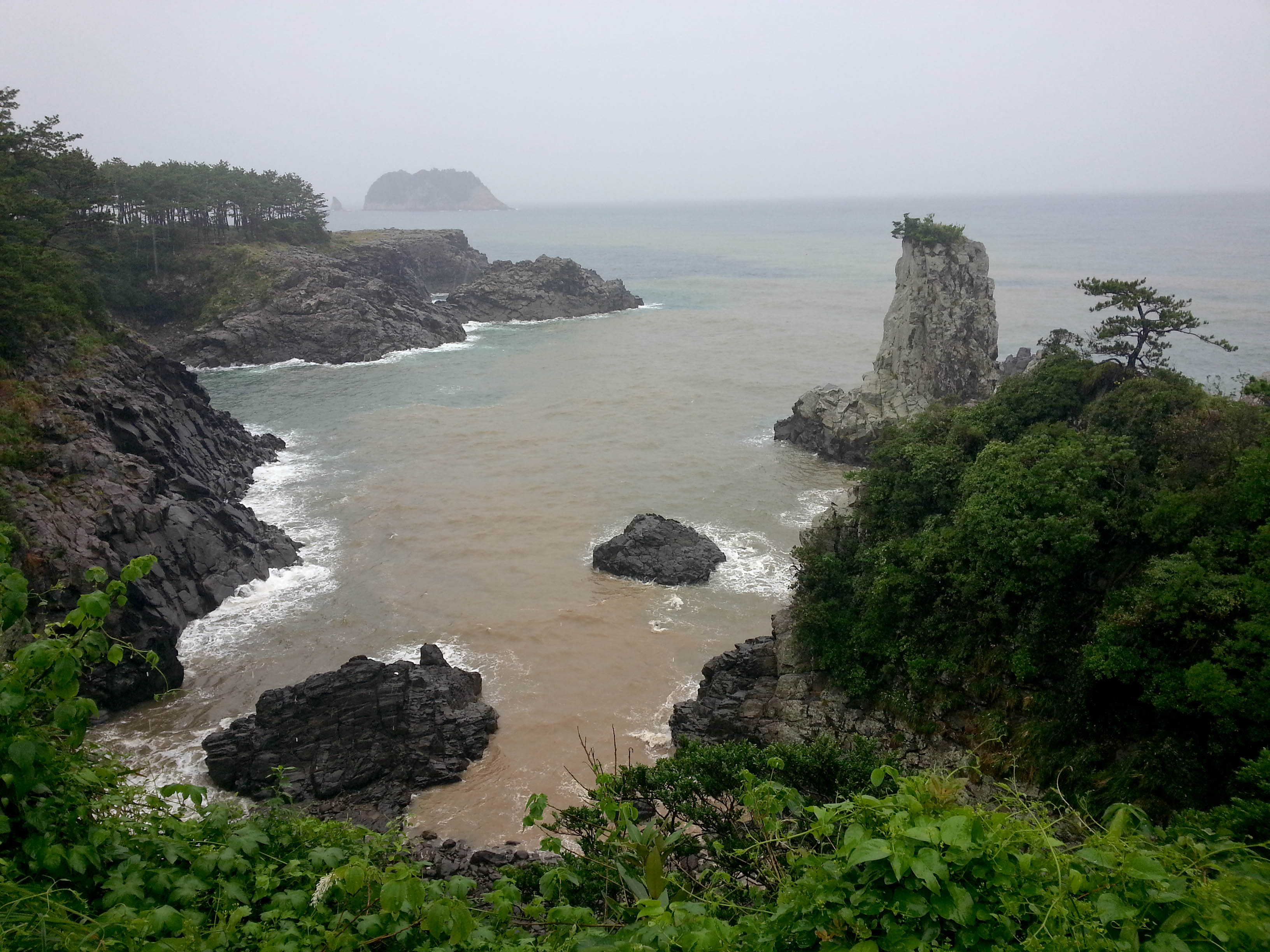
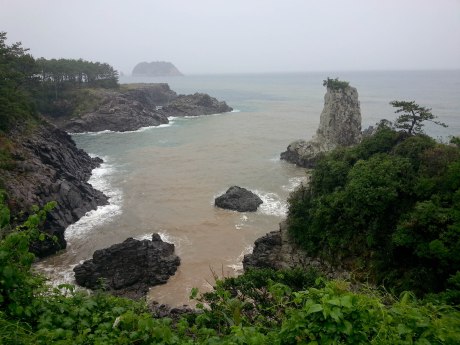
Oedolgae Rock stands 65 feet tall and was formed by a volcanic eruption 1.5 million years ago. According to legend, an old woman became the rock after waiting for her husband who went out to sea to fish and never returned.
Oedolgae Rock stands 65 feet above what is usually turquoise water (but not on this day due to the storms moving though). It was formed by a volcanic eruption 1.5 million years ago. According to legend, an old woman became the rock after waiting for her husband who went out to sea to fish and never returned.

A young Korean guy offered to take our picture. We didn't realize it was going to be a mini photo shoot. He took at least 20 photos from different angles.

A young Korean guy offered to take our picture. We didn’t realize it was going to be a mini photo shoot. He took at least 20 photos from all different angles.

Black pork street.

Black pork street where you can find an abundance of restaurants specializing in Jeju’s black pig.
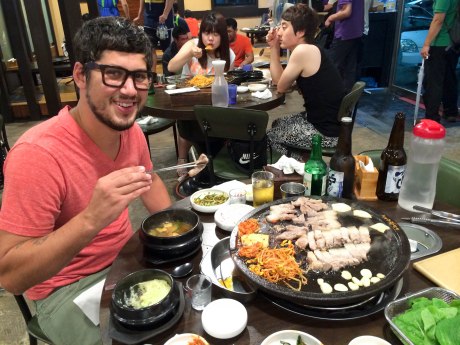
I think David was very happy about this Korean barbecue experience.

I think David was very happy about this Korean barbecue experience.

Mmmm. Mushrooms, pork, kimchi, garlic, and bean sprouts sizzling right at our table.
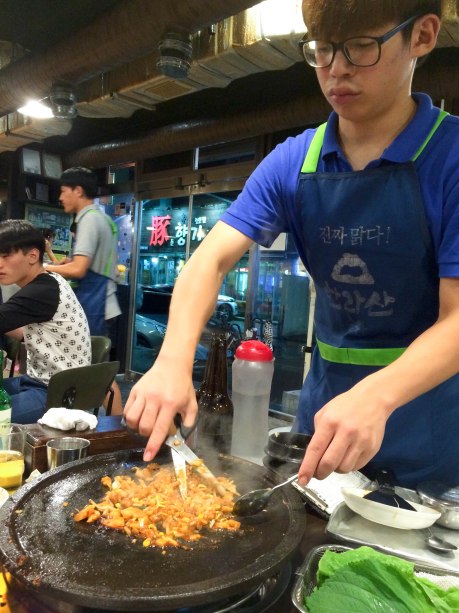
Mmmm. Mushrooms, pork, kimchi, garlic, and bean sprouts sizzling right at our table.

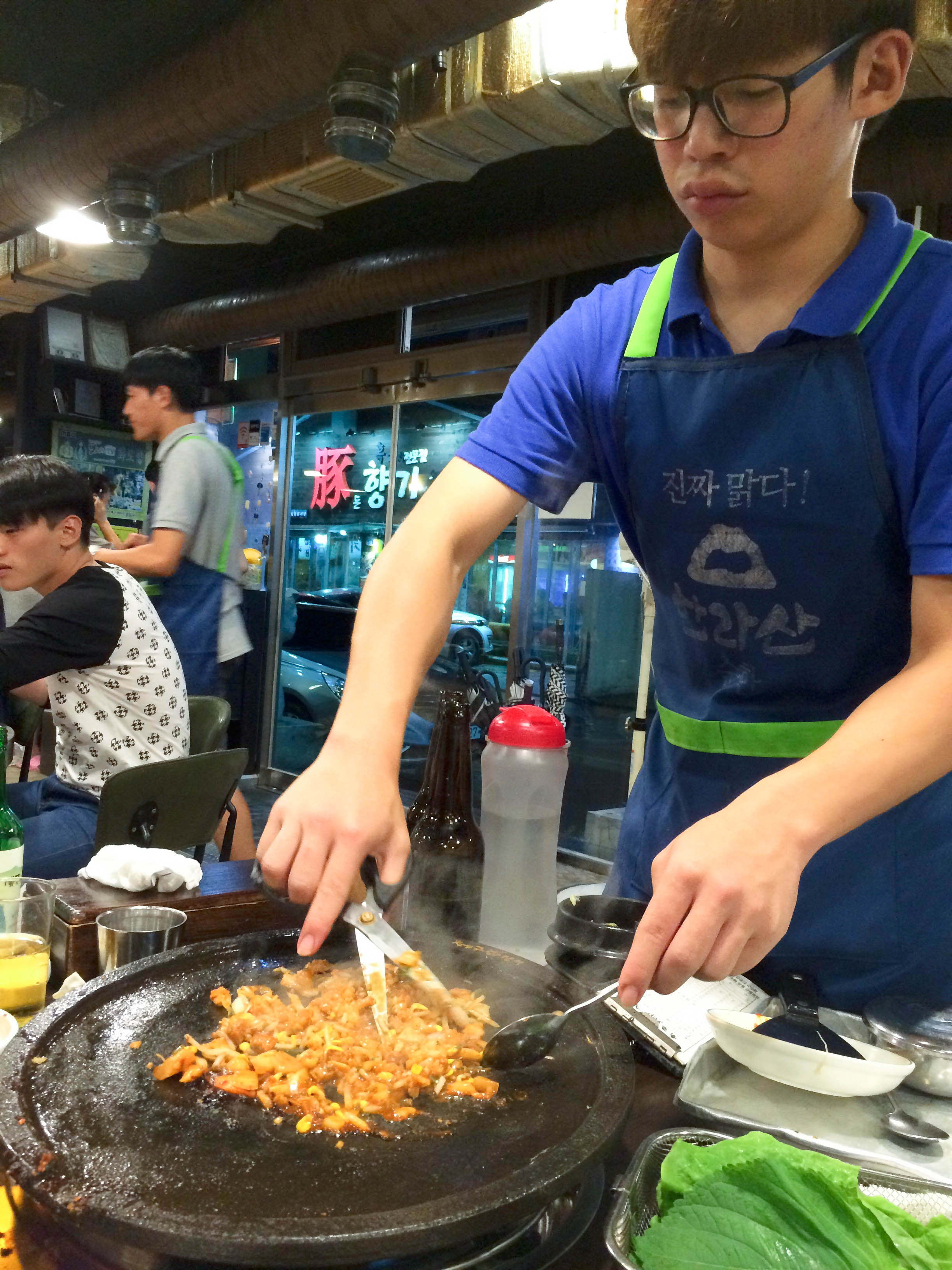
When ordering bokkembap (fried rice), they use the bits of remaining meat, garlic, kimchi and onions that are on the grill and mix it with rice right at your table. They'll usually add dried seaweed as well.

When ordering bokkembap (fried rice), they use the bits of remaining meat, garlic, kimchi and onions that are on the grill and mix it with rice right at your table. They usually add dried seaweed as well. Also, you’ll notice he’s using scissors, the knife of Korea.

Testing the fried rice. It was delicious!

Testing the fried rice. It was delicious!

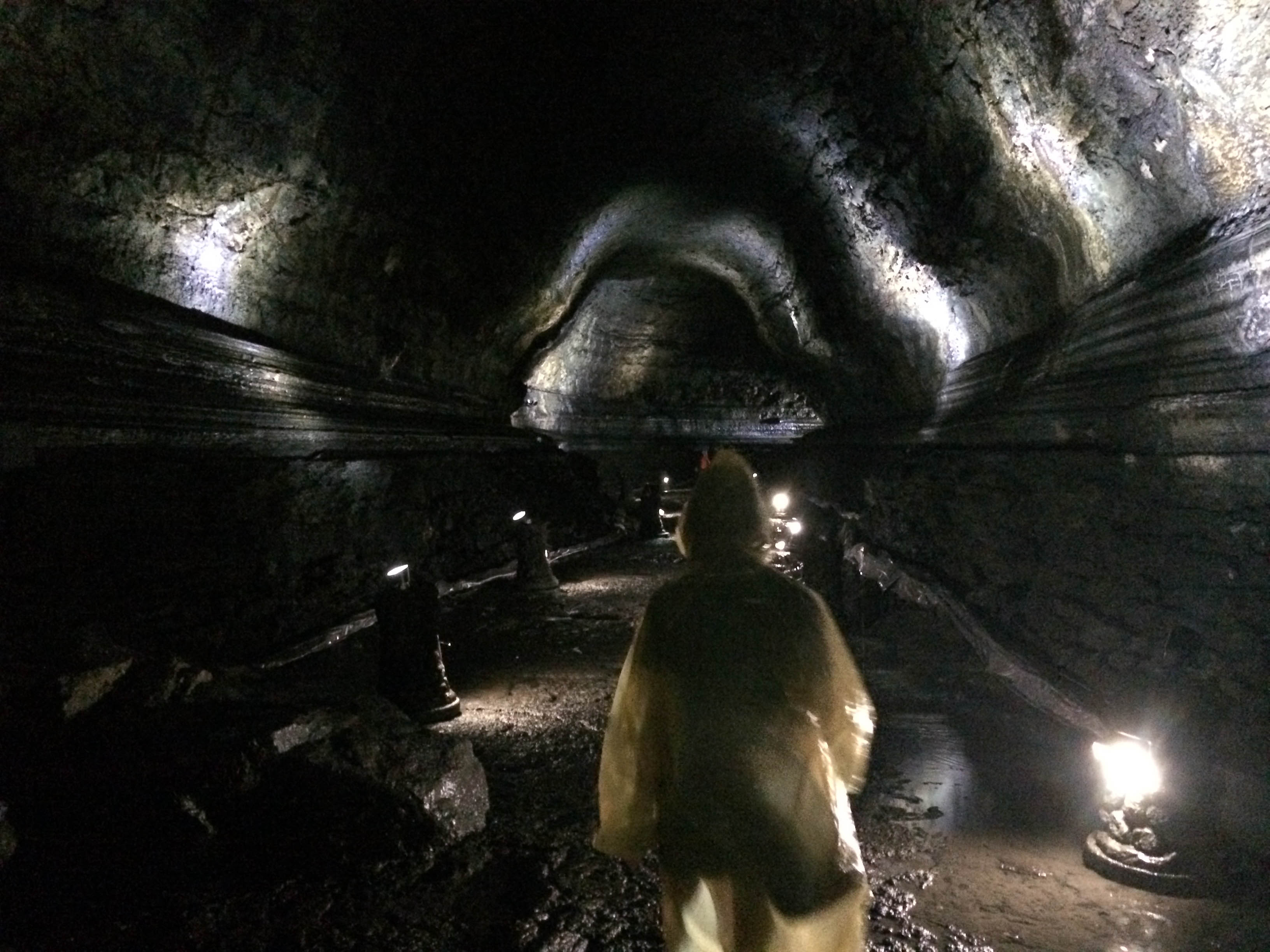
Exploring the Manjanggul Lava Tube.

Exploring Manjanggul Cave.

The underground lava tube.

Inside the lava tube.

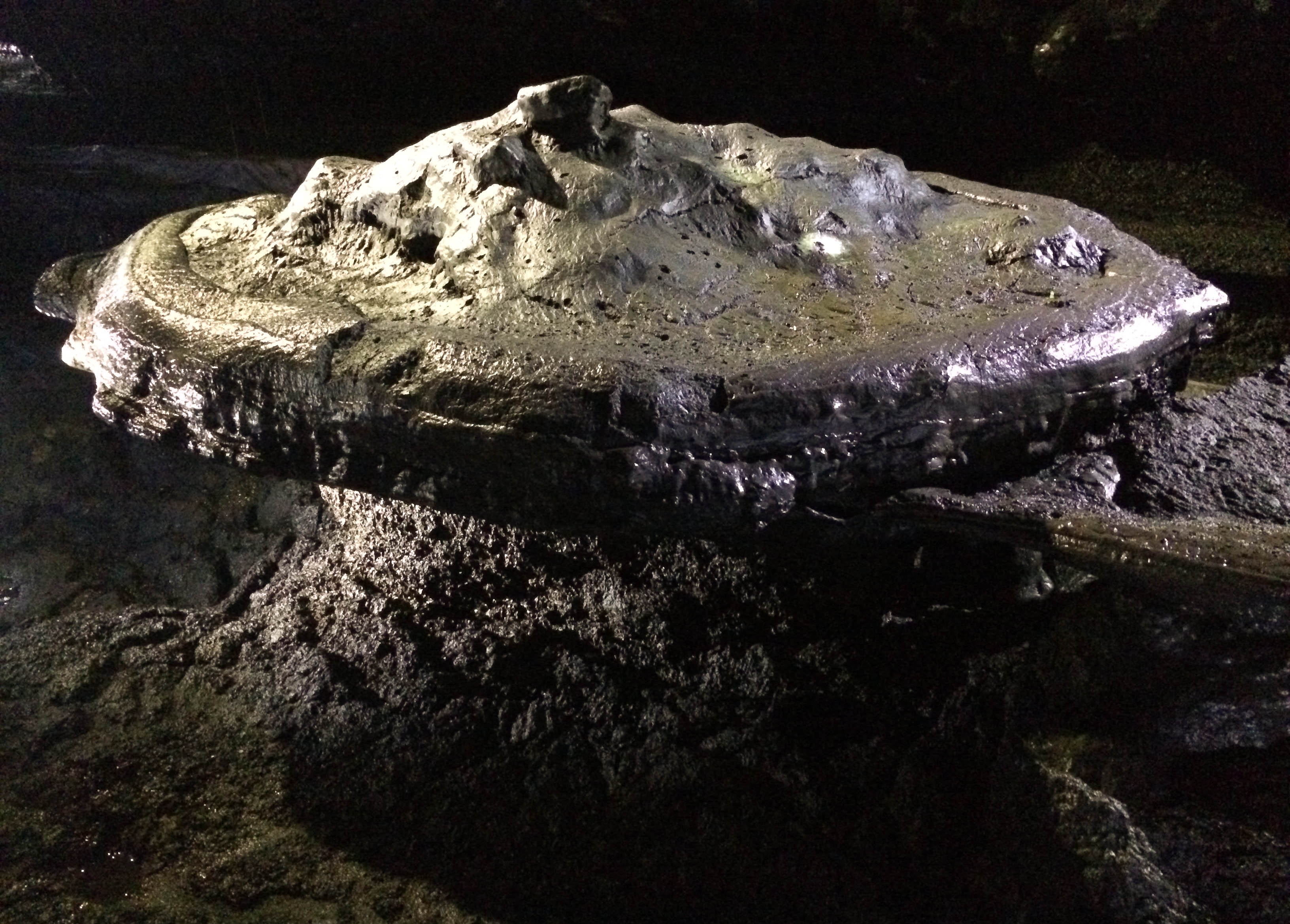
A lava formation that looks a bit like a mushroom in Manjanggul Cave.
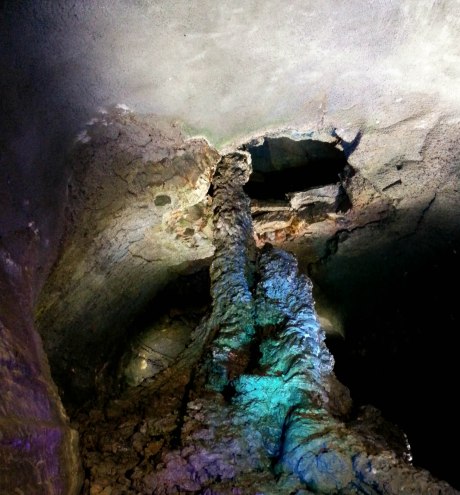
A lava formation that looks a bit like a mushroom in Manjanggul Cave.

Formation at the end of the lava tube (or at least the part that was open to tourists).
Formation at the end of the lava tube (or at least the part that was open to tourists).

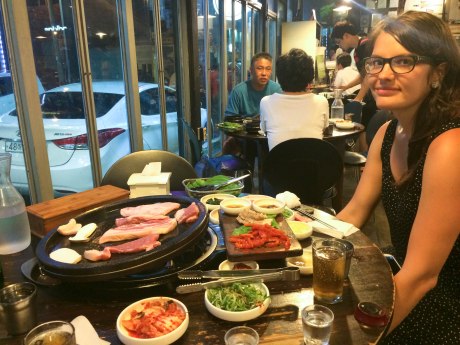
More Korean barbecue because it tasted so good the first night.

More Korean barbecue because it tasted so good the first night.

Jeju is known for mandarins, tangerines and hallabongs (a cross between and orange and a tangerine).

Jeju is known for mandarins, tangerines and hallabongs (a cross between an orange and a tangerine).
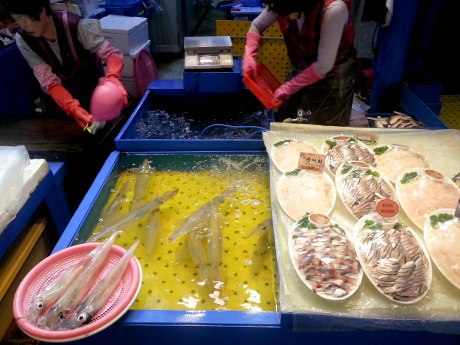
Squid and giant plates of really cheap sashimi at the fish market near our hostel.
Squid and giant plates of really cheap sashimi at the fish market near our hostel.

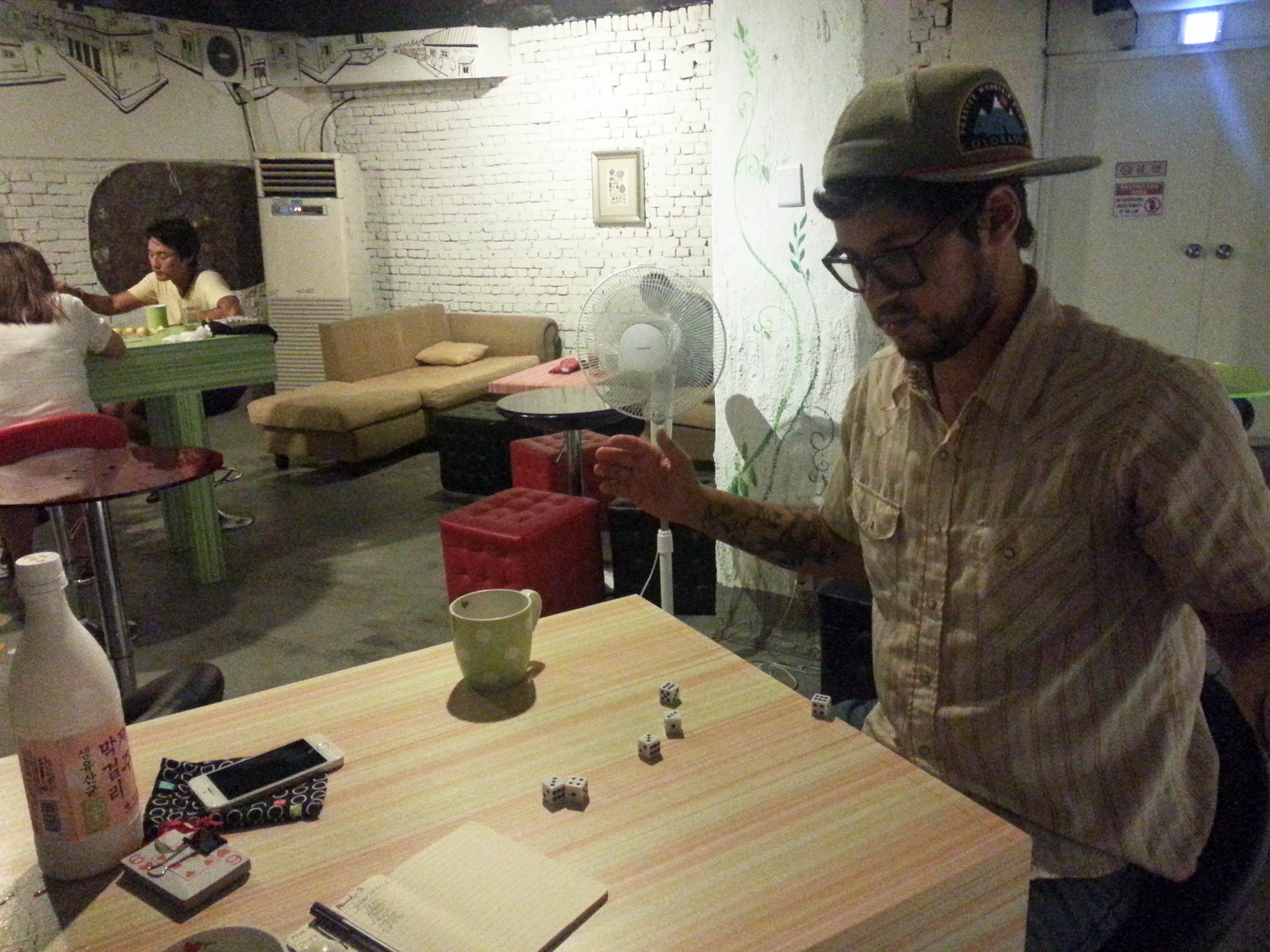
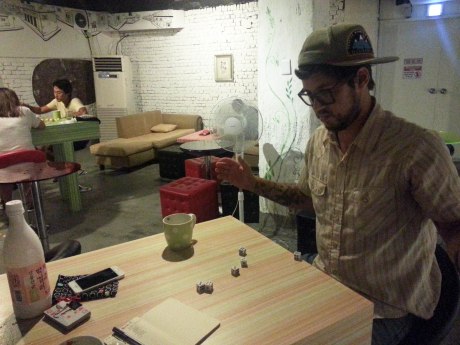
We got some game time in while drinking tangerine flavored makgeoli in the common room of our hostel because, well, it was still raining.
We got some game time in while drinking tangerine flavored makgeoli in the common room of our hostel because, well, it was still raining.